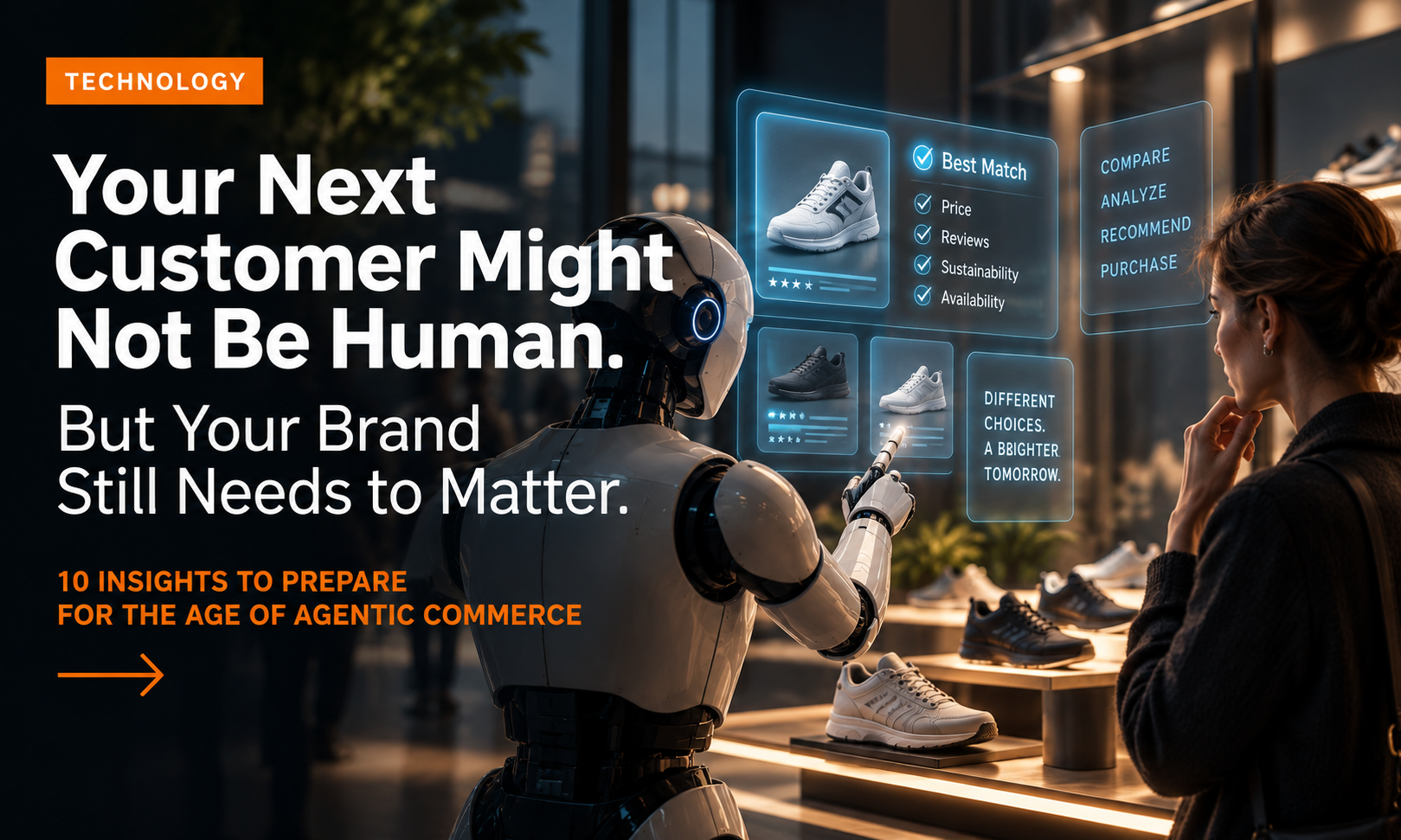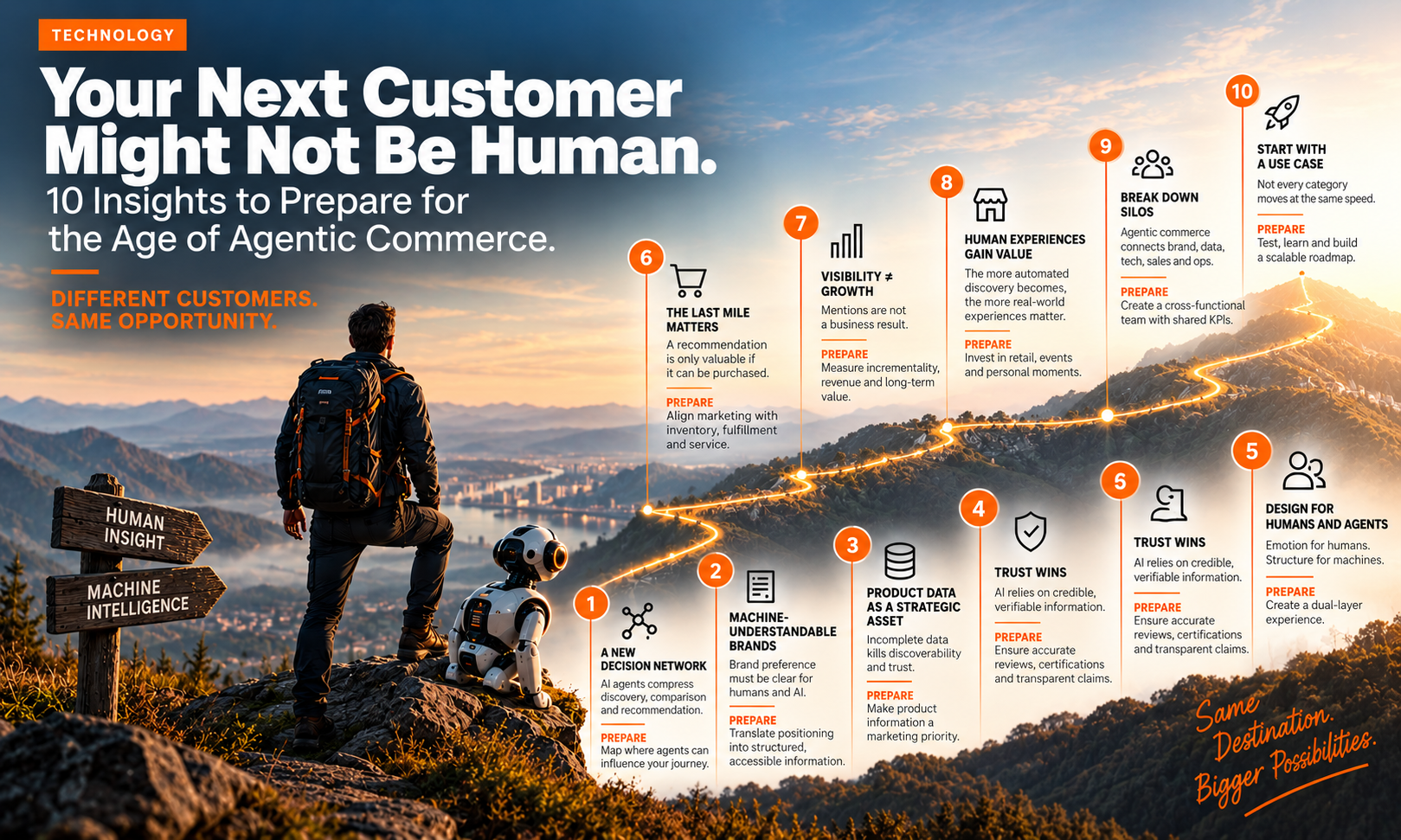

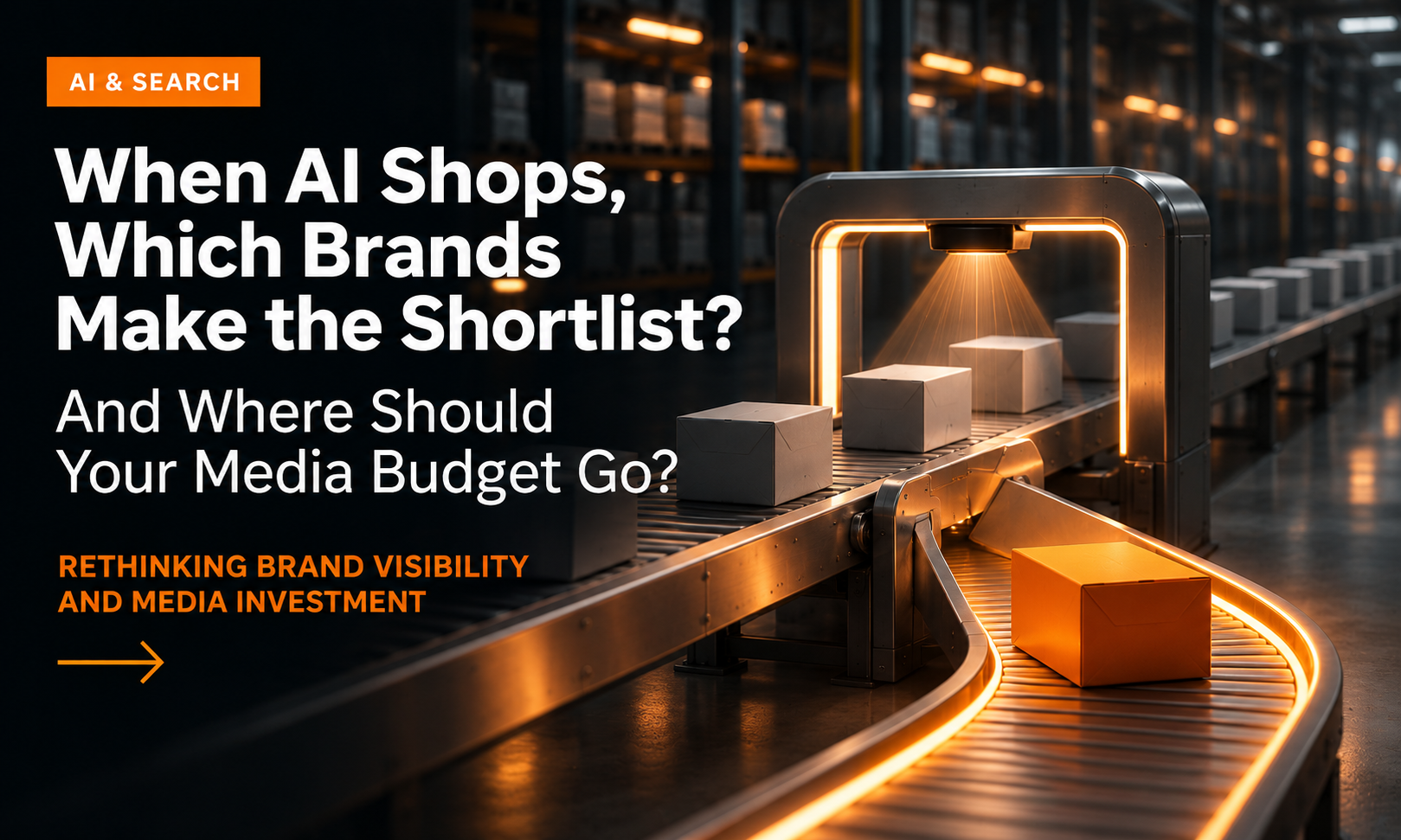
AI shopping agents are changing how people discover, compare and choose products. For marketers, this raises a bigger question: how do brands make the shortlist, and where should the next media euro go?
Imagine planning a weekend away with your family.
You tell your AI assistant what matters: somewhere quiet, good food, activities for the children and a realistic total price. It returns three hotels, explains the differences and helps you choose.
Convenient? Absolutely.
But what happened to all the hotels you never saw? The carefully designed websites, the paid search campaigns, the inspirational videos?
Somewhere between your request and the recommendation, a shortlist formed.
For brands, understanding that moment could become one of marketing’s most important challenges.
How AI shopping agents change product discovery
On 11 November, Zalando described how its Assistant now supports product comparisons, size recommendations, basket preparation and order tracking. According to the company, customer queries in the Assistant are three times longer than traditional search queries. People can explain their situation rather than squeeze it into a few keywords.
That distinction matters.
“Waterproof jacket” describes a product category.
“I need a jacket for a wet November weekend outdoors, but I don’t want to look as though I’m climbing Everest” describes a person, a situation and a compromise.
My view is that this creates a new competitive challenge: brands need to communicate clearly enough to be considered in that context, while remaining distinctive enough for people to want them.
Who actually controls the recommendation?
We should be careful about treating AI as a neutral personal shopper.
A retailer’s assistant operates within a commercial environment. An independent assistant may draw on different sources, partnerships and technical access. A sponsored placement and an organic recommendation are different things.
The questions become: which products can the assistant access, what evidence does it use, and how clearly does it distinguish advertising from advice?
For marketers, “being visible in AI” is therefore too vague to be a strategy. Visibility needs a context: which assistant, which market, which customer need and which stage of the decision?
What this means for media spending
As AI shopping agents influence more purchase decisions, marketers need to examine which placements still reach customers and generate additional demand.
The immediate response should be to examine how media contributes to decisions.
Reuters recently reported that AI shopping agents could reduce exposure to retailer websites and advertising placements. It also reported that Amazon had seen no meaningful impact on its advertising from third-party agents so far. The direction of change deserves attention; the timing and scale remain uncertain.
That argues for disciplined experimentation.
I would put three kinds of spending under closer scrutiny:
- Repeated exposure with little evidence of additional demand. High impression counts can conceal weak commercial impact.
- Search activity that mainly captures customers already looking for the brand. Reported conversions deserve a closer look at what would have happened without the ad.
- Traffic acquisition that leads to incomplete information or disappointing experiences. More visitors will rarely solve an unclear offer.
These are useful questions today. AI makes them more urgent.
Where I would invest

Preparing for AI shopping agents means coordinating paid media with accurate product information, credible evidence and a dependable customer experience.
I would organise investment around five priorities, with paid media working alongside product, content and customer experience.
| Investment priority | What I would fund | What I would assess |
| Brand demand | Distinctive creative, relevant video, social, OOH and partnerships | Whether more people remember, seek out and consider the brand |
| Useful product information | Accurate feeds, clear specifications, availability, pricing and practical FAQs | Information quality, discovery and conversion |
| Independent evidence | Credible reviews, expert coverage, customer cases and relevant PR | Quality of coverage, consideration and referral activity |
| Customer experience | Better advice, booking, delivery, service and recovery | Repeat purchase, complaints, returns and recommendations |
| Controlled experiments | Relevant AI discovery and advertising tests | Additional sales, acquisition cost and customer quality |
The balance will vary. A hotel, a software provider and a consumer electronics brand should arrive at different allocations.
1. Give people a reason to ask for you
There is a meaningful difference between asking an assistant for “a good hotel” and asking it to check availability at a particular hotel.
Brand building can influence the starting point of the conversation.
I would continue investing in creative work that builds recognition and preference. The channel should follow the audience and the task. A memorable physical experience, a strong video or a relevant partnership can all contribute.
2. Make the offer easy to understand
Google has introduced additional Merchant Center attributes intended to support conversational discovery, including answers to product questions and information about compatible accessories or substitutes. That is a practical signal that the quality of product information deserves investment.
For a hotel, “family friendly” is a claim. Connecting rooms, children’s meal times, pool restrictions and transparent additional charges help someone make a decision.
Clear information helps customers and gives discovery systems more useful material to work with. It cannot guarantee a recommendation.
3. Build evidence beyond your own advertising
Independent reviews, relevant editorial coverage and specific customer stories give prospective buyers ways to check a promise.
I would fund those activities for their credibility and usefulness. Their influence on AI recommendations should be tested rather than assumed.
4. Invest in the experience people remember
My background in hospitality taught me how quickly a polished promise meets reality.
The welcome. The room. The meal. The response when something goes wrong.
Marketing can create an expectation. Operations determine whether that expectation was justified.
That is why part of the growth conversation belongs with service and product teams. A recurring complaint may point to a better investment than another acquisition campaign.
How much should move?
There is no defensible universal percentage.
For an established advertiser, I would start with a bounded 90-day test funded from activity with the weakest evidence of incremental return. Protect effective campaigns, define the hypothesis and agree on the success criteria before spending.
Keep the accounting clear, too: product data, service improvements and paid media are different budget categories. They need coordination and appropriate measures.
Alongside sales and acquisition cost, I would track AI recommendations across a consistent set of relevant customer questions. That is a diagnostic measure. Inclusion in an answer is useful only if it eventually contributes to a worthwhile business outcome.
The shortlist is only the beginning
My working thesis is that brands will need to earn consideration in more places, often before a customer reaches their website.
That makes distinctive communication, dependable information and a credible customer experience valuable investments.
Getting recommended creates an opportunity. Delivering on the recommendation creates the relationship.
AI shopping agents may help shape the shortlist, but the experience after purchase determines whether customers return.
If an assistant compared your brand tomorrow, what evidence would give it a good reason to put you on the shortlist?