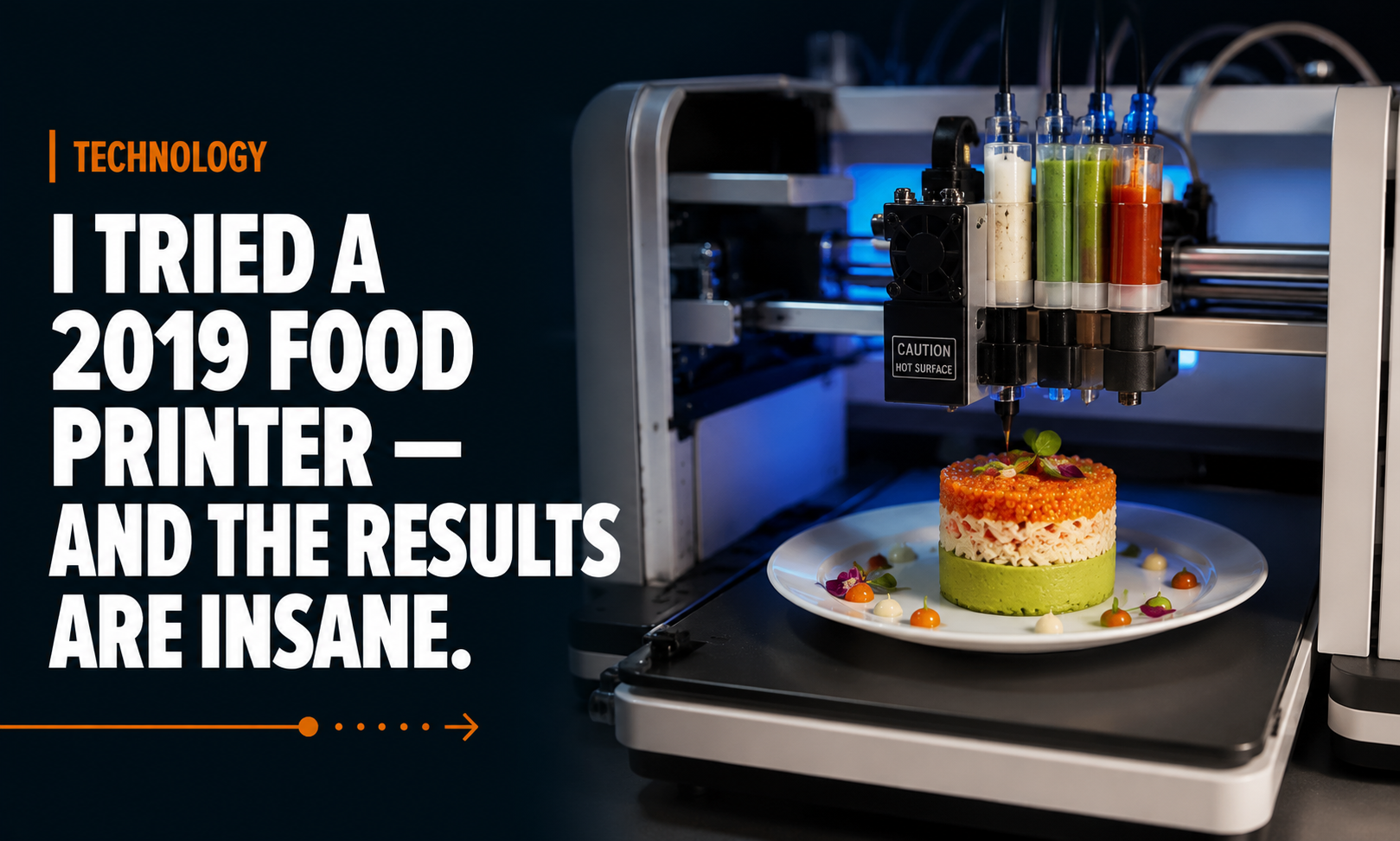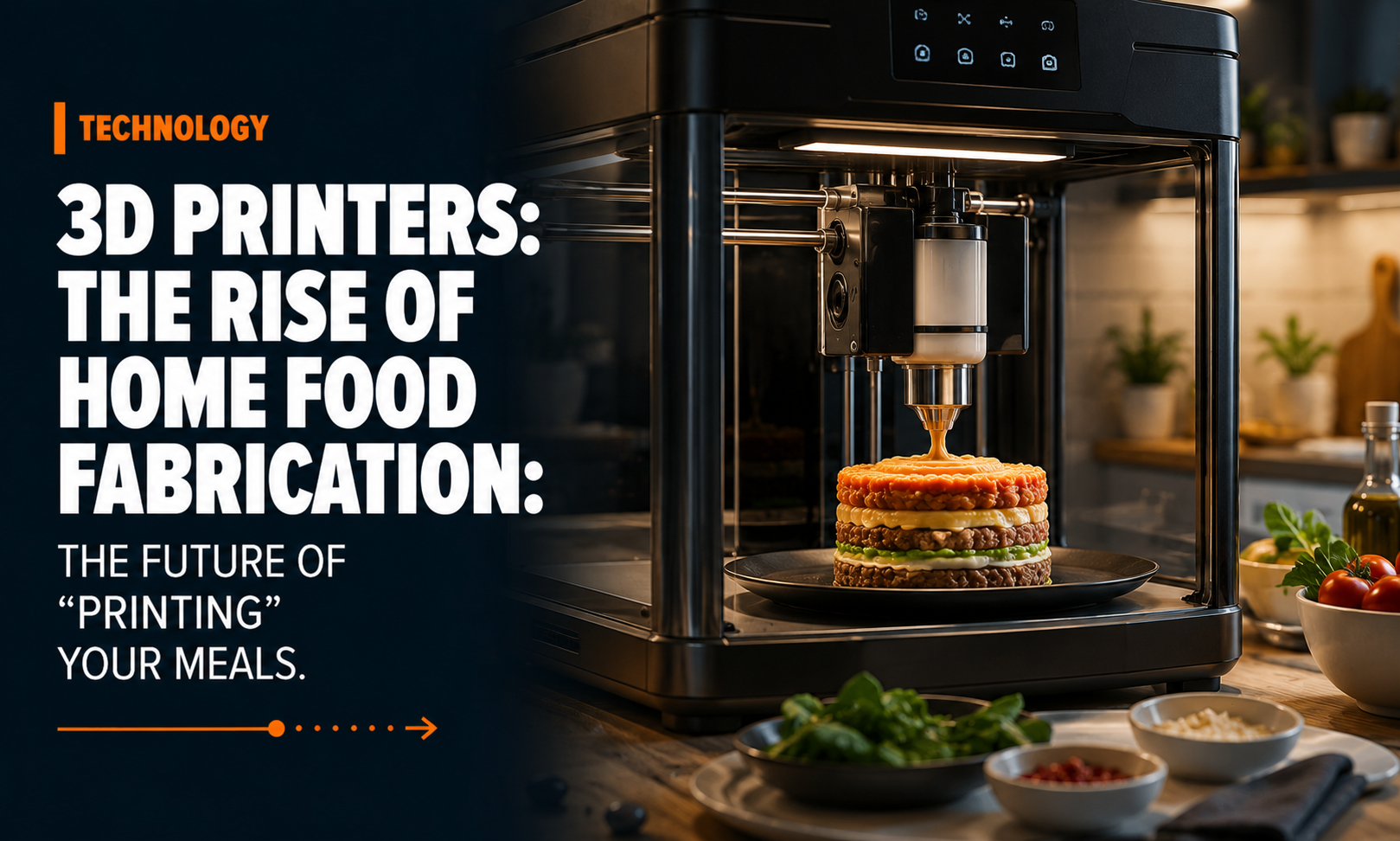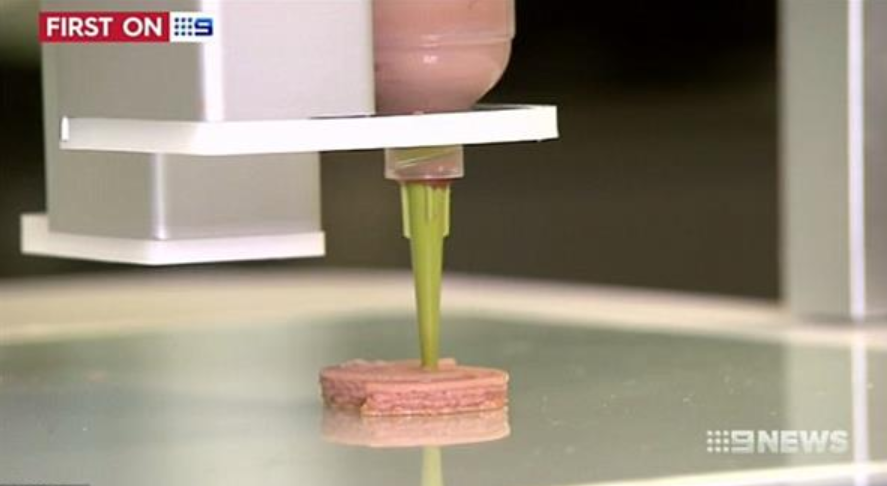

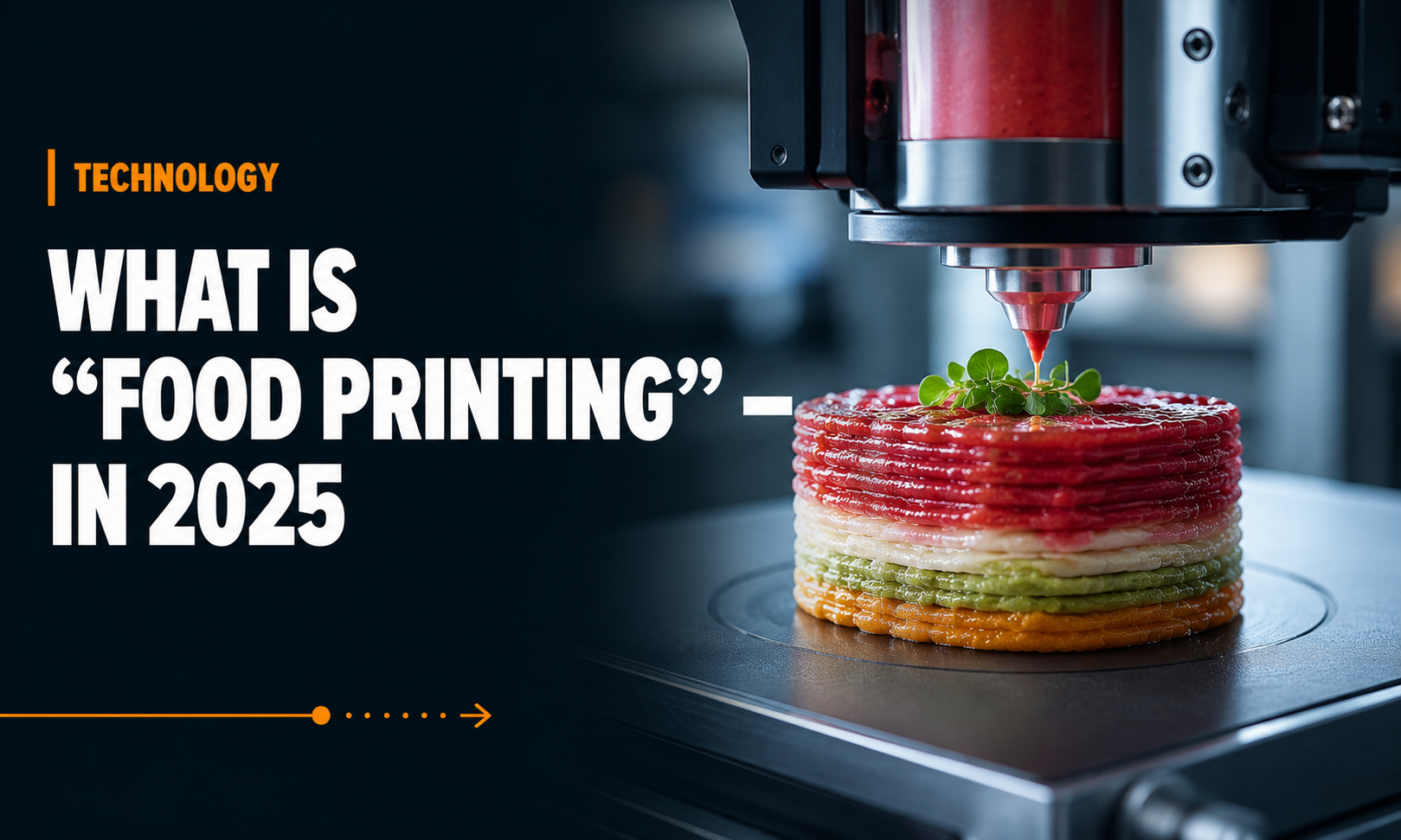
“Food printing” (often via 3D food printing / “3D-Lebensmitteldruck”) refers to using additive-manufacturing principles — similar to 3D printing — to produce edible items. Instead of plastic or metal, the “ink” can be dough, purée, chocolate, plant-protein paste, or mixtures of edible ingredients. https://en.wikipedia.org/wiki/3D_food_printing
Modern food printers build food layer by layer, directed by a digital design (CAD / software), which allows very precise control over shape, texture, internal structure — and even nutritional content. https://www.mdpi.com/2304-8158/14/12/2066
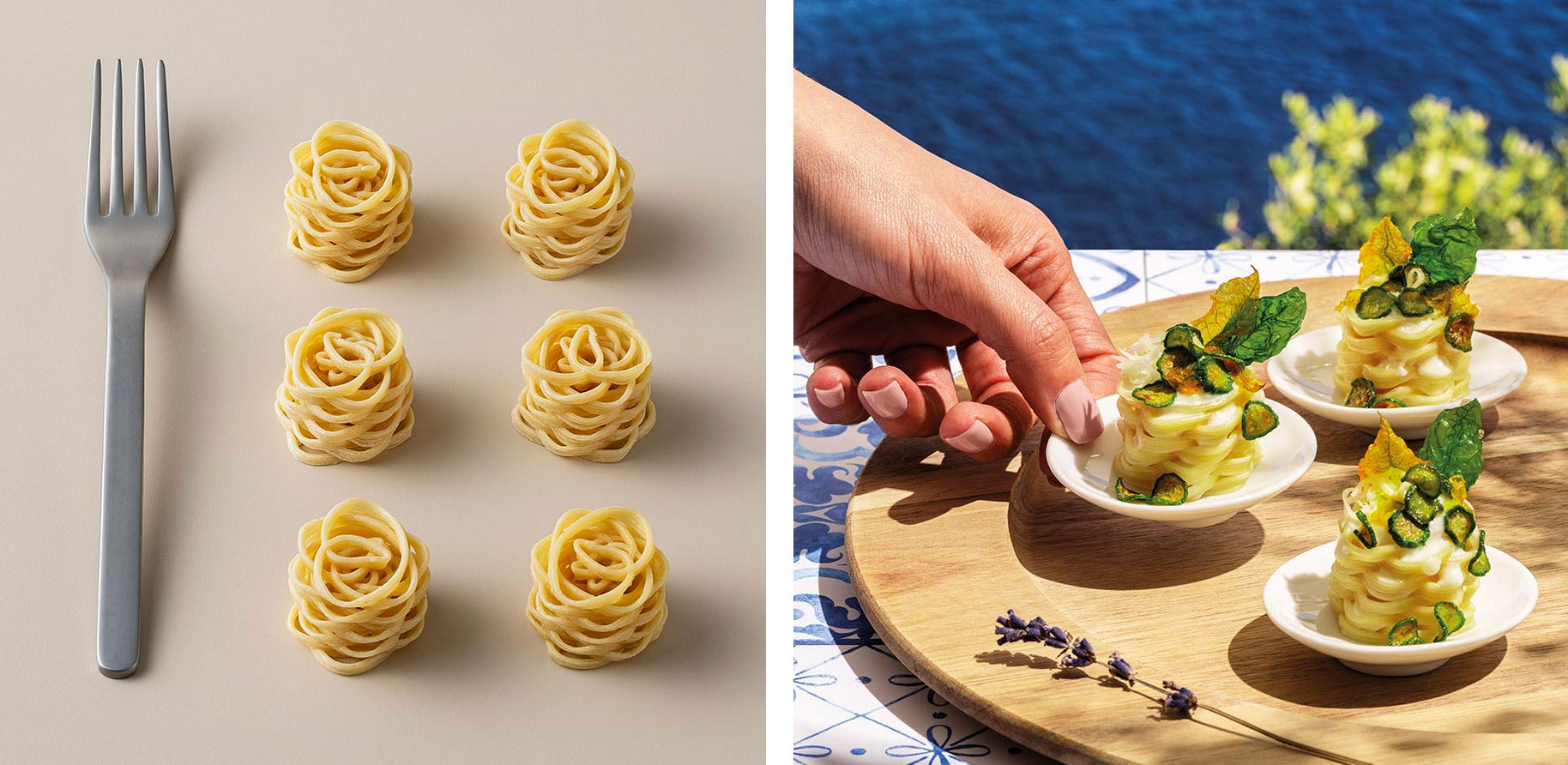
Thanks to recent innovations, 2025’s food-printing capabilities go far beyond novelty desserts or decorative elements — they now include:
- Plant-based meat and fish alternatives with meat-like texture and structure. https://www.tno.nl/en/newsroom/insights/2025/05/3d-food-printing-future-our-food
- Customisable nutrition profiles, e.g. meals tailored for children, elderly, or people with special dietary needs (allergy-friendly, texture-adjusted for swallowing difficulties, etc.). https://www.sciencedirect.com/science/article/abs/pii/S0963996925001280
- Complex geometries and textures for food (intricate designs, layered structures, controlled porosity) — something traditional cooking or molding could rarely achieve. https://www.mdpi.com/2304-8158/14/12/2066
In short: 3D food printing in 2025 isn’t just a futuristic gadget — it’s a growing segment of food science, gastronomy, and alternative-food development.
What’s Changed Since 2019
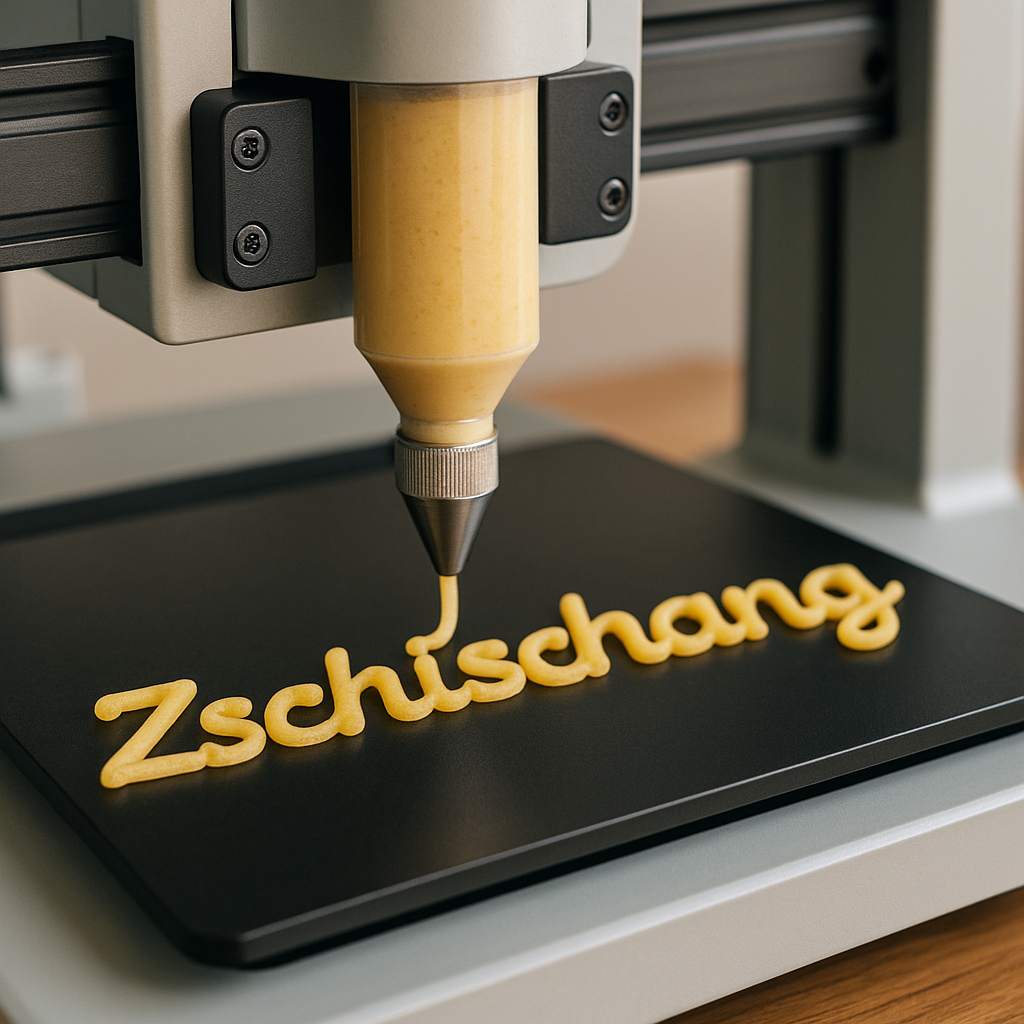
Looking back at 2019 and earlier, food printing was more of a curiosity or experimental kitchen-tech novelty — often used for chocolate decorations, simple pastry shapes, or concept-level dishes. https://de.wikipedia.org/wiki/3D-Lebensmitteldruck
From novelty to serious innovation
- Then (?2019): Mostly simple shapes (cake decorations, chocolate, basic dough). Limited to “fun” or niche uses; not many serious applications. https://de.wikipedia.org/wiki/3D-Lebensmitteldruck
- Now (2025): The technology matured significantly — able to print protein-rich meat/fish substitutes, meal components for special nutrition needs, and complex edible structures. https://www.tno.nl/en/newsroom/insights/2025/05/3d-food-printing-future-our-food
From individual fun to industrial & nutritional relevance
- 2019-era food printing was largely artisanal or home-printer-based, with limited practical impact. https://de.wikipedia.org/wiki/3D-Lebensmitteldruck
- In 2025, food printing is being adopted in food technology research, alternative-protein production, and personalised nutrition — seen as a way to address sustainability, waste reduction, dietary needs, and food variety. https://www.tno.nl/en/newsroom/insights/2025/05/3d-food-printing-future-our-food
From simple textures to engineered food experiences
- Early printed foods were often limited by ingredient type (mostly chocolate, doughs, purées). https://en.wikipedia.org/wiki/3D_food_printing
- Today’s “food inks” include plant proteins, composite gels, and novel blends — enabling textures and structures that mimic meat, or enable controlled porosity/texture (important for dietary needs or sensory design). https://www.mdpi.com/2304-8158/14/12/2066
Why 2025 Feels Like a Turning Point
- Sustainability & food security pressures: With growing population and environmental concerns, printing foods — especially from plant-based or upcycled ingredients — becomes more attractive. https://www.fortunebusinessinsights.com/de/industrie-berichte/markt-f-r-lebensmittel-3d-druck-101466
- Customization & dietary inclusivity: The ability to tailor nutrition (allergens, protein content, texture for swallowing) makes food printing attractive for many demographics: seniors, children, people with dietary restrictions. https://www.sciencedirect.com/science/article/abs/pii/S0963996925001280
- Gastronomic creativity & food design: Chefs and food designers now have tools to create shapes, layers, textures — giving food itself the role of visual art, beyond just taste. https://wasgermany.com/magazine/3d_printing
Also — research keeps pushing boundaries: as of 2025, scientists have demonstrated printing foods with bioactive ingredients, customizing not just how food looks or tastes, but also its nutritional and functional properties. https://www.frontiersin.org/journals/food-science-and-technology/articles/10.3389/frfst.2025.1607449/full
Challenges & What’s Still Being Solved
Even with big advances, 3D food printing still faces hurdles:
- Scalability & cost: Producing large quantities remains expensive; often more costly than conventional food processing. https://www.cbs.de/en/blog/3d-food-printing-the-future-of-synthetic-foods
- Food safety, regulation & consumer acceptance: New food-ink materials and printing processes require rigorous testing. Not all regulations worldwide yet fully cover printed food. https://www.cbs.de/en/blog/3d-food-printing-the-future-of-synthetic-foods
- Taste & texture challenges: While visuals and structure can be engineered, matching taste, mouthfeel and “real food” experience — especially for meat or fish analogues — remains difficult. https://www.cbs.de/en/blog/3d-food-printing-the-future-of-synthetic-foods
Thus, while food printing is promising, it’s not yet replacing traditional farming or cooking — at least not at scale.
What’s Next — What to Watch in the Coming Years
- Wider adoption in food industry & retail: As printing becomes cheaper and regulation advances, expect more printed products — perhaps in supermarkets, special-diet segments, or ready-to-eat lines.
- Advanced “food-ink” materials: More plant-based proteins, sustainable sources (algae, upcycled waste), or even lab-grown ingredients — enabling sustainable food systems.
- Personalized nutrition & functional foods: Printed meals tailored to individual nutritional needs, age groups, or health conditions.
- Creative gastronomy & design-centric dining: Restaurants and chefs using printing to bring innovative textures, shapes, and dining experiences (art-on-a-plate, edible architecture).
- Regulatory & safety developments: As printed foods become more common, expect tighter standards, labeling requirements, and quality regulation.
In Summary
Food printing in 2025 is no longer a sci-fi curiosity — it’s a growing field at the crossroads of technology, nutrition, sustainability, and culinary art. From simple printed desserts back in 2010s and early 2020s, it has evolved into a tool capable of crafting plant-based meats, personalized nutrition solutions, and artful gastronomic creations.
Still, it’s not yet mainstream. Challenges remain: cost, scaling, regulation, taste. But the direction is clear: food printing could become a meaningful part of how we produce, design, and enjoy food — especially as we rethink sustainability, dietary diversity, and food culture for the future.
If you like, I can also show you examples of 3D-printed dishes from 2025 — including photos and links to research or restaurants.