
Back in 2019, food printing technology was still in its early, experimental chapter — but it was already capturing imaginations around the world. What once sounded like science fiction had started to take shape on kitchen counters and in innovation labs, where engineers and chefs worked side by side to explore what “printed food” could become.
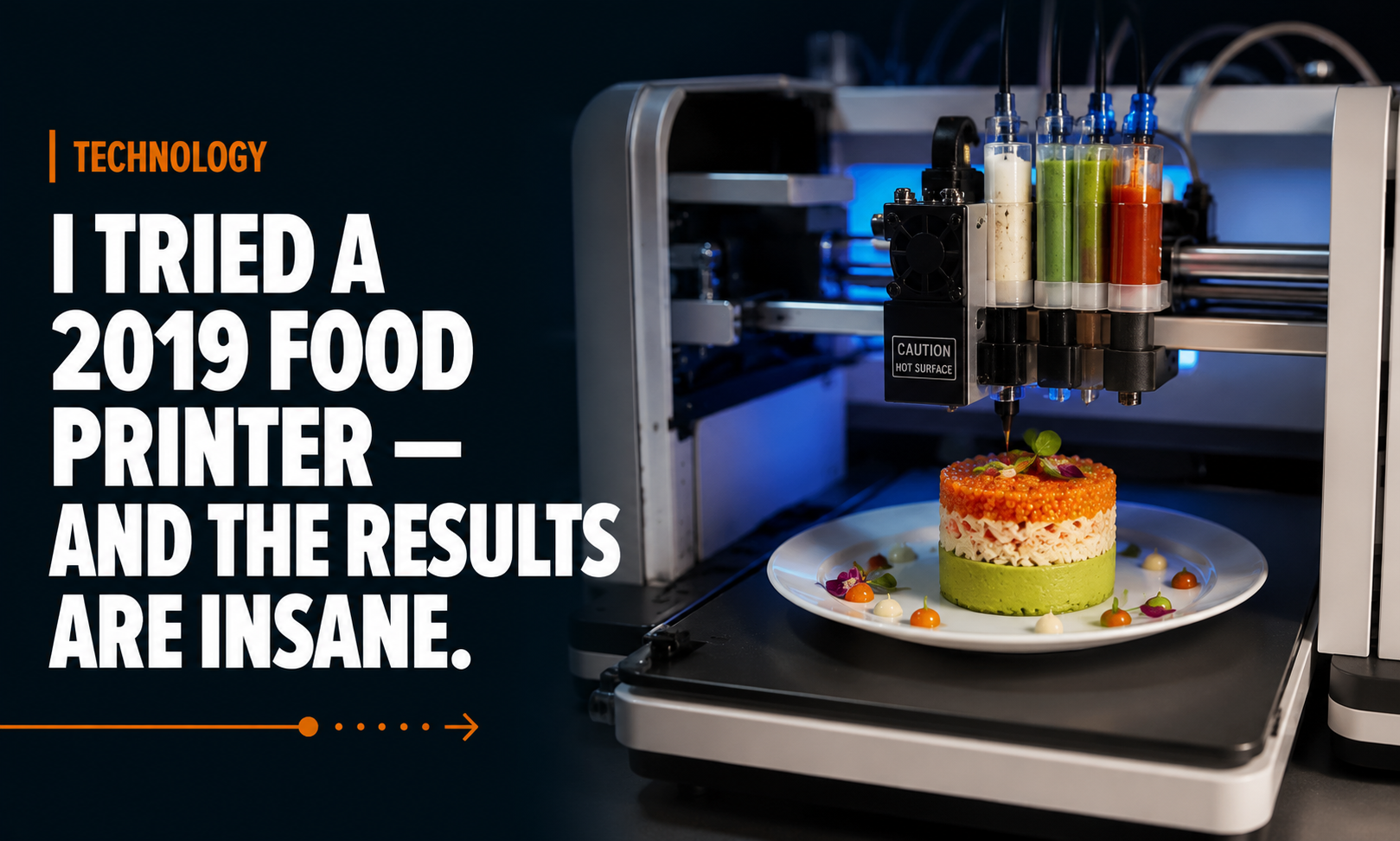
Food printers in 2019 were essentially 3D printers for edible materials, using cartridges filled with chocolate, doughs, purees, cheeses, and other soft ingredients. While they couldn’t yet produce full meals, they excelled at precision, customization, and creativity. Intricate shapes, personalized decorations, geometric chocolates, and elaborate food sculptures became possible at the press of a button — tasks that would normally take a professional chef hours to complete.
The technology was driven by syringe-style extrusion systems, layering ingredients one delicate trace at a time. Early adopters included pastry chefs, confectioners, designers, and tech enthusiasts eager to experiment with the boundaries between food and art.
In 2019, food printers were also a preview of a future where nutrition, sustainability, and technology merge. Researchers were exploring how printers might someday help reduce food waste through exact portioning, or make specialized diets easier to manage by printing meals with controlled nutrients. In aerospace labs, scientists were testing how food printing might support long-duration space missions — offering astronauts more variety and personalization.
While the 2019 machines were limited in speed, ingredient variety, and texture complexity, they represented a bold first step toward a world where food could be shaped digitally. They showed us what was possible when technology entered the kitchen — and set the stage for the rapid advancements still to come.