When AI Does the Shopping, Which Brands Make the Shortlist?

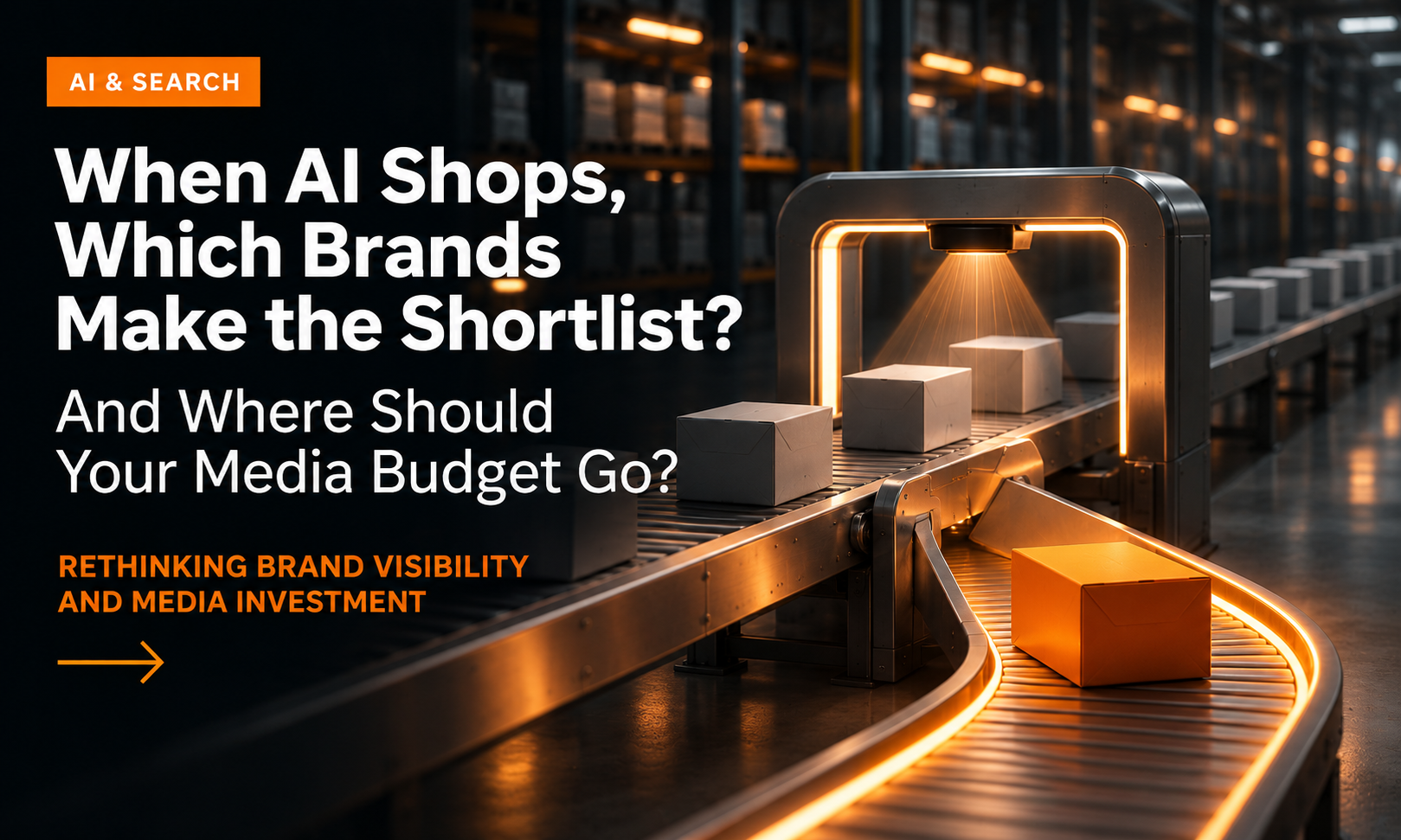
Conceptual illustration of AI shopping agents selecting products, with one orange package diverted from grey alternatives on a conveyor belt.

AI shopping agents are changing how people discover, compare and choose products. For marketers, this raises a bigger question: how do brands make the shortlist, and where should the next media euro go?

Imagine planning a weekend away with your family.

You tell your AI assistant what matters: somewhere quiet, good food, activities for the children and a realistic total price. It returns three hotels, explains the differences and helps you choose.

Convenient? Absolutely.

But what happened to all the hotels you never saw? The carefully designed websites, the paid search campaigns, the inspirational videos?

Somewhere between your request and the recommendation, a shortlist formed.

For brands, understanding that moment could become one of marketing’s most important challenges.

How AI shopping agents change product discovery

On 11 November, Zalando described how its Assistant now supports product comparisons, size recommendations, basket preparation and order tracking. According to the company, customer queries in the Assistant are three times longer than traditional search queries. People can explain their situation rather than squeeze it into a few keywords.

That distinction matters.

“Waterproof jacket” describes a product category.

“I need a jacket for a wet November weekend outdoors, but I don’t want to look as though I’m climbing Everest” describes a person, a situation and a compromise.

My view is that this creates a new competitive challenge: brands need to communicate clearly enough to be considered in that context, while remaining distinctive enough for people to want them.

Who actually controls the recommendation?

We should be careful about treating AI as a neutral personal shopper.

A retailer’s assistant operates within a commercial environment. An independent assistant may draw on different sources, partnerships and technical access. A sponsored placement and an organic recommendation are different things.

The questions become: which products can the assistant access, what evidence does it use, and how clearly does it distinguish advertising from advice?

For marketers, “being visible in AI” is therefore too vague to be a strategy. Visibility needs a context: which assistant, which market, which customer need and which stage of the decision?

What this means for media spending

As AI shopping agents influence more purchase decisions, marketers need to examine which placements still reach customers and generate additional demand.

The immediate response should be to examine how media contributes to decisions.

Reuters recently reported that AI shopping agents could reduce exposure to retailer websites and advertising placements. It also reported that Amazon had seen no meaningful impact on its advertising from third-party agents so far. The direction of change deserves attention; the timing and scale remain uncertain.

That argues for disciplined experimentation.

I would put three kinds of spending under closer scrutiny:

  • Repeated exposure with little evidence of additional demand. High impression counts can conceal weak commercial impact.
  • Search activity that mainly captures customers already looking for the brand. Reported conversions deserve a closer look at what would have happened without the ad.
  • Traffic acquisition that leads to incomplete information or disappointing experiences. More visitors will rarely solve an unclear offer.

These are useful questions today. AI makes them more urgent.

Where I would invest

Marketer reviewing hotel recommendations from AI shopping agents alongside campaign photos of advertising, events and customer service.
Investing in visibility means connecting AI discovery with memorable human experiences.

Preparing for AI shopping agents means coordinating paid media with accurate product information, credible evidence and a dependable customer experience.

I would organise investment around five priorities, with paid media working alongside product, content and customer experience.

Investment priorityWhat I would fundWhat I would assess
Brand demandDistinctive creative, relevant video, social, OOH and partnershipsWhether more people remember, seek out and consider the brand
Useful product informationAccurate feeds, clear specifications, availability, pricing and practical FAQsInformation quality, discovery and conversion
Independent evidenceCredible reviews, expert coverage, customer cases and relevant PRQuality of coverage, consideration and referral activity
Customer experienceBetter advice, booking, delivery, service and recoveryRepeat purchase, complaints, returns and recommendations
Controlled experimentsRelevant AI discovery and advertising testsAdditional sales, acquisition cost and customer quality

The balance will vary. A hotel, a software provider and a consumer electronics brand should arrive at different allocations.

1. Give people a reason to ask for you

There is a meaningful difference between asking an assistant for “a good hotel” and asking it to check availability at a particular hotel.

Brand building can influence the starting point of the conversation.

I would continue investing in creative work that builds recognition and preference. The channel should follow the audience and the task. A memorable physical experience, a strong video or a relevant partnership can all contribute.

2. Make the offer easy to understand

Google has introduced additional Merchant Center attributes intended to support conversational discovery, including answers to product questions and information about compatible accessories or substitutes. That is a practical signal that the quality of product information deserves investment.

For a hotel, “family friendly” is a claim. Connecting rooms, children’s meal times, pool restrictions and transparent additional charges help someone make a decision.

Clear information helps customers and gives discovery systems more useful material to work with. It cannot guarantee a recommendation.

3. Build evidence beyond your own advertising

Independent reviews, relevant editorial coverage and specific customer stories give prospective buyers ways to check a promise.

I would fund those activities for their credibility and usefulness. Their influence on AI recommendations should be tested rather than assumed.

4. Invest in the experience people remember

My background in hospitality taught me how quickly a polished promise meets reality.

The welcome. The room. The meal. The response when something goes wrong.

Marketing can create an expectation. Operations determine whether that expectation was justified.

That is why part of the growth conversation belongs with service and product teams. A recurring complaint may point to a better investment than another acquisition campaign.

How much should move?

There is no defensible universal percentage.

For an established advertiser, I would start with a bounded 90-day test funded from activity with the weakest evidence of incremental return. Protect effective campaigns, define the hypothesis and agree on the success criteria before spending.

Keep the accounting clear, too: product data, service improvements and paid media are different budget categories. They need coordination and appropriate measures.

Alongside sales and acquisition cost, I would track AI recommendations across a consistent set of relevant customer questions. That is a diagnostic measure. Inclusion in an answer is useful only if it eventually contributes to a worthwhile business outcome.

The shortlist is only the beginning

My working thesis is that brands will need to earn consideration in more places, often before a customer reaches their website.

That makes distinctive communication, dependable information and a credible customer experience valuable investments.

Getting recommended creates an opportunity. Delivering on the recommendation creates the relationship.

AI shopping agents may help shape the shortlist, but the experience after purchase determines whether customers return.

If an assistant compared your brand tomorrow, what evidence would give it a good reason to put you on the shortlist?
The Ultimate Invisible Brand Experience

AI Customer Journey: The Invisible Brand Experience

Why AI is changing where customers discover brands and why more content is no longer the answer

For years, digital marketing and the customer journey followed a relatively simple logic. Today, the emerging AI customer journey is beginning to challenge that logic.

Create content. Make it discoverable. Bring people to your website. Guide them through the funnel. Convert them.

We optimized search rankings, landing pages, click-through rates and conversion journeys. And while the customer journey was never truly linear, there was one comforting assumption behind much of our work:

At some point, the customer would come to us.

That assumption is beginning to break.

AI-powered search, answer engines, and assistants are reshaping the AI customer journey.

They also alter where discovery, consideration, and even decision-making happen.

And this is no longer a niche behavior.

Adobe’s 2026 Digital Trends research found that 25% of consumers globally already use AI-powered platforms as their primary research tool, ahead of brand websites and reviews. In Germany, the figure is 23%, while 39% of German consumers use AI assistants at least occasionally as their primary source of information.

A customer can learn about your category, compare solutions, understand your reputation and form an opinion about your brand without ever visiting your website.

At the same time, brands have never been able to create as much content as they can today.

And therein lies the paradox.

Our brands are producing more content, while customers may experience less of the brand itself.

Welcome to the invisible brand experience.

The AI customer journey hasn’t disappeared. Parts of it have moved somewhere else.

Consider how the AI customer journey is changing.

Instead of entering a few keywords, opening several results and visiting multiple websites, people can increasingly ask a question and receive a synthesized answer.

The interface becomes the destination. This is one of the defining characteristics of the AI customer journey: discovery can happen without a click.

That might be Google, ChatGPT, an AI assistant embedded in another platform or, increasingly, an agent acting on someone’s behalf.

The implications go much further than SEO.

For marketers, website traffic has traditionally been both an objective and a proxy for interest. We could observe visits, clicks, dwell time, downloads and conversions.

But what happens when a potential customer discovers your brand, evaluates it and perhaps even adds it to a shortlist somewhere else?

The journey still exists.

We just don’t necessarily see it anymore. As the AI customer journey develops, more of these interactions may happen beyond the environments brands can directly measure.

Gartner describes exactly this emerging problem. As answer engines absorb more of the discovery process, traditional click-based measurement captures a smaller share of how demand is actually formed. Gartner argues that declining organic traffic may therefore sometimes indicate a measurement gap rather than a decline in marketing performance.

This is an important distinction.

Traffic and influence are beginning to separate.

A brand can potentially become more visible within AI-generated answers while receiving fewer visits to its own digital properties.

This means marketers will need to complement familiar metrics such as traffic, conversions and acquisition costs with new indicators of influence. Gartner points to metrics such as Share of Answer, Citation Presence, Brand Mention Frequency and AEO-influenced conversions as potential additions to the measurement toolbox.

Not replacements.

Additions.

Because if part of the customer journey becomes invisible to our existing analytics, we need new ways to see it.

And then we decided to produce even more content

The marketing industry’s instinctive response to every new channel has traditionally been remarkably consistent:

Create more.

More formats.
More posts.
More videos.
More landing pages.
More keywords.
More personalization.

Generative AI has removed one of the biggest constraints on this model: production capacity.

A company that previously produced ten pieces of content can theoretically produce one hundred. Or one thousand.

But so can everyone else.

That changes the economics of content.

When production becomes abundant, production itself stops being a competitive advantage.

The scarce resource is no longer content.

It is relevance.

And increasingly, trust.

A Gartner survey published in September 2026 makes this tension particularly visible. Among 1,006 U.S. consumers surveyed, 65% said brands are producing too much AI-generated marketing content.

Even more concerning for marketers, 57% said AI-generated content had made them less trusting of brand messaging overall.

And there is another interesting signal.

43% said they now rely more on real people for shopping information and recommendations because of the prevalence of AI-generated content.

That should make us think.

Consumers are not necessarily rejecting AI.

They are becoming more selective about what deserves their attention and trust.

The problem isn’t AI.

The problem is irrelevance at scale.

The danger: optimizing for algorithms and disappearing for humans

This is where the two developments collide.

Brands understandably want their information to be discoverable by AI systems. We are already talking about AEO, GEO, structured content, machine-readable information and optimizing for large language models.

And this is becoming a legitimate marketing discipline. Gartner now explicitly recommends that organizations integrate traditional SEO with Answer Engine Optimization and Generative Engine Optimization as AI-powered discovery grows.

All of that matters.

But there is a strategic risk.

In trying to become increasingly understandable to machines, brands could become increasingly interchangeable to people.

Imagine thousands of companies using similar models to generate similar articles based on similar keywords, search data and prompts.

The grammar will be correct.

The structure will be optimized.

The information will probably be useful.

And much of it will feel exactly the same.

This creates what I believe will become one of marketing’s defining tensions:

Brands need to become more legible to machines without becoming less distinctive to humans.

That is not primarily a content problem.

It is a brand experience problem.

AI can scale communication. It cannot manufacture meaning.

This is why I don’t believe the answer is to use less AI.

Quite the opposite.

AI can make marketing dramatically better.

It can analyze customer signals, identify patterns, accelerate research, adapt experiences, automate repetitive production and help organizations respond faster.

Used well, it creates more space for human judgment.

The mistake is using AI primarily to multiply output.

If every efficiency gain simply produces another 20 pieces of content, we haven’t transformed marketing.

We have accelerated the old model.

The more interesting question is:

What should we do with the capacity AI gives us?

My answer would be to reinvest it in experience.

Spend more time understanding the customer.

Talk to sales and service teams.

Observe where journeys break.

Test propositions.

Improve products and services.

Create useful tools.

Develop original points of view.

Build communities.

Design moments people actually remember.

And then use AI to help those experiences travel further.

That is a fundamentally different relationship between technology and marketing.

From content-led growth to experience-led growth

For a long time, digital growth could be driven heavily by acquisition.

More reach created more traffic. More traffic created more leads. Optimization improved conversion.

That logic isn’t disappearing.

But I believe another layer is becoming increasingly important:

Experience becomes the source. Content becomes the evidence. Technology becomes the amplifier.

That reverses the usual sequence.

Instead of asking:

What content should we create this week?

Start with:

What experience, expertise or value do we have that is worth talking about?

Instead of:

How can we generate more traffic?

Ask:

Where are customers actually making decisions and what signals influence those decisions?

Instead of:

How can we use AI to create more?

Ask:

Where can AI remove friction so that people can create something better?

That is what I mean by experience-led growth.

Not CX as another department.

Not a new funnel.

And certainly not a rejection of performance marketing.

It is the recognition that brand, customer experience, technology and growth increasingly operate as one connected system.

Five questions I think brands should be asking now

If parts of the customer journey are becoming invisible, traditional dashboards alone will not tell us whether the brand is healthy.

So perhaps the questions need to change.

1. Would an AI understand what makes our brand different?

Not just what we sell, but why someone should choose us.

2. Would a human?

The second question may actually be harder.

3. Are we creating original value or simply producing more content about existing information?

Original research, expertise, customer experiences and strong perspectives become increasingly valuable when generic information becomes abundant.

4. Are we measuring traffic or influence?

Website visits remain important, but mentions, recommendations, reviews, citations, community conversations and other signals may increasingly shape decisions outside owned channels.

5. Where does human experience create an advantage that automation cannot easily copy?

That could be service. Expertise. Design. Community. Hospitality. Creativity. Trust. Or simply making something complicated feel remarkably easy.

Those are difficult things to automate.

They are also difficult for competitors to replicate.

Maybe the website was never the destination

There is a temptation to see declining clicks or AI-generated answers primarily as a threat to websites.

I think that perspective is too narrow.

A website is a touchpoint.

So is a store, a salesperson, an app, a product, a review, a social post, a customer service conversation and now an AI-generated answer.

The strategic task has always been bigger:

Create a coherent experience across the places where customers encounter the brand.

What is changing is that we may control fewer of those places directly.

That makes consistency, distinctiveness and trust more important, not less.

Because in an AI-mediated world, customers may encounter the representation of your brand before they encounter the brand itself.

And that representation will be built from the signals you put into the world.

The opportunity hidden inside the disruption

I don’t think the future belongs to brands that produce the most content.

Nor necessarily to those deploying the most AI.

The advantage will belong to organizations that connect technology with something harder to replicate:

real expertise, distinctive ideas and experiences worth remembering.

AI can help those experiences become easier to discover.

It can help personalize them.

It can help scale them.

It may increasingly help customers navigate towards them.

But first, there needs to be something worth finding.

Perhaps that is the real shift ahead.

For years, marketers tried to bring customers to the brand.

Now we need to make sure the brand can travel to the customer without losing what makes it human along the way.

Sources and further reading

Gartner, AEO Is Creating New Blind Spots in Customer Demand, September 2026.

Gartner, Marketing Survey Finds 35% of Consumers Rely on Influencers Less Due to AI, September 2026. Survey of 1,006 U.S. consumers conducted May to June 2026.

Gartner, Unified Search: Integrating SEO, AEO and GEO to Improve Visibility, July 2026.

Adobe, AI and Digital Trends 2026. Research conducted with Oxford Economics among 3,000 executives and practitioners and 4,000 consumers globally.

Your Next Customer Might Not Be Human. But Your Brand Still Needs to Matter.

Your next customer might not be human.

10 insights marketing leaders should prepare for in the age of agentic commerce

By Andreas Zschischang | September 9, 2026

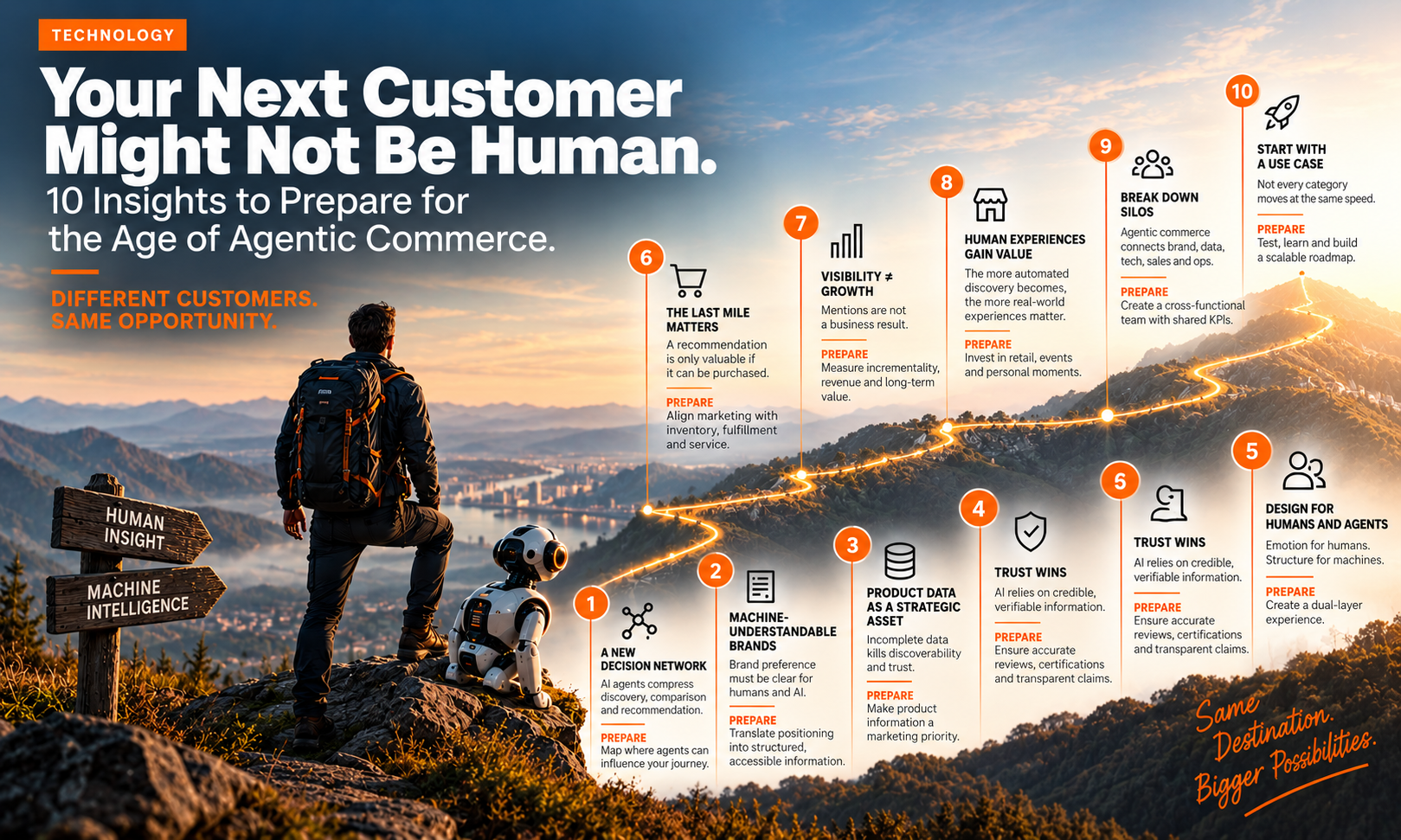
The next major shift in marketing may not be another channel, platform or content format. It may be a new participant in the customer journey: the AI agent.

10 insights to prepare the age of agentic commerce
10 insights to prepare the age of agentic commerce.

The latest Future Marketing Index, published on September 8, 2026, places Agentic AI directly at number two among current marketing trends. Half of respondents consider it relevant today, rising to 61% when looking ahead. With DMEXCO 2026 approaching under the theme “Scaling Intelligence”, the conversation is moving from experimentation toward measurable business value.

But what happens to brand preference when an AI assistant researches, compares and potentially purchases on behalf of a customer?

My view: the future is not Brand vs. AI. It is Brand + AI. Marketing must prepare for a world in which human emotion and machine-readable relevance work together.

1. The customer journey is becoming a decision network

The traditional funnel assumes that people move through a sequence of touchpoints. AI agents can compress discovery, comparison and recommendation into a single interaction.

Prepare: Map where an agent could influence your existing journey, from initial research to post-purchase support.

2. Brand preference must become machine-understandable

A strong brand creates associations in the human mind. An AI agent also needs accessible, reliable information to understand why a product is relevant.

Prepare: Translate your positioning into clear product attributes, use cases, differentiators and trustworthy content without losing the emotional brand story.

3. Product data is becoming a marketing asset

Incomplete specifications, inconsistent descriptions and outdated availability can undermine discoverability and recommendation quality.

Prepare: Treat product information management as a strategic capability shared by marketing, commerce and IT, not merely an operational database.

4. Trust will become a competitive signal

AI-assisted recommendations depend on information that can be assessed. Reviews, transparent policies, credible claims and consistent brand information may influence how products are evaluated.

Prepare: Audit the evidence behind your claims and ensure that reviews, certifications, service policies and product details are accurate and accessible.

5. The experience must work for humans and agents

Humans value inspiration, reassurance and memorable experiences. Agents require structured information, clear options and reliable processes. These needs are different, but complementary.

Prepare: Design a dual-layer experience: emotionally compelling for people and functionally understandable for machines.

6. The last mile matters more than ever

A recommendation is only valuable if the product can actually be purchased. Poor availability, unclear delivery information or a complicated checkout can break the journey.

Prepare: Connect marketing promises with inventory, pricing, fulfillment and customer service. The entire commercial experience becomes part of the brand.

7. AI visibility is not the same as business growth

Being mentioned by an AI system is not automatically a commercial success. The important question is whether AI-assisted discovery generates qualified demand, profitable sales and long-term customers.

Prepare: Develop measurement beyond rankings and mentions, including qualified traffic, conversion, incremental revenue, margin and customer lifetime value.

8. Human experiences may become more valuable

As digital discovery becomes increasingly automated, physical and personal experiences can provide differentiation that is difficult to reduce to a product comparison.

Prepare: Invest selectively in retail, events, demonstrations, expert advice and other moments where customers can experience the brand rather than simply evaluate its attributes.

9. Marketing can no longer prepare in silos

Agentic commerce connects brand strategy, content, data, technology, legal, sales and operations. A campaign team alone cannot solve the underlying readiness challenge.

Prepare: Establish a cross-functional working group with clear ownership, practical use cases and shared commercial KPIs.

10. Start with a use case, not an AI transformation slogan

The market is still evolving. Not every category will adopt autonomous purchasing at the same speed, and customers will retain different levels of control depending on the purchase.

Prepare: Select one product category or customer journey, test AI-assisted discovery and comparison, identify the gaps and build a measurable roadmap before scaling.

The strategic question

The brands that succeed will not necessarily be those producing the most AI-generated content or deploying the largest number of agents. They will be those that combine a distinctive brand with reliable data, connected commerce and a customer experience that delivers on its promise.

DMEXCO’s “Scaling Intelligence” is therefore a useful challenge for marketing leaders: move beyond the technology itself and ask where intelligence creates real customer and business value.

The next customer journey may not be entirely human. The responsibility to create a meaningful brand experience still is.

Further reading and event references

  • BVDW, Marketing-Trends 2026: Agentische KI steigt in Top 3 ein, September 8, 2026.
  • DMEXCO 2026, Scaling Intelligence, September 23–24, Cologne.
  • DMEXCO session, Agentic Commerce: Wenn KI einkauft, September 23, 2026.
  • DMEXCO keynote, The Hidden Intelligence Behind AI Assisted Commerce, September 23, 2026.

#AgenticAI #AgenticCommerce #BrandStrategy #CustomerExperience #MarketingLeadership #DMEXCO2026

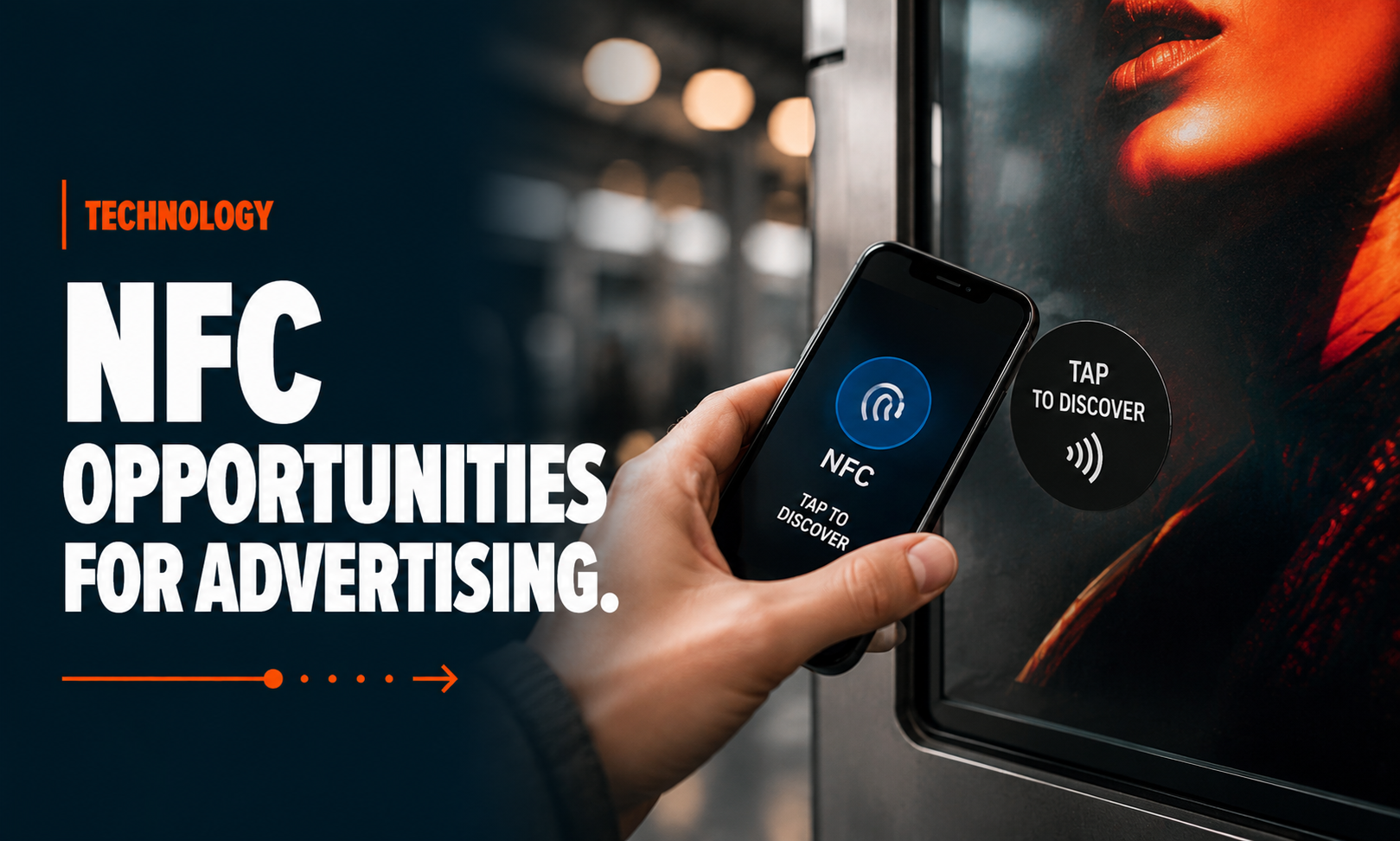
NFC Opportunities for Advertising

NFC Opportunities for Advertising

NFC in 2026: The Invisible Bridge Between Physical and Digital Advertising

First things first:
Do you really know what NFC is — and more importantly, why it matters even more in 2026?

What is NFC?

NFC (Near Field Communication) is a short-range wireless technology that allows two devices to exchange data when placed very close together (usually within 4 cm).

Unlike Bluetooth, NFC isn’t built for long sessions. It’s built for:

  • instant interaction
  • zero-friction activation
  • contextual engagement
  • micro-transactions

That’s what makes it so powerful.


NFC vs Bluetooth — The Real Difference

NFCBluetooth
Tap-basedDistance-based
~4 cm range5–100 meters
Instant pairingRequires discovery/pairing
Ultra low powerHigher energy usage
Ideal for trigger actionsIdeal for continuous data transfer
Often passiveAlways active

Simple:

Bluetooth = conversation
NFC = trigger

That distinction is huge.


Why NFC matters more in 2026

Consumer behavior changed.

People now expect:

  • one tap access
  • no QR camera opening
  • no app download
  • no URL typing
  • instant personalized content

NFC removes friction better than QR in many environments.

The hidden advantage:

intent quality

A tap is deliberate.

This makes NFC interactions often more valuable than passive impressions.


The big shift: NFC + AI + Personalization

This is where 2026 gets interesting.

NFC tags are no longer static.

With AI backends, a single tag can now trigger:

  • dynamic content
  • personalized offers
  • localized campaigns
  • weather-based creatives
  • CRM-triggered journeys
  • language-specific experiences

Same physical tag. Infinite digital outcomes.

That changes everything.


Advertising opportunities in 2026

1. Smart OOH (the obvious evolution)

Billboards become interactive media layers.

Tap to:

  • save an offer
  • join a waitlist
  • unlock exclusive content
  • book instantly
  • connect to AR

Especially strong for:

luxury, travel, automotive, events.


2. Retail windows after closing hours

Dead storefronts become conversion channels.

Tap the window:

  • browse products
  • reserve items
  • check inventory
  • chat with AI sales assistant

24/7 commerce.


3. Hospitality (huge potential)

Your hotel elevator example is perfect.

Expand it:

Hotel room

Tap bedside NFC:

  • room service
  • spa booking
  • late checkout
  • pillow menu
  • smart concierge

Restaurant table

Tap menu stand:

  • chef stories
  • allergen info
  • wine pairing
  • instant payment

Lobby art

Tap artwork:

  • artist background
  • NFT drops
  • event invitations

Hospitality loves frictionless moments.


4. Product packaging

This is exploding.

Imagine:

wine bottle ? tap ? vineyard story
perfume box ? tap ? brand film
food product ? tap ? recipe
luxury watch ? tap ? authenticity certificate

Packaging becomes media.


5. Events & trade fairs

Massive.

Badges already use NFC — but marketing underuses it.

Ideas:

  • tap booths for instant lead capture
  • personalized decks
  • live agenda updates
  • gamification
  • AI networking recommendations

ITB, IAA, CES, DMEXCO = perfect.


6. Print is alive again

Magazines.

Business cards.

Brochures.

Direct mail.

One tap turns dead print into measurable digital interaction.

That’s huge for attribution.


7. Automotive

Think beyond the car.

NFC in dealership posters:

Tap to:

  • configure vehicle
  • book test drive
  • compare financing
  • unlock immersive AR model

High intent. Low friction.

Perfect.


8. Tourism & destination marketing

Brilliant for your content universe.

At destinations:

Tap:

  • historical stories
  • local recommendations
  • hidden spots
  • gastronomy guides
  • live weather
  • emergency info

Physical exploration meets digital depth.


The underrated power: analytics

NFC creates physical-to-digital attribution:

You can measure:

  • where
  • when
  • how often
  • conversion rate
  • dwell-to-tap ratio

That’s gold for marketers.


Security in 2026

Still relevant.

But major improvements:

  • tokenization
  • rolling encryption
  • secure elements
  • dynamic URLs
  • zero-trust authentication

The old “easy to sniff” problem still exists — but mainly in poorly configured environments.

For marketing use cases:
risk is relatively low.

Payments are far more secure now.

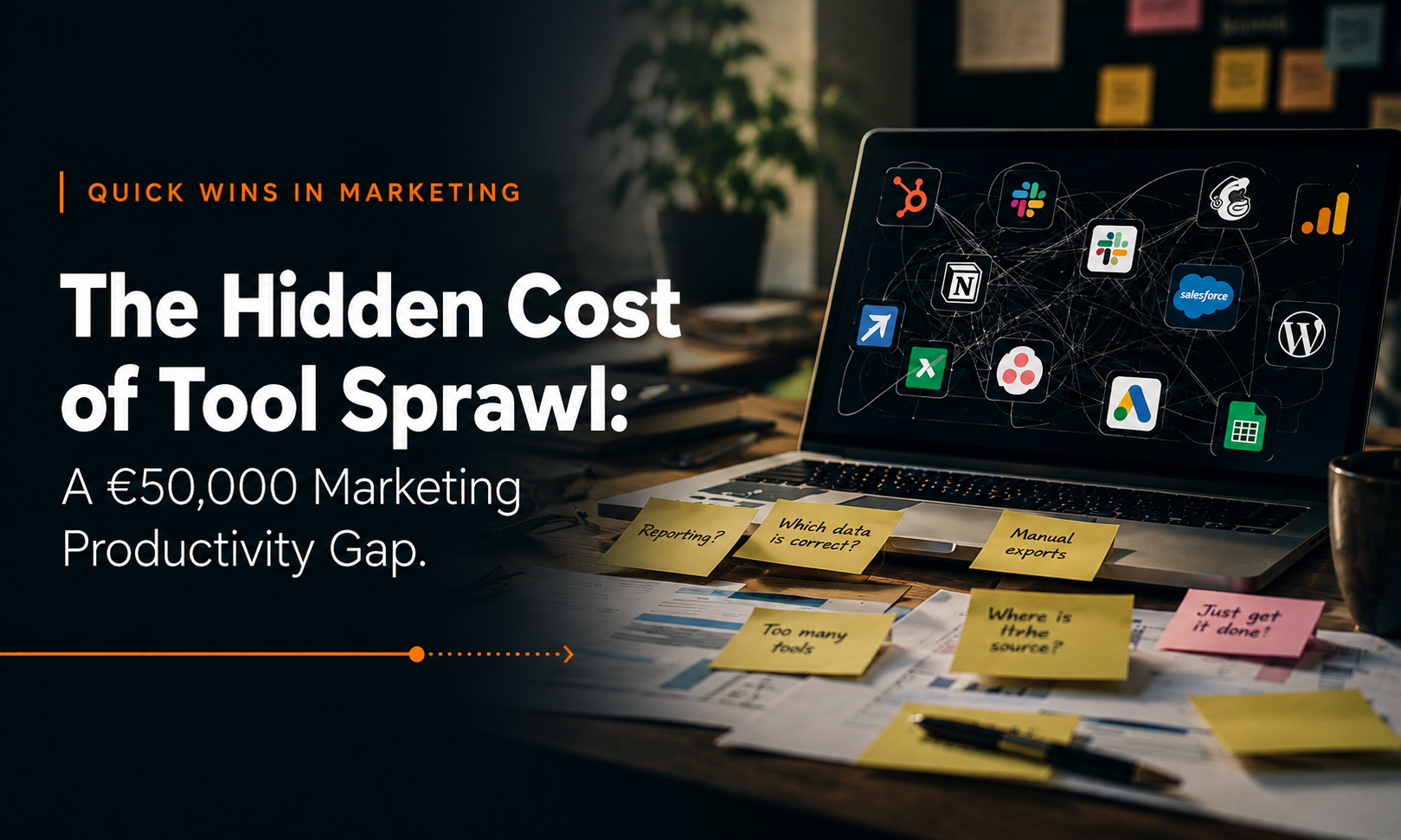
The Hidden Cost of Tool Sprawl: A €50,000 Marketing Productivity Gap.

The hidden cost of tool sprawl

“The most expensive software in your company is often the software you already own.”

When organizations discuss productivity, the conversation quickly turns to Artificial Intelligence.

How can AI create content faster?

How can AI summarize meetings?

How can AI automate workflows?

Those are valid questions.

But they often overlook a much bigger productivity problem:

Tool Sprawl.

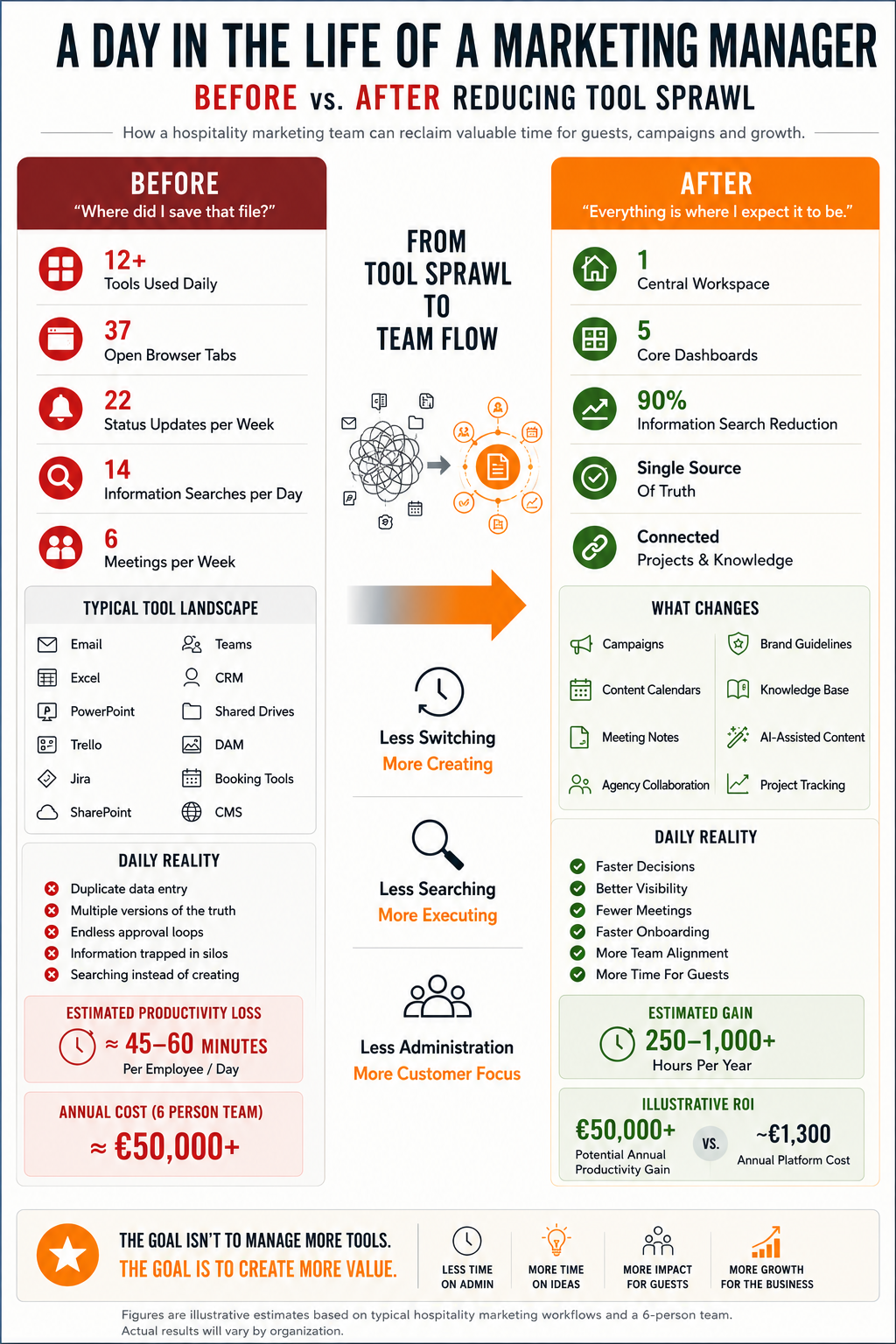
A day in the life of a marketing manager. Try to reduce tool sprawl.
A day in the life of a marketing manager and how to avoid tool sprawl.

The average marketing department in the hospitality industry works across a growing ecosystem of disconnected systems:

  • Email
  • Teams or Slack
  • Excel
  • PowerPoint
  • Trello
  • Jira
  • SharePoint
  • CRM Systems
  • Asset Libraries
  • Booking Platforms
  • Content Calendars
  • Project Management Tools

Each platform solves a specific problem.

Collectively, they often create friction, duplication and hidden costs.

The Hospitality Marketing Reality

Imagine a hotel group operating:

  • 8 properties
  • 4 brands
  • 6 marketing team members
  • Multiple agencies
  • Regional sales teams
  • Seasonal campaigns and promotions

The team manages:

  • Social media
  • Website content
  • Email marketing
  • Events
  • Partnerships
  • CRM campaigns
  • Brand communications

At first glance, everything appears organized.

In reality, information is scattered across multiple tools.

The result?

Highly qualified marketing professionals spend valuable time searching, updating, copying and coordinating instead of focusing on guests, campaigns and growth.

Where Productivity Gets Lost

Let’s look at a few common marketing activities.

Assumption:

  • Marketing Manager hourly rate (fully loaded): €50/hour
  • Team size: 6 people
  • Working days per year: 220

Example 1: Weekly Status Meetings

Before

Preparing updates from:

  • Excel
  • Trello
  • Email
  • Agency reports
  • CRM dashboards

Average preparation time:

45 minutes per person

6 people

Weekly effort:

4.5 hours

Annual effort:

234 hours

Annual cost:

€11,700

After (Centralized Workspace)

Single dashboard

Connected project status

Shared visibility

Preparation time:

10 minutes per person

Annual effort:

52 hours

Annual cost:

€2,600

Annual Saving

182 hours

€9,100


Example 2: Campaign Planning

Before

Campaign assets spread across:

  • PowerPoint
  • Excel
  • Email
  • Shared drives

Searching for information:

30 minutes per campaign

100 campaigns annually

50 hours

€2,500

After

Campaigns documented in one location

Search time reduced to:

5 minutes

8 hours annually

€400

Annual Saving

42 hours

€2,100


Example 3: Onboarding New Team Members

Before

Knowledge distributed across:

  • Colleagues
  • Drives
  • Emails
  • Various systems

Average onboarding effort:

20 hours

3 hires annually

60 hours

€3,000

After

Centralized playbooks

Templates

Knowledge base

8 hours onboarding effort

24 hours annually

€1,200

Annual Saving

36 hours

€1,800


Example 4: Agency Collaboration

Before

Feedback loops through:

  • Email
  • Teams
  • Calls
  • Shared documents

Average:

4 hours weekly

Annual:

208 hours

€10,400

After

Shared project workspace

Single source of truth

Reduced effort:

2 hours weekly

Annual:

104 hours

€5,200

Annual Saving

104 hours

€5,200


Example 5: Content Production

Before

Finding assets

Locating previous campaigns

Checking approvals

Average:

20 minutes per content piece

500 assets annually

167 hours

€8,350

After

Centralized content hub

5 minutes per asset

42 hours

€2,100

Annual Saving

125 hours

€6,250


Total Estimated Annual Impact

AreaAnnual Saving
Meeting Preparation€9,100
Campaign Planning€2,100
Onboarding€1,800
Agency Collaboration€5,200
Content Production€6,250
Total€24,450

And these examples only cover a fraction of daily activities.

When additional workflows are included—budget approvals, reporting, content reviews, knowledge management, event planning and AI-supported content creation—the potential annual productivity gain can easily exceed:

€50,000+ per year

for a mid-sized hospitality marketing team.

What About the Cost?

Let’s assume:

Notion Business Plan

Approx. €18 per user/month

6 users

Annual cost:

€1,296

Even if implementation required:

  • Initial setup
  • Training
  • Migration

The investment remains small compared to the productivity gains.

Illustrative ROI

Annual Productivity Gain:

€50,000

Annual Platform Cost:

€1,296

Potential ROI:

More than 3,700%

Few marketing initiatives deliver this level of return.

The Bigger Benefit

The true value is not cost reduction.

The true value is attention.

Less time searching.

Less time reporting.

Less time updating.

More time:

  • Creating memorable guest experiences
  • Developing stronger campaigns
  • Supporting sales teams
  • Building brand value
  • Driving revenue

Technology should remove friction.

Not create it.

Final Thought

AI may become the most transformative technology of this decade.

But before adding another AI tool to your stack, ask yourself:

How many hours does your team spend every week moving information between systems?

The answer may reveal your biggest untapped productivity opportunity.


Interested in learning more about operational efficiency, customer experience and marketing transformation?

Explore Notion:
https://www.notion.so

More Marketing Quick Wins

Disclaimer: The calculations shown are illustrative examples based on typical hospitality marketing workflows and intended to demonstrate potential productivity impacts. Actual results will vary depending on organizational structure, processes and technology landscape.

AI for Good Global Summit 2026: Why Geneva Will Become One of the Most Important AI Meeting Points This Summer

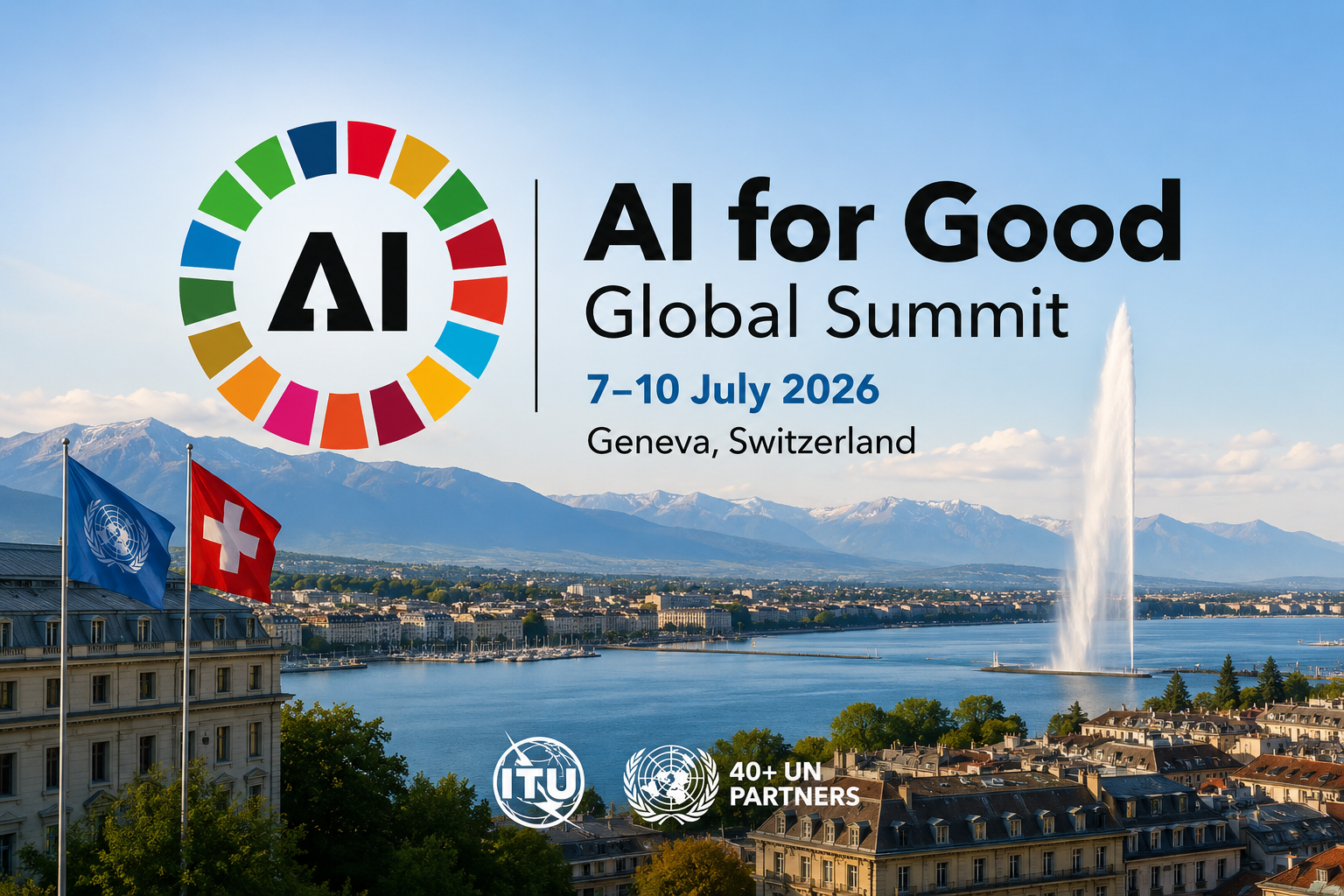
AI for Good Global Summit 2026 in Geneva
AI for Good Global Summit 2026

From 7–10 July 2026, Geneva will once again host one of the most fascinating international technology events of the year: the AI for Good Global Summit at Palexpo Geneva.

But unlike many AI conferences driven by hype, valuations and futuristic buzzwords, this summit approaches artificial intelligence from a very different angle.

The central question is not how AI can replace humans.

It is how AI can improve human lives.

Organized in collaboration with the United Nations and international partners, the summit brings together governments, researchers, startups, technology leaders, NGOs, creatives and business decision-makers from around the world to discuss the future of responsible and human-centered artificial intelligence.

And in 2026, that conversation feels more relevant than ever.

More Than Just Another AI Event

Over the past two years, artificial intelligence has moved from experimental technology into everyday reality.

AI is now shaping customer experiences, healthcare systems, travel planning, hospitality operations, marketing workflows, education platforms and even creative industries.

Yet despite the enormous technological progress, many companies and individuals are still asking the same questions:

Where is this really going?
What role will humans continue to play?
How can AI be implemented responsibly?
And how do we avoid losing trust, authenticity and empathy along the way?

This is exactly where AI for Good stands apart.

Instead of focusing purely on disruption, the summit explores how AI can support society, sustainability, accessibility and innovation in practical and meaningful ways.

What Visitors Can Expect

Visitors can expect four days filled with international perspectives, live demonstrations, keynote sessions, startup showcases and discussions around topics such as:

  • Responsible AI and governance
  • AI in healthcare and education
  • Smart cities and sustainability
  • Customer experience transformation
  • Tourism and hospitality innovation
  • Accessibility and inclusion
  • Workforce transformation
  • Ethics, transparency and digital trust

One of the most interesting aspects of the event is the diversity of participants. It is not solely a developer conference or corporate trade show.

It is a meeting point between technology and humanity.

That creates a much more balanced atmosphere than many purely commercial AI events.

You may encounter:

  • AI systems helping doctors improve diagnostics
  • Intelligent accessibility tools supporting inclusion
  • Hospitality concepts using AI to enhance guest experiences
  • Sustainability solutions optimizing energy and mobility
  • Discussions about regulation, ethics and transparency

And perhaps most importantly, you will hear very different perspectives from across industries, cultures and countries.

What Not To Expect

If you expect an exhibition full of dystopian robot narratives or exaggerated promises about fully autonomous societies, you may be surprised.

AI for Good is remarkably grounded.

The conversations are less about “AI replacing everything” and far more about integration, responsibility and long-term societal impact.

You should also not expect easy answers.

Artificial intelligence remains one of the most transformative and controversial shifts of our generation. Questions around employment, privacy, regulation, authenticity and bias remain highly complex.

The summit does not avoid those tensions — it embraces them.

And that is exactly what makes it valuable.

Because the future of AI will not be defined by technology alone, but by the choices humanity makes around it.

Practical Information

The AI for Good Global Summit 2026 takes place from 7–10 July 2026 at Palexpo International Exhibition and Convention Center in Geneva, Switzerland.

The event is expected to attract more than 15,000 attendees from over 170 countries.

Ticket prices vary significantly depending on the level of access:

  • Discovery Passes start around CHF 50
  • Gold Passes are approximately CHF 890
  • Premium Leadership access reaches around CHF 4,900

Virtual participation options are also available for international audiences unable to travel to Switzerland. Find out more on https://aiforgood.itu.int/summit26/

Why Geneva Is the Perfect Host City

There are few cities in the world better suited for this conversation than Geneva.

Home to the United Nations, the World Health Organization and countless international organizations, Geneva has long been a center for diplomacy, innovation and global cooperation.

The city itself feels like a bridge between worlds:
between politics and technology,
between business and society,
between innovation and responsibility.

And beyond the summit halls, Geneva offers an inspiring environment to reflect and recharge.

If You Stay Two More Days

For visitors extending their trip, Geneva offers far more than conference rooms and keynote stages.

Spend an evening walking along Lake Geneva with views of the famous Jet d’Eau fountain and the surrounding Alps. Explore the historic old town, enjoy Swiss-French cuisine by the waterfront or visit the Palais des Nations, the European headquarters of the United Nations.

If you have another day available, the surrounding region becomes equally rewarding.

The Lavaux vineyard terraces overlooking Lake Geneva offer one of Switzerland’s most beautiful landscapes and are recognized as a UNESCO World Heritage Site. Alternatively, a short trip to Mont Salève provides spectacular panoramic views over Geneva and the Alps.

The contrast between high-level AI discussions during the day and the calm beauty of the surrounding region creates a unique atmosphere rarely found at global technology events.

Why This Event Matters

Even for people outside the technology industry, AI for Good matters.

Because artificial intelligence is no longer a niche topic reserved for engineers or startups.

It is rapidly becoming part of everyday life, customer interactions, workplaces, travel experiences and creative processes.

Events like this help move the conversation beyond fear, hype and headlines.

They encourage a more thoughtful discussion about how technology can support people rather than simply accelerate automation.

Perhaps the most important takeaway from AI for Good 2026 will not be a new tool or a new platform.

It may simply be the growing realization that the future belongs neither to humans alone nor to machines alone.

It belongs to those who understand how to combine technology with empathy, creativity, ethics and meaningful human experiences.

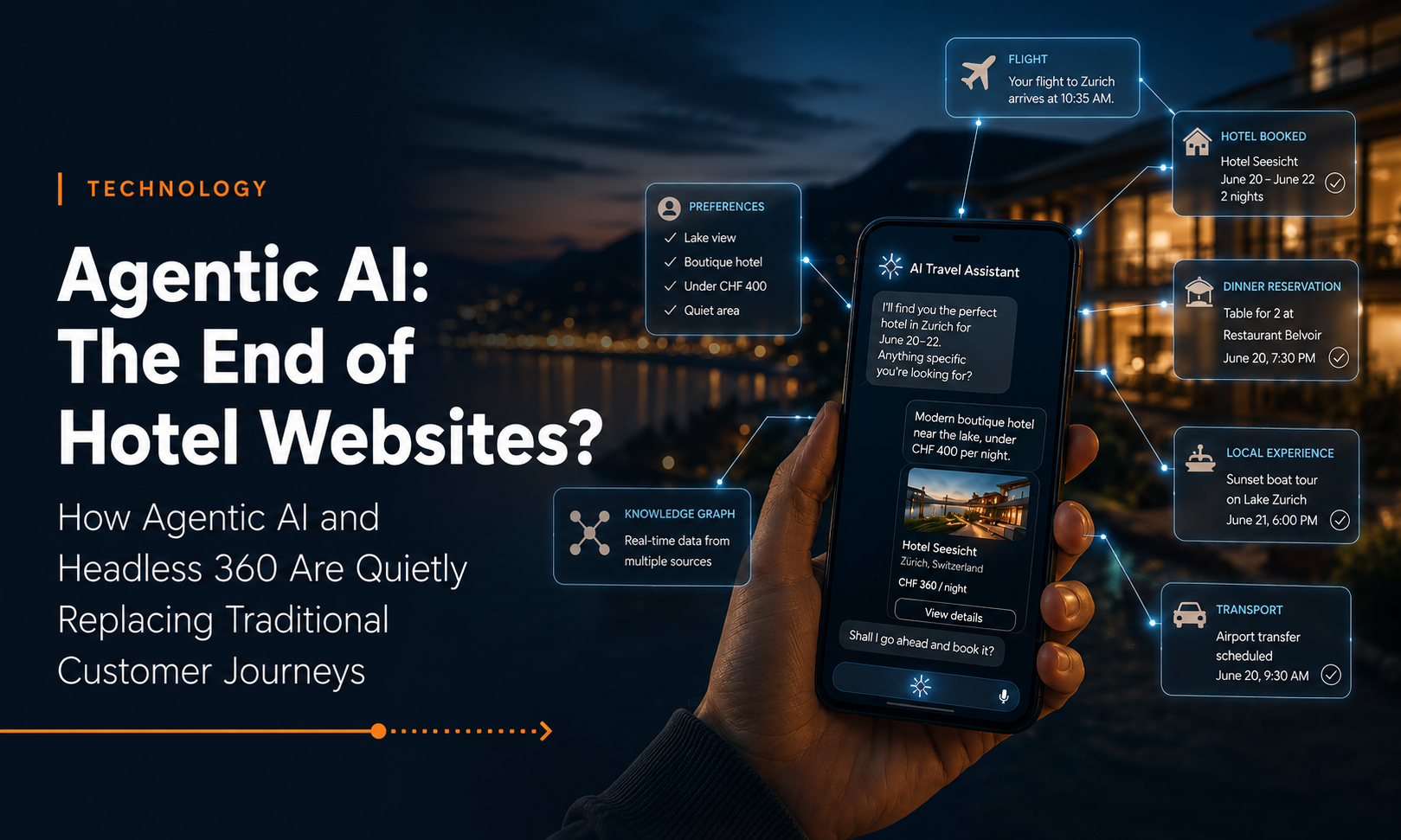
Agentic AI: The End of Hotel Websites? How Agentic AI and Headless 360 Are Quietly Replacing Traditional Customer Journeys

Agentic AI: The end of hotel websites?
Agentic_AI_Hospitality
Check in with Agentic AI

Why the future of hospitality may no longer start with your homepage

For more than two decades, hospitality brands have optimized websites, booking engines, loyalty platforms, CRM ecosystems and digital campaigns to guide guests through carefully orchestrated customer journeys.

But what happens when the customer journey no longer starts on your website?

What happens when AI agents begin researching, comparing, negotiating, booking, upselling and even servicing customers autonomously?

Welcome to the era of Agentic AI combined with Headless 360 architecture — where experiences become modular, intelligent and frictionless across every touchpoint.

And yes: this changes everything for hospitality brands.


What Is Agentic AI?

Unlike traditional AI systems that simply answer prompts, Agentic AI acts autonomously toward goals.

It can:

  • plan tasks
  • gather information
  • make decisions
  • trigger workflows
  • communicate across systems
  • learn from context
  • optimize outcomes continuously

Think of it less as a chatbot and more as a digital concierge, sales manager, operations assistant and customer advisor combined.

Now combine this with a modern Headless 360 ecosystem.


What Is Headless 360?

Headless architecture separates the frontend experience from backend systems.

Instead of one monolithic website controlling everything, APIs connect:

  • CRM
  • PMS
  • booking engine
  • loyalty systems
  • content platforms
  • payment systems
  • event tools
  • marketing automation
  • customer data platforms
  • AI orchestration layers

The result?

Experiences can happen anywhere.

Inside:

  • voice assistants
  • wearables
  • WhatsApp
  • automotive systems
  • travel platforms
  • AI agents
  • smart TVs
  • airport apps
  • virtual concierges
  • mixed reality interfaces

The website becomes only one interface among many.

Sometimes not even the primary one anymore.


A Hospitality Example: The AI-Driven Luxury Weekend

Imagine a guest planning a spontaneous long weekend.

Instead of browsing 14 hotel websites, comparing rates manually and checking review platforms, the guest simply tells their personal AI assistant:

“Find me a quiet luxury spa hotel within 3 hours of Frankfurt with great food, late checkout, hiking nearby and a suite under €900.”

The AI agent now:

  • checks calendar availability
  • analyzes preferences
  • compares reviews
  • evaluates loyalty benefits
  • negotiates rates dynamically
  • books transportation
  • reserves dinner
  • schedules spa treatments
  • syncs everything into the guest calendar

The hotel’s Headless 360 ecosystem enables all of this seamlessly through APIs.

No lengthy website navigation.
No call center.
No repetitive form filling.

The experience becomes invisible.

And that is exactly the point.


Why This Is a Massive Opportunity for Hospitality Brands

1. Frictionless Customer Experience

The modern customer values simplicity more than ever.

Agentic AI reduces:

  • search friction
  • booking complexity
  • repetitive interactions
  • waiting times
  • service inconsistencies

The guest feels understood instantly.

That creates emotional loyalty.


2. Hyper-Personalization at Scale

Traditional personalization was mostly segmentation.

Agentic AI enables contextual personalization in real time.

Examples:

  • room preferences automatically applied
  • dynamic dining recommendations
  • wellness suggestions based on stress indicators
  • family experiences adapted to children’s age
  • personalized itineraries based on weather and behavior

This moves hospitality closer to true anticipatory service.


3. Operational Efficiency

Hotels struggle globally with:

  • staffing shortages
  • rising operational costs
  • inconsistent service delivery

AI agents can automate:

  • reservation handling
  • FAQ communication
  • internal task coordination
  • upselling workflows
  • multilingual guest communication
  • post-stay feedback loops

Teams can focus more on high-value guest interaction instead of administrative repetition.


4. Omnichannel Becomes Reality

Many brands still talk about omnichannel.

Few truly execute it.

Headless 360 finally enables consistent experiences across:

  • web
  • app
  • social
  • voice
  • messaging
  • partner ecosystems
  • in-room systems
  • physical touchpoints

The customer journey becomes continuous instead of fragmented.


But Here Comes the Dangerous Part

The hospitality industry must be careful not to automate away its humanity.

Because luxury hospitality is not only about efficiency.

It is about emotion.

And emotion remains deeply human.


Where Human Service Still Wins

Emotional Intelligence

AI can recognize sentiment patterns.

But it cannot genuinely empathize.

A great concierge understands nuance:

  • nervousness before a proposal
  • cultural sensitivity
  • emotional tone
  • unspoken expectations
  • moments requiring discretion

Human intuition still creates magic.


Authentic Relationships

Guests remember:

  • names
  • smiles
  • conversations
  • humor
  • warmth
  • empathy
  • anticipation

Not API response times.

Especially in luxury hospitality, relationships are still the real differentiator.


Complex Problem Solving

AI performs exceptionally well in structured environments.

But hospitality is often chaotic.

Examples:

  • flight cancellations
  • emotional complaints
  • VIP sensitivities
  • family emergencies
  • weather disruptions
  • cultural misunderstandings

Experienced staff navigate ambiguity with creativity and emotional judgment.

That remains difficult to automate fully.


Brand Soul Cannot Be Automated

Many brands risk becoming technically efficient but emotionally interchangeable.

If every hotel uses similar AI systems, the true differentiator becomes:

  • people
  • culture
  • service mindset
  • storytelling
  • atmosphere
  • authenticity

Technology scales operations.

Humans create memories.


The Real Future: AI-Augmented Hospitality

The future is probably not AI versus humans.

It is AI-enhanced humans.

The winning hospitality brands will:

  • automate repetitive complexity
  • empower employees with better insights
  • reduce operational friction
  • free teams for meaningful interaction

In other words:

Less administration.
More hospitality.

That is where the real opportunity lies.


Strategic Questions Hospitality Leaders Should Ask Now

Is your current architecture API-ready?

Many legacy hotel systems are still heavily fragmented.

Without modern API connectivity, agentic ecosystems become difficult to scale.


Who owns the customer relationship in an AI-agent world?

If AI assistants become the primary booking interface, brands risk losing direct customer ownership.

That changes:

  • loyalty economics
  • acquisition models
  • SEO strategies
  • media investments
  • distribution power

A massive shift may already be underway.


Is your organization culturally ready?

Technology transformation is rarely the hardest part.

Mindset transformation is.

Future-ready hospitality organizations need:

  • agile structures
  • data literacy
  • service innovation culture
  • interdisciplinary collaboration
  • AI governance frameworks

Final Thought

Hospitality has always evolved alongside technology.

From telephone reservations to online booking.
From desktop to mobile.
From transactional CRM to experience ecosystems.

Agentic AI combined with Headless 360 may become the next major shift.

The brands that succeed will not simply deploy more AI.

They will redesign experiences around seamless human-centric journeys.

Because in the end, guests rarely remember the technology.

They remember how the experience made them feel.

And that is still profoundly human.


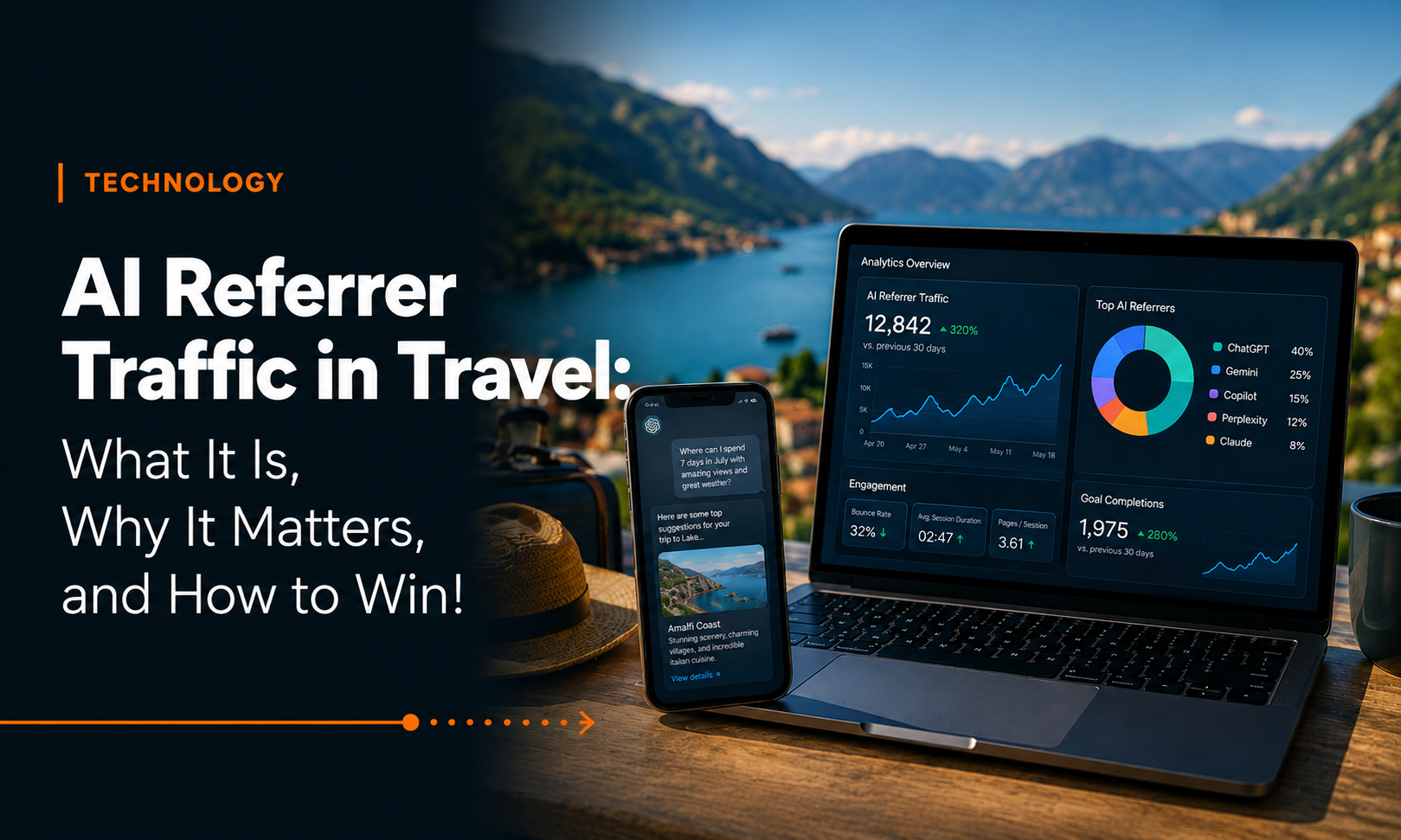
AI Referrer Traffic in Travel: What It Is, Why It Matters, and How to Win!

AI Referrer Traffic in Travel

AI is about to take your traffic

1. LLM vs. RAG — the foundation

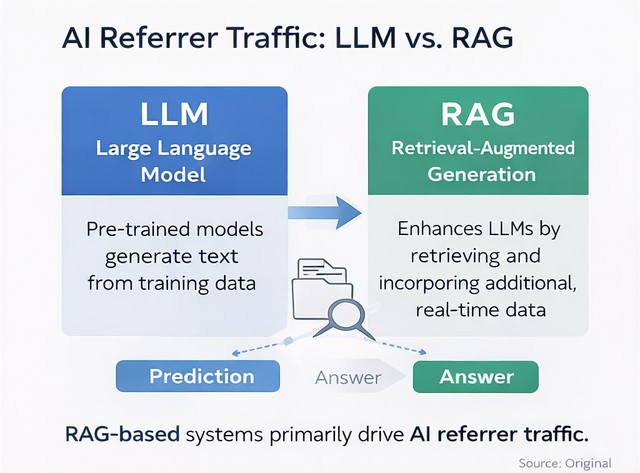
LLMs generate answers from training data.
RAG systems retrieve real-time sources before answering.

AI referrer traffic is driven by RAG

Meaning:

  • You must be retrievable
  • You must be trusted
  • You must be citable
AI Referrer Traffic: LL; vs, RAG

2. Study context

Thanks to Similarweb for sharing US market insights.

The US is a leading indicator for Europe—and Germany.


3. The modern travel ecosystem

  • Platforms dominate discovery
  • Brands dominate fulfillment
  • AI sits in between

Visibility is dynamically assembled per query


4. The shift: keywords ? intent

SEO:

  • Short queries
  • Rankings

AI:

  • Long prompts
  • Answers
  • Traffic now comes from intent resolution

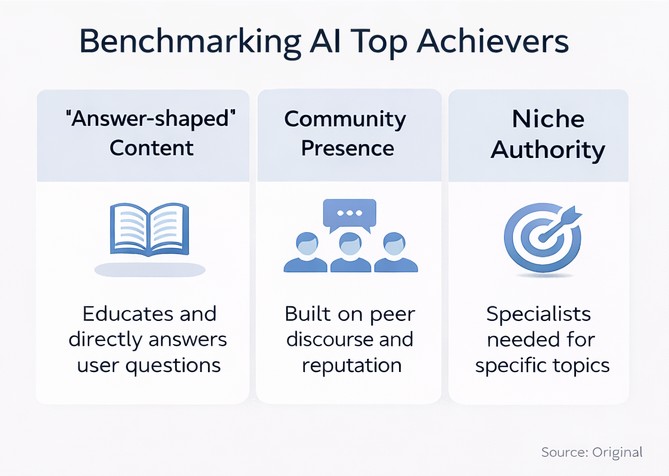
5. What AI top achievers do

  1. Answer questions directly
  2. Build trust via community
  3. Focus on niche expertise
Benchmarking AI Top Achievers

6. German market projections

Germany combines:

  • High digital booking penetration
  • Strong travel demand
  • Low AI usage (today)

That creates a high-growth adoption curve


Projection 1: AI shapes consideration first

AI influences:

  • Destination choice
  • Hotel selection
  • Planning

Not necessarily booking (yet)


Projection 2: Visibility shifts to AI-readable brands

Winning brands have:

  • Reviews
  • Mentions
  • Structured content
  • Platform presence

Projection 3: German long-tail = biggest opportunity

Example queries:

  • “Wellness hotels Bavaria 3-day spa weekend”
  • “Family hotels Baltic Sea train access”

Underdeveloped = opportunity


Projection 4: Everything converges

Winning requires:

  • SEO
  • GEO
  • PR
  • Reviews
  • Platform strategy

7. Real example: top-tier hotel brands

Consider global premium brands operating in Germany:

  • Marriott International
  • Hilton Worldwide
  • Hyatt Hotels Corporation

These brands excel at:

  • Brand recognition
  • Direct bookings
  • Loyalty ecosystems

However, in AI-generated answers they are often:

  • Referenced less frequently than OTAs
  • Outranked by review-rich sources
  • Missing in comparison-style responses

Why?

AI systems prioritize:

  • Breadth (aggregators)
  • Trust (reviews)
  • Structure (data)

Strategic implication

Even premium hotel brands must:

  • Build answer-level content
  • Strengthen third-party presence
  • Ensure data accessibility

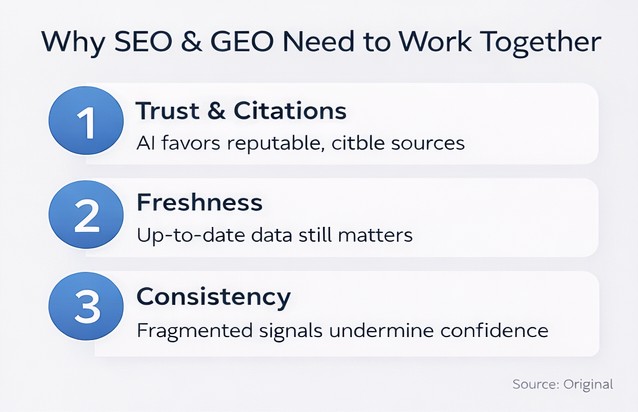
8. Why SEO and GEO must work together

SEO

  • Rankings
  • Traffic

GEO

  • Citations
  • AI inclusion

Requires:

  • Trust
  • Freshness
  • Consistency
  • Integration
Why SEO & GEO Need to Work Together

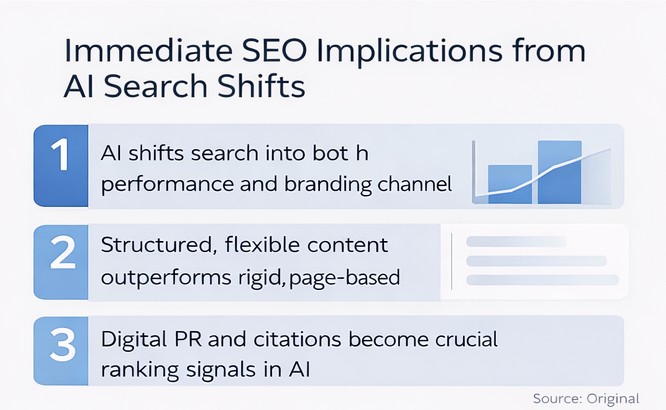
9. Immediate implications

  • Search = branding + performance
  • Content must be modular
  • PR becomes critical
Immediate SEO Implications from AI Search Shifts

10. What brands must do

  • Play to strengths
  • Build community
  • Create quotable content
  • Continuously adapt

Conclusion

AI changes:

  • Ranking ? recommendation
  • Keywords ? intent
  • Pages ? answers

The winners are trusted sources—not just visible brands

Download this checklist as a PDF:

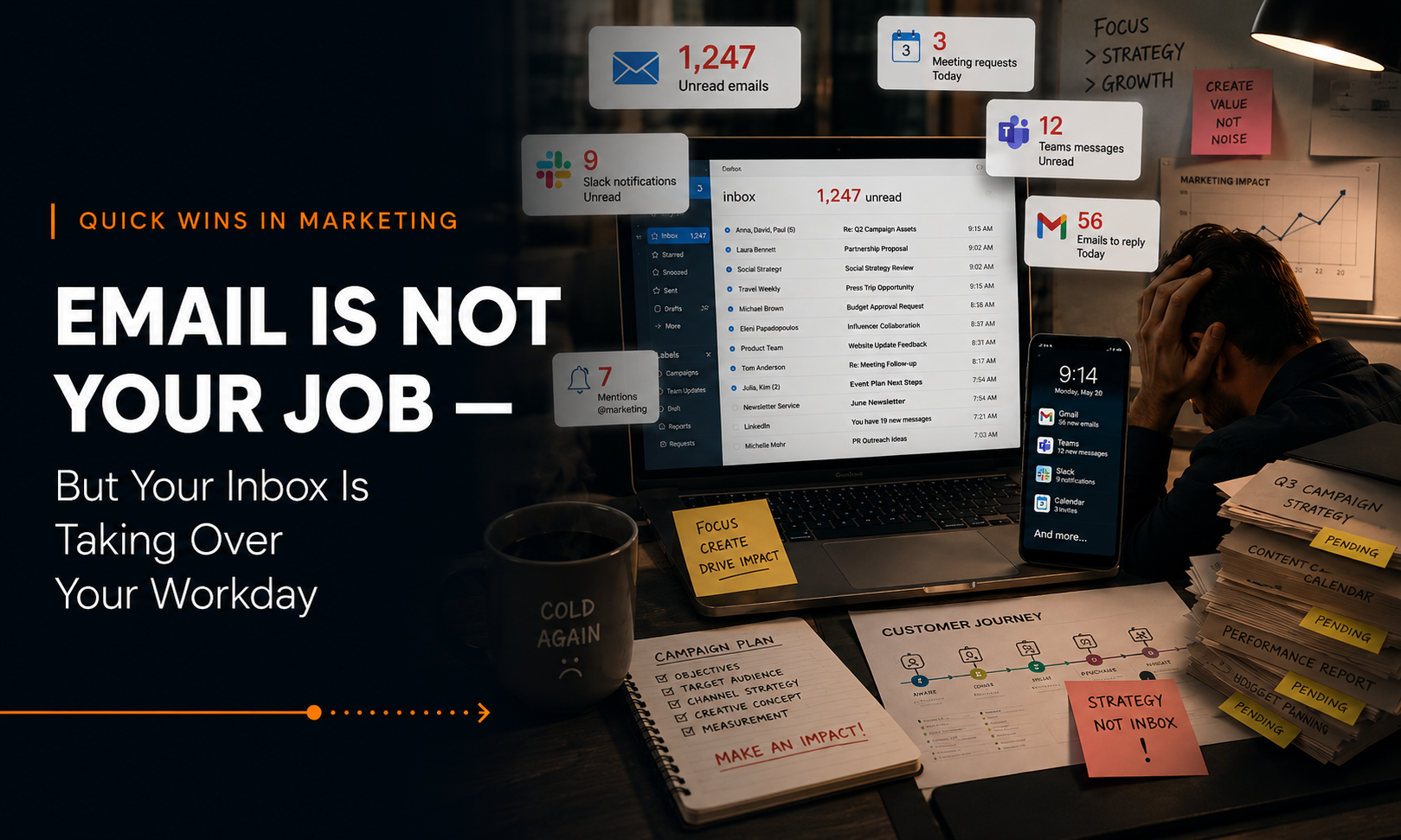
Email Is Not Your Job — But Your Inbox Is Taking Over Your Workday

Email is not your job!

Most professionals spend between 2 to 4 hours a day managing their inbox.

Not because they’re inefficient.
Not because they lack discipline.

But because email has quietly become the default operating system of work.

And that’s the real problem.

The opportunity in 2026 isn’t about getting better at email.
It’s about reclaiming your time—by redesigning how work happens.

That starts with two shifts:

  1. Choosing the right communication channel
  2. Letting AI handle what shouldn’t require you
Your Inbox
Email ist not your job!

1. Stop Defaulting to Email

Email was never designed to handle everything. Yet today, it’s used for nearly anything—from quick questions to complex decisions.

A simple rule can immediately reduce unnecessary email traffic:

  • Email ? External, formal, documented communication
  • Chat (Teams, Slack) ? Quick internal coordination
  • Call ? Complex, urgent, or unclear topics
  • In-person ? Fastest way to resolve internal blockers

A useful trigger:

If you’re writing your third email in a thread, you should already be on a call.

Email feels productive—but often it just delays clarity.


2. Fix What You Can Immediately

Before rethinking entire systems, start with small, high-impact changes.

Here are five low-effort improvements that deliver immediate results:

  1. Remove unnecessary CCs
    More recipients = more noise = less accountability
  2. Write subject lines with intent
    Make it clear: Is this for action, input, or information?
  3. Check email 2–3 times per day
    Constant checking destroys focus
  4. Apply the two-minute rule
    If it takes less than two minutes, do it immediately
  5. Move tasks out of your inbox
    Your inbox is not a task manager

These changes take days to implement—but can dramatically reduce inbox overload.


3. Rethink the System (Not Just Your Habits)

Most organizations stop at individual productivity tips.

That’s not enough.

The real gains come from structural change.

Here’s where to focus:

  1. Move internal communication out of email
    Use dedicated tools for collaboration
  2. Define clear communication rules
    Align teams on when to use what
  3. Automate incoming emails
    Routing, tagging, prioritization should not be manual
  4. Use AI for drafting and summarizing
    Reduce time spent reading and writing
  5. Build a shared knowledge base
    Stop emailing information that should be accessible

Email overload is rarely an individual issue—it’s a system design problem.


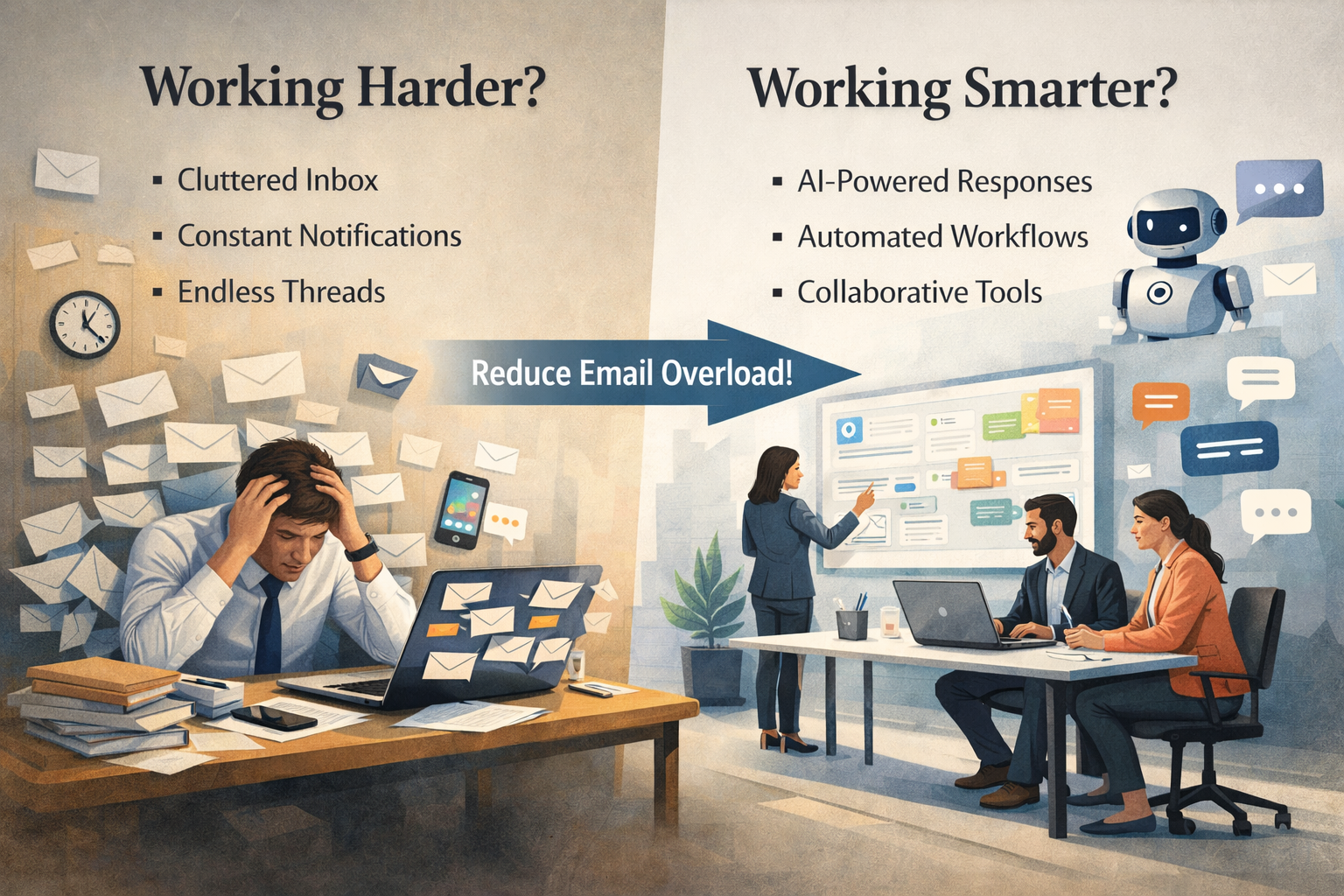
Work smarter and reduce Email Overload

4. The Shift Most People Underestimate: Agentic AI

We’re moving beyond AI that assists.

We’re entering the era of AI that acts.

Agentic AI doesn’t just help you write emails—it operates on your behalf.

This is already possible today:

  • Emails are categorized automatically
  • Repetitive requests are answered without human input
  • Meeting requests trigger scheduling workflows
  • Emails generate tasks in project management tools
  • AI agents follow up on missing information

This fundamentally changes your role.

You are no longer the processor of every message.


5. The Impact Is Measurable

Organizations adopting these approaches are already seeing:

  • 30–50% fewer emails
  • 1–2 hours saved per day
  • Reduced context switching
  • More time for meaningful work

This isn’t incremental improvement—it’s a shift in how work gets done.


6. Where to Start This Week

You don’t need a full transformation to see results.

Start small:

  • Reduce unnecessary emails
  • Move one recurring topic to chat or calls
  • Identify one repetitive email that could be automated

That’s enough to begin changing the system.


Final Thought

The goal isn’t to manage email better.

The goal is to design work so that email is no longer the bottleneck.

Because your job isn’t your inbox.

And it never was.

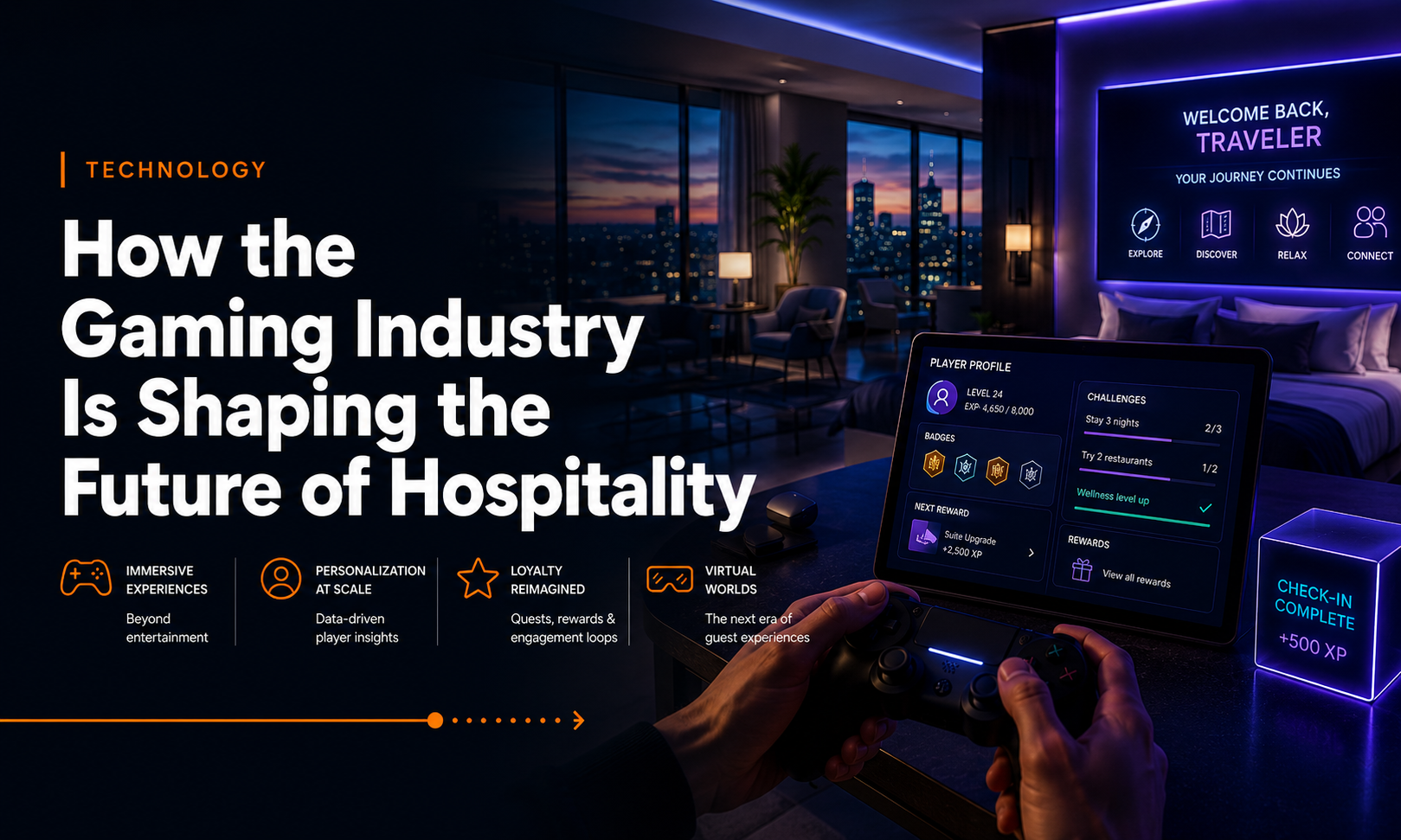
How the Gaming Industry Is Shaping the Future of Hospitality

How the gaming industry is shaping the future of hospitality

They guide users when they get stuck.
They anticipate needs.
They personalise the experience dynamically.

In other words:

A good game doesn’t ask the player to understand the system.

The system learns the player.

Hospitality, however, still often relies on static digital experiences.

Hotel apps rarely remember preferences.
Recommendations often feel generic.
Guest journeys restart with every visit.

Yet the opportunity to create dynamic and personalised experiences has never been greater.

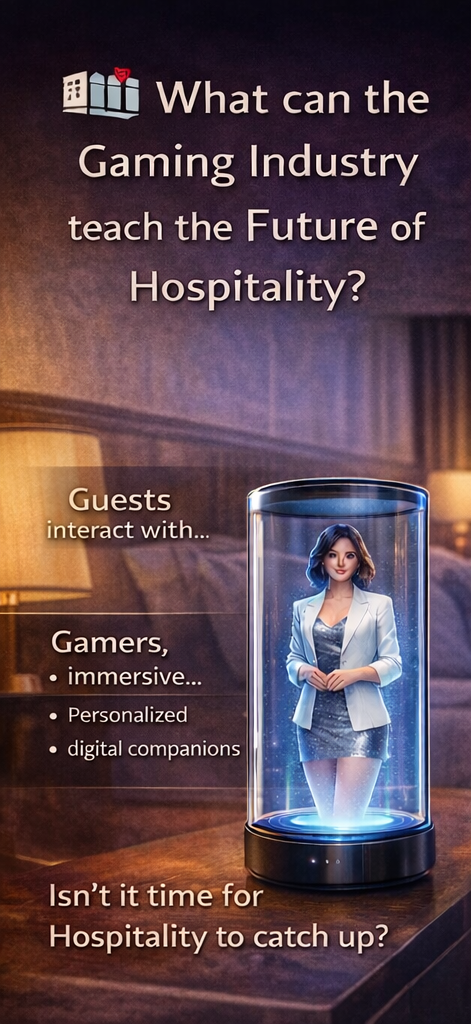
What can the Gaming Industry teach the Futue of Hospitality?

A Glimpse of the Future: AI Avatars

At the Game Developers Conference, Razer demonstrated an intriguing prototype called Razer Ava.

The concept features a small device with a holographic avatar living inside a glass cylinder.

The AI assistant observes the player’s screen, analyses the situation and provides guidance.

It can:

  • analyse context
  • search for information
  • execute tasks
  • coordinate with other AI agents

While designed for gaming, the underlying concept is far more powerful.

It represents the shift from chatbots to persistent AI companions.


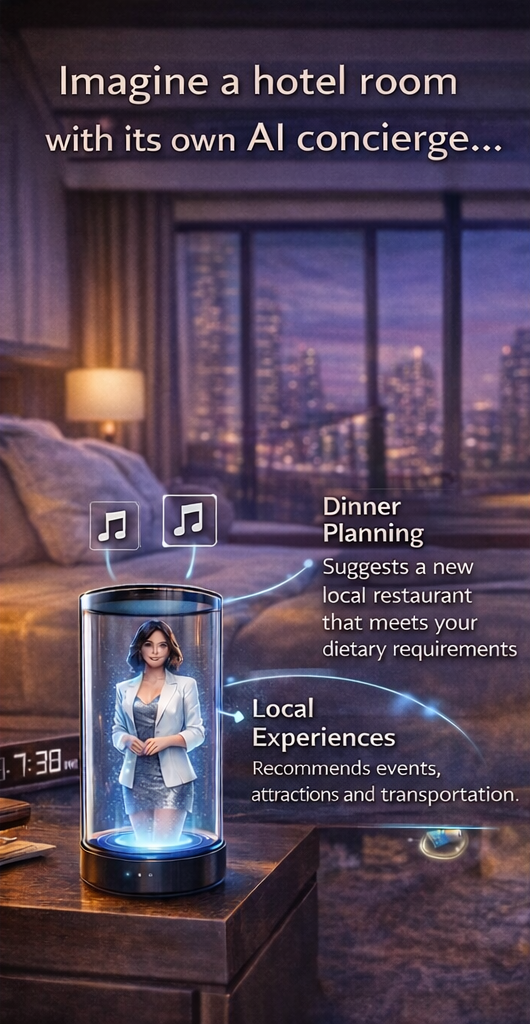
How the Gaming Industry Is Shaping the Future of Hospitality: Imagine This in a Hotel Room

Now imagine entering your hotel room.

On the bedside table sits a small glass device.

Inside it appears a subtle digital avatar.

Think of it as a genie in a bottle — powered by AI.

Your personal concierge.

It already knows:

  • your dietary preferences
  • your favourite music
  • your preferred lighting temperature
  • your wellness habits
  • the type of restaurants you enjoy

Instead of browsing multiple apps, you simply ask:

“Where should I have dinner tonight?”

The assistant might respond:

“There is a Mediterranean restaurant five minutes away that fits your dietary preferences. Would you like me to reserve a table?”

It could also:

  • adjust lighting and room settings
  • recommend events happening nearby
  • organise transportation
  • suggest activities for the next day

All seamlessly integrated into the guest journey.


A New Revenue Engine for Hotels

Beyond guest experience, this concept also opens significant economic opportunities for the hospitality industry.

AI-powered concierge systems could unlock new revenue streams such as:

Cross-Selling and Upselling

Hotels could dynamically recommend:

  • spa treatments
  • dining experiences
  • room upgrades
  • wellness services
  • premium amenities

Because recommendations are personalised and contextual, conversion rates would likely increase significantly.


Local Experience Ecosystems

Hotels could integrate partnerships with local businesses and earn commissions on:

  • restaurant reservations
  • event tickets
  • cultural experiences
  • guided tours
  • transportation services

The AI concierge becomes a digital marketplace for local experiences, curated around each guest.


Continuous Guest Engagement

Unlike static information folders or generic apps, an AI companion can interact with the guest throughout the stay.

This creates multiple opportunities for:

  • personalised offers
  • last-minute upgrades
  • event suggestions
  • partner services

The result is not just better service — but higher ancillary revenue per guest.


AI Does Not Replace Human Hospitality

Whenever AI is discussed in hospitality, the first concern is often job displacement.

But the real opportunity lies elsewhere.

AI assistants can take over routine operational tasks, including:

  • answering standard questions
  • basic recommendations
  • reservation coordination
  • room environment adjustments

This frees human concierges to focus on what truly defines hospitality:

  • designing unique experiences
  • solving complex guest requests
  • building emotional connections
  • delivering cultural insight

Technology increases efficiency.

Humans create meaning.

In this model, concierges evolve from information providers to experience curators.


Why the Industry Needs Testing Spaces

The hospitality industry rarely experiments with radical digital concepts in real environments.

What if hotels introduced AI innovation rooms?

Spaces where technologies could be tested together with:

  • gaming companies
  • AI startups
  • hospitality tech providers
  • universities
  • local partners

Gaming companies have built innovation ecosystems like this for years.

Hospitality could benefit from a similar model.


The Real Question

The holographic AI avatar may seem futuristic today.

But many innovations that started in gaming eventually reshaped other industries.

Real-time graphics.
Virtual economies.
Immersive digital worlds.

AI companions may be next.

And hospitality has the opportunity to turn them into real-world guest experiences and new revenue streams.


A Question to the Industry

What if hotels started experimenting with AI-powered concierge rooms?

Spaces where new guest experiences could be tested with partners from technology, gaming and hospitality.

Which organisations should be involved?

Gaming studios?
AI startups?
Hospitality tech providers?
Universities?

And perhaps the most interesting question:

Which hotel brand will open the first experimental “AI concierge room”?

Because the future of hospitality might not start with a new app.

It might start with a small avatar on the bedside table.