

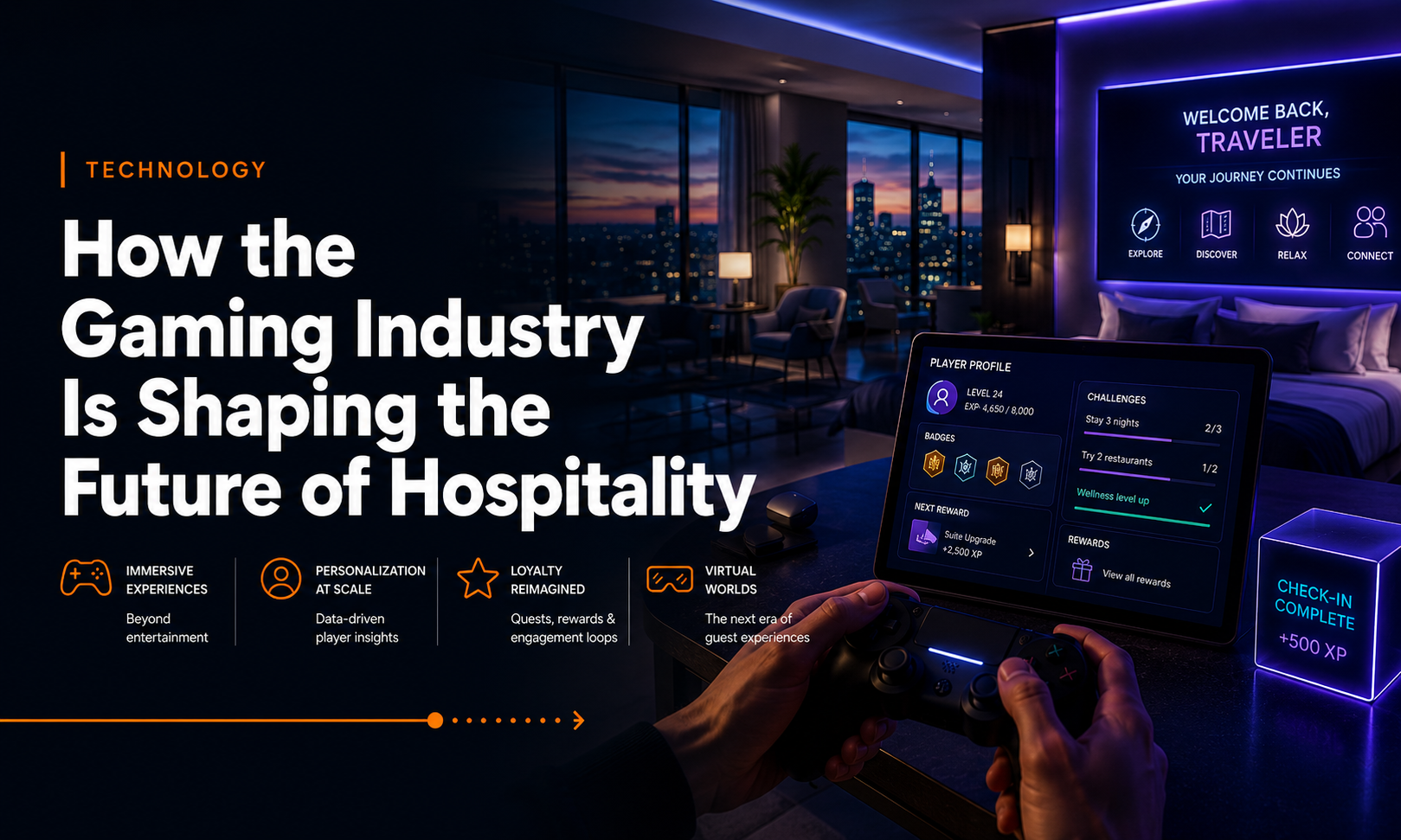
They guide users when they get stuck.
They anticipate needs.
They personalise the experience dynamically.
In other words:
A good game doesn’t ask the player to understand the system.
The system learns the player.
Hospitality, however, still often relies on static digital experiences.
Hotel apps rarely remember preferences.
Recommendations often feel generic.
Guest journeys restart with every visit.
Yet the opportunity to create dynamic and personalised experiences has never been greater.
A Glimpse of the Future: AI Avatars
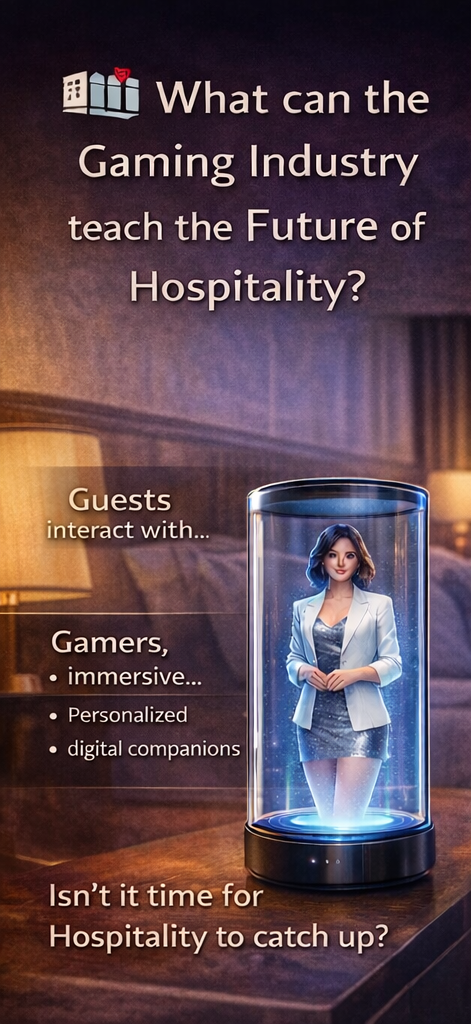
At the Game Developers Conference, Razer demonstrated an intriguing prototype called Razer Ava.
The concept features a small device with a holographic avatar living inside a glass cylinder.
The AI assistant observes the player’s screen, analyses the situation and provides guidance.
It can:
- analyse context
- search for information
- execute tasks
- coordinate with other AI agents
While designed for gaming, the underlying concept is far more powerful.
It represents the shift from chatbots to persistent AI companions.
How the Gaming Industry Is Shaping the Future of Hospitality: Imagine This in a Hotel Room
Now imagine entering your hotel room.
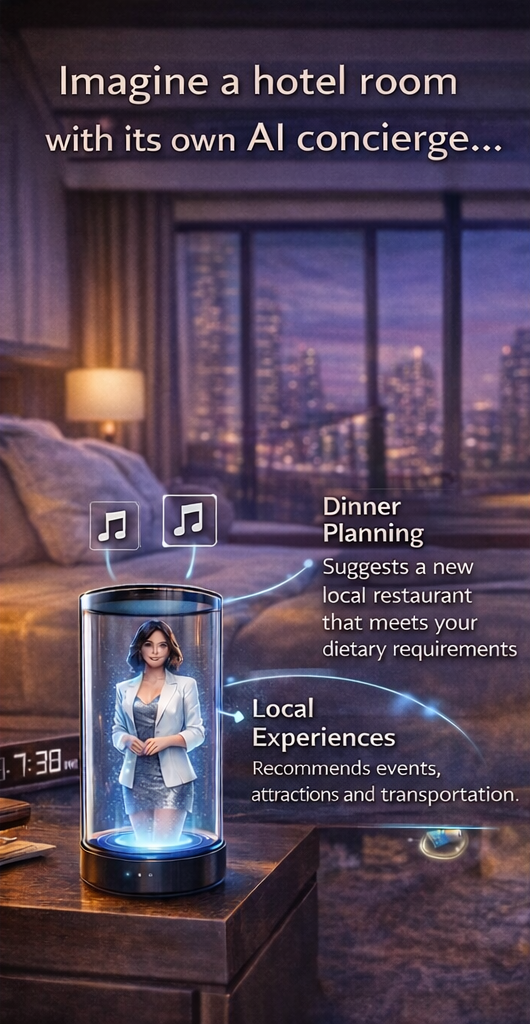
On the bedside table sits a small glass device.
Inside it appears a subtle digital avatar.
Think of it as a genie in a bottle — powered by AI.
Your personal concierge.
It already knows:
- your dietary preferences
- your favourite music
- your preferred lighting temperature
- your wellness habits
- the type of restaurants you enjoy
Instead of browsing multiple apps, you simply ask:
“Where should I have dinner tonight?”
The assistant might respond:
“There is a Mediterranean restaurant five minutes away that fits your dietary preferences. Would you like me to reserve a table?”
It could also:
- adjust lighting and room settings
- recommend events happening nearby
- organise transportation
- suggest activities for the next day
All seamlessly integrated into the guest journey.

A New Revenue Engine for Hotels
Beyond guest experience, this concept also opens significant economic opportunities for the hospitality industry.
AI-powered concierge systems could unlock new revenue streams such as:
Cross-Selling and Upselling
Hotels could dynamically recommend:
- spa treatments
- dining experiences
- room upgrades
- wellness services
- premium amenities
Because recommendations are personalised and contextual, conversion rates would likely increase significantly.
Local Experience Ecosystems
Hotels could integrate partnerships with local businesses and earn commissions on:
- restaurant reservations
- event tickets
- cultural experiences
- guided tours
- transportation services
The AI concierge becomes a digital marketplace for local experiences, curated around each guest.
Continuous Guest Engagement
Unlike static information folders or generic apps, an AI companion can interact with the guest throughout the stay.
This creates multiple opportunities for:
- personalised offers
- last-minute upgrades
- event suggestions
- partner services
The result is not just better service — but higher ancillary revenue per guest.
AI Does Not Replace Human Hospitality
Whenever AI is discussed in hospitality, the first concern is often job displacement.
But the real opportunity lies elsewhere.
AI assistants can take over routine operational tasks, including:
- answering standard questions
- basic recommendations
- reservation coordination
- room environment adjustments
This frees human concierges to focus on what truly defines hospitality:
- designing unique experiences
- solving complex guest requests
- building emotional connections
- delivering cultural insight
Technology increases efficiency.
Humans create meaning.
In this model, concierges evolve from information providers to experience curators.
Why the Industry Needs Testing Spaces
The hospitality industry rarely experiments with radical digital concepts in real environments.
What if hotels introduced AI innovation rooms?
Spaces where technologies could be tested together with:
- gaming companies
- AI startups
- hospitality tech providers
- universities
- local partners
Gaming companies have built innovation ecosystems like this for years.
Hospitality could benefit from a similar model.
The Real Question
The holographic AI avatar may seem futuristic today.
But many innovations that started in gaming eventually reshaped other industries.
Real-time graphics.
Virtual economies.
Immersive digital worlds.
AI companions may be next.
And hospitality has the opportunity to turn them into real-world guest experiences and new revenue streams.
A Question to the Industry
What if hotels started experimenting with AI-powered concierge rooms?
Spaces where new guest experiences could be tested with partners from technology, gaming and hospitality.
Which organisations should be involved?
Gaming studios?
AI startups?
Hospitality tech providers?
Universities?
And perhaps the most interesting question:
Which hotel brand will open the first experimental “AI concierge room”?
Because the future of hospitality might not start with a new app.
It might start with a small avatar on the bedside table.