

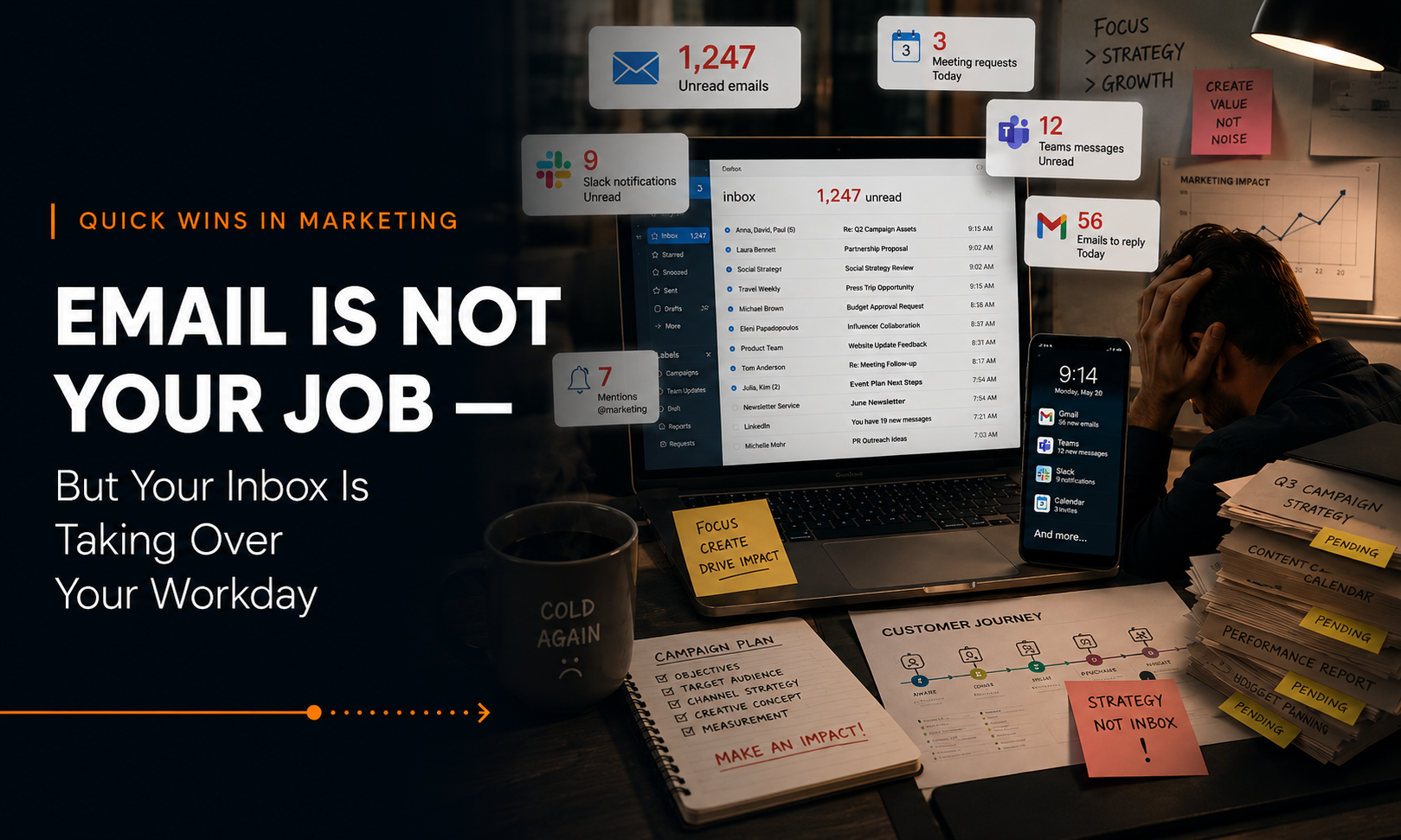
Most professionals spend between 2 to 4 hours a day managing their inbox.
Not because they’re inefficient.
Not because they lack discipline.
But because email has quietly become the default operating system of work.
And that’s the real problem.
The opportunity in 2026 isn’t about getting better at email.
It’s about reclaiming your time—by redesigning how work happens.
That starts with two shifts:
- Choosing the right communication channel
- Letting AI handle what shouldn’t require you
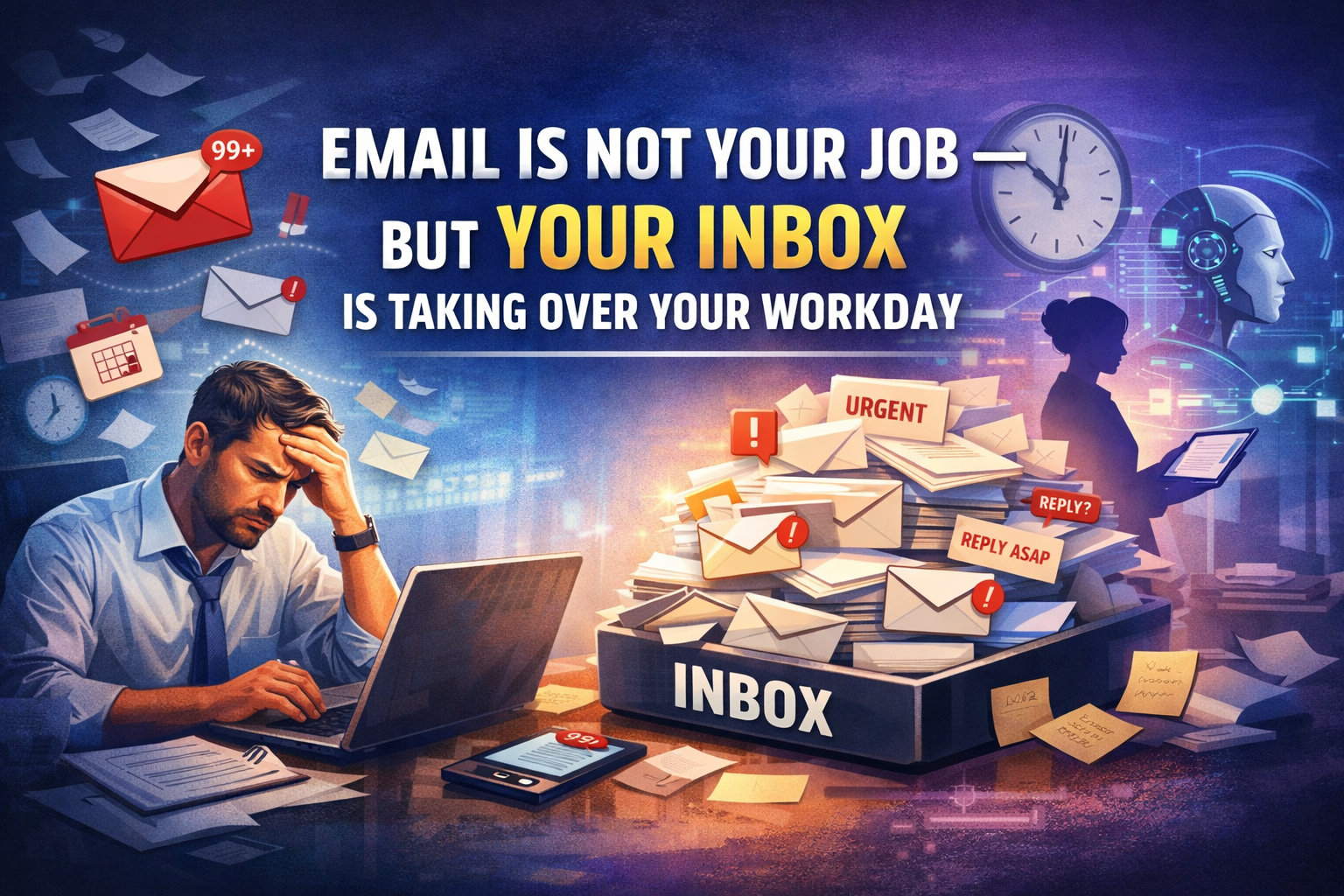
1. Stop Defaulting to Email
Email was never designed to handle everything. Yet today, it’s used for nearly anything—from quick questions to complex decisions.
A simple rule can immediately reduce unnecessary email traffic:
- Email ? External, formal, documented communication
- Chat (Teams, Slack) ? Quick internal coordination
- Call ? Complex, urgent, or unclear topics
- In-person ? Fastest way to resolve internal blockers
A useful trigger:
If you’re writing your third email in a thread, you should already be on a call.
Email feels productive—but often it just delays clarity.
2. Fix What You Can Immediately
Before rethinking entire systems, start with small, high-impact changes.
Here are five low-effort improvements that deliver immediate results:
- Remove unnecessary CCs
More recipients = more noise = less accountability - Write subject lines with intent
Make it clear: Is this for action, input, or information? - Check email 2–3 times per day
Constant checking destroys focus - Apply the two-minute rule
If it takes less than two minutes, do it immediately - Move tasks out of your inbox
Your inbox is not a task manager
These changes take days to implement—but can dramatically reduce inbox overload.
3. Rethink the System (Not Just Your Habits)
Most organizations stop at individual productivity tips.
That’s not enough.
The real gains come from structural change.
Here’s where to focus:
- Move internal communication out of email
Use dedicated tools for collaboration - Define clear communication rules
Align teams on when to use what - Automate incoming emails
Routing, tagging, prioritization should not be manual - Use AI for drafting and summarizing
Reduce time spent reading and writing - Build a shared knowledge base
Stop emailing information that should be accessible
Email overload is rarely an individual issue—it’s a system design problem.
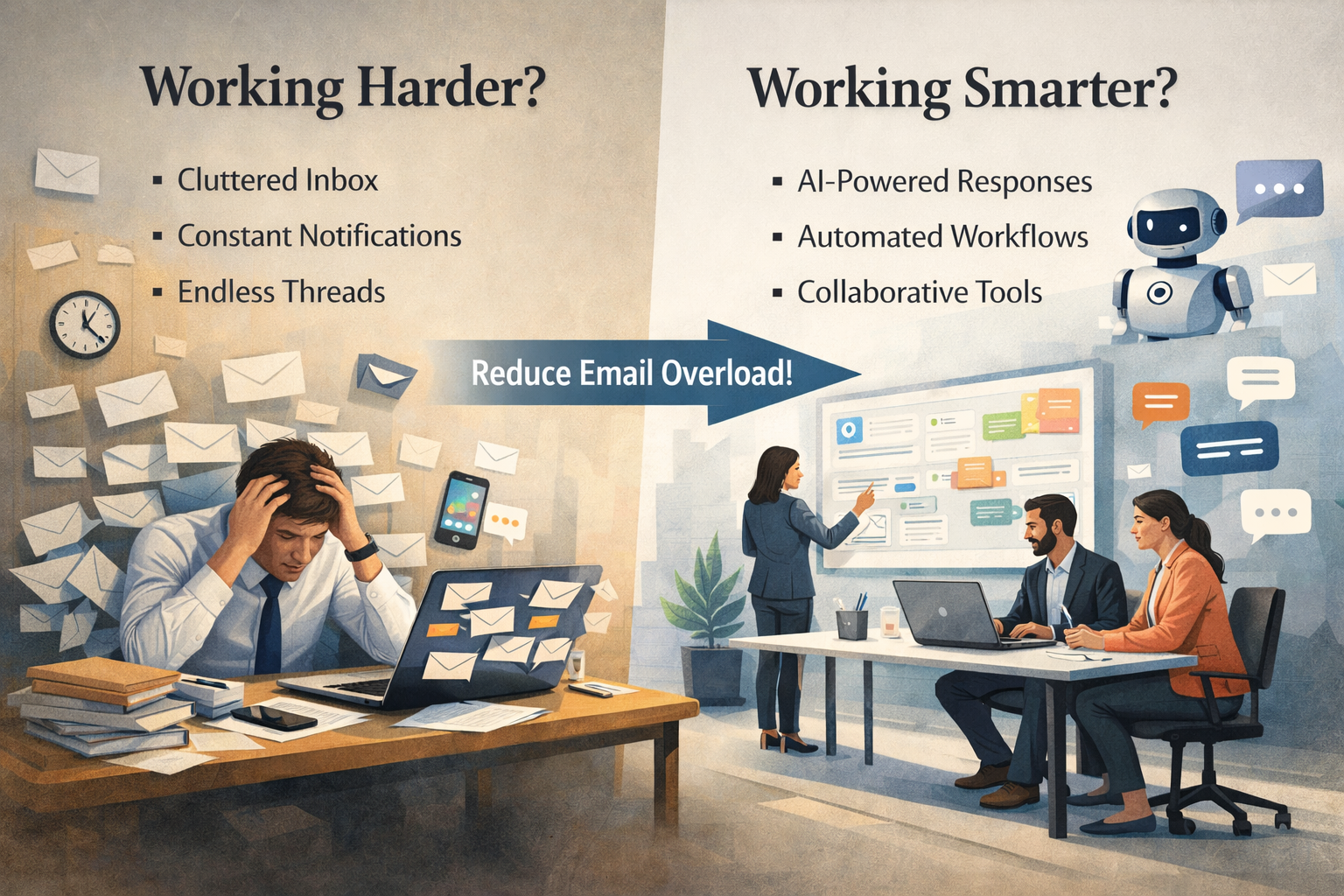
4. The Shift Most People Underestimate: Agentic AI
We’re moving beyond AI that assists.
We’re entering the era of AI that acts.
Agentic AI doesn’t just help you write emails—it operates on your behalf.
This is already possible today:
- Emails are categorized automatically
- Repetitive requests are answered without human input
- Meeting requests trigger scheduling workflows
- Emails generate tasks in project management tools
- AI agents follow up on missing information
This fundamentally changes your role.
You are no longer the processor of every message.
5. The Impact Is Measurable
Organizations adopting these approaches are already seeing:
- 30–50% fewer emails
- 1–2 hours saved per day
- Reduced context switching
- More time for meaningful work
This isn’t incremental improvement—it’s a shift in how work gets done.
6. Where to Start This Week
You don’t need a full transformation to see results.
Start small:
- Reduce unnecessary emails
- Move one recurring topic to chat or calls
- Identify one repetitive email that could be automated
That’s enough to begin changing the system.
Final Thought
The goal isn’t to manage email better.
The goal is to design work so that email is no longer the bottleneck.
Because your job isn’t your inbox.
And it never was.