

Introduction
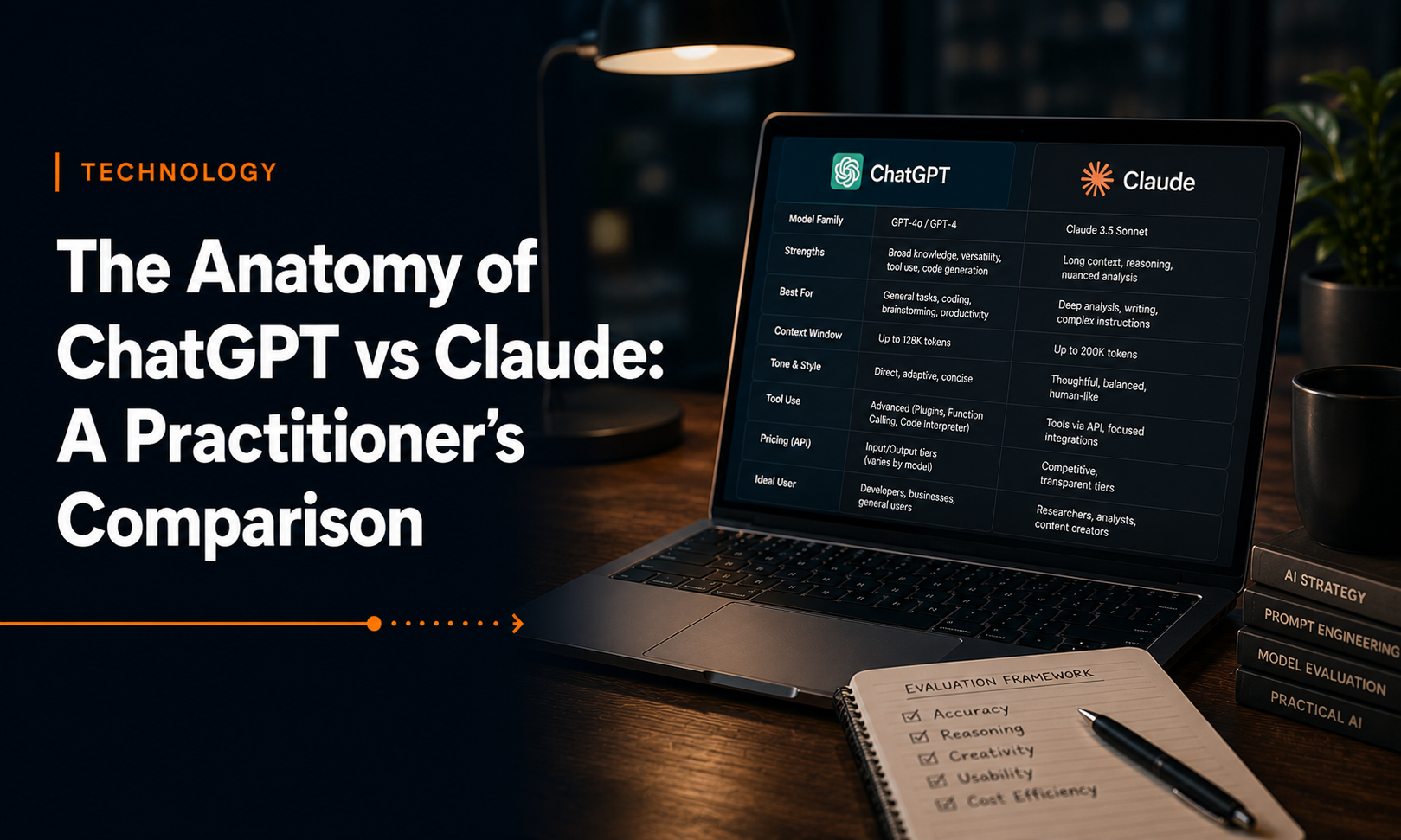
Most AI comparisons focus on benchmarks. This one focuses on behavior.
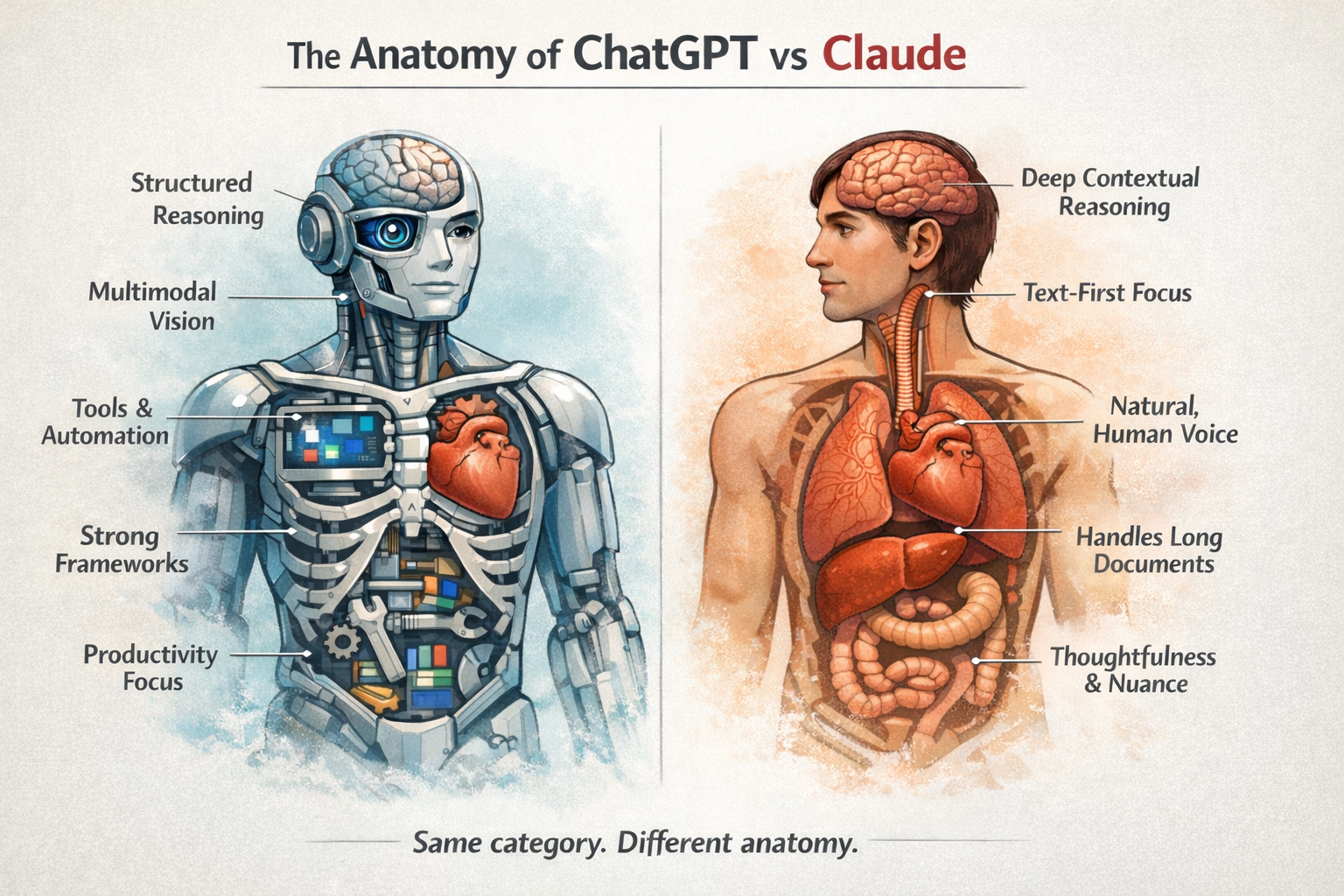
If you treat ChatGPT and Claude as different “organisms,” their strengths become obvious—and predictable.
1. Cognitive Anatomy (How They Think)
- ChatGPT: hierarchical reasoning, decomposition, execution-oriented
- Claude: associative reasoning, context preservation, synthesis
Who wins when:
- Logic, planning, workflows ? ChatGPT
- Ethics, nuance, interpretation ? Claude
2. Linguistic Anatomy (How They Write)
- Sentence rhythm
- Tone control
- Voice consistency
Include side-by-side writing samples (same prompt, different outputs).
3. Memory & Context (How Much They Can Hold)
- Long PDFs
- Policies, contracts, research papers
- Loss of nuance vs compression
Claude tends to carry context; ChatGPT tends to optimize it.
4. Tooling & Ecosystem (What They Can Do)
- Browsing
- Data analysis
- Images
- Custom workflows
This is where ChatGPT clearly behaves like a platform, not just a model.
5. Reliability & Control (How Predictable They Are)
- Prompt sensitivity
- Output variance
- Enterprise readiness
6. Use-Case Matrix (Very Shareable Section)
| Use Case | Winner |
| Marketing copy | ChatGPT |
| Editorial writing | Claude |
| Strategy decks | ChatGPT |
| Policy analysis | Claude |
| Automation | ChatGPT |
| Thinking through ambiguity | Claude |
Final Verdict: Choosing the Right Anatomy
They’re not competitors in practice—they’re complements.
- ChatGPT is a multitool
- Claude is a mind
The best teams learn when to use which.
4. Credibility Note