
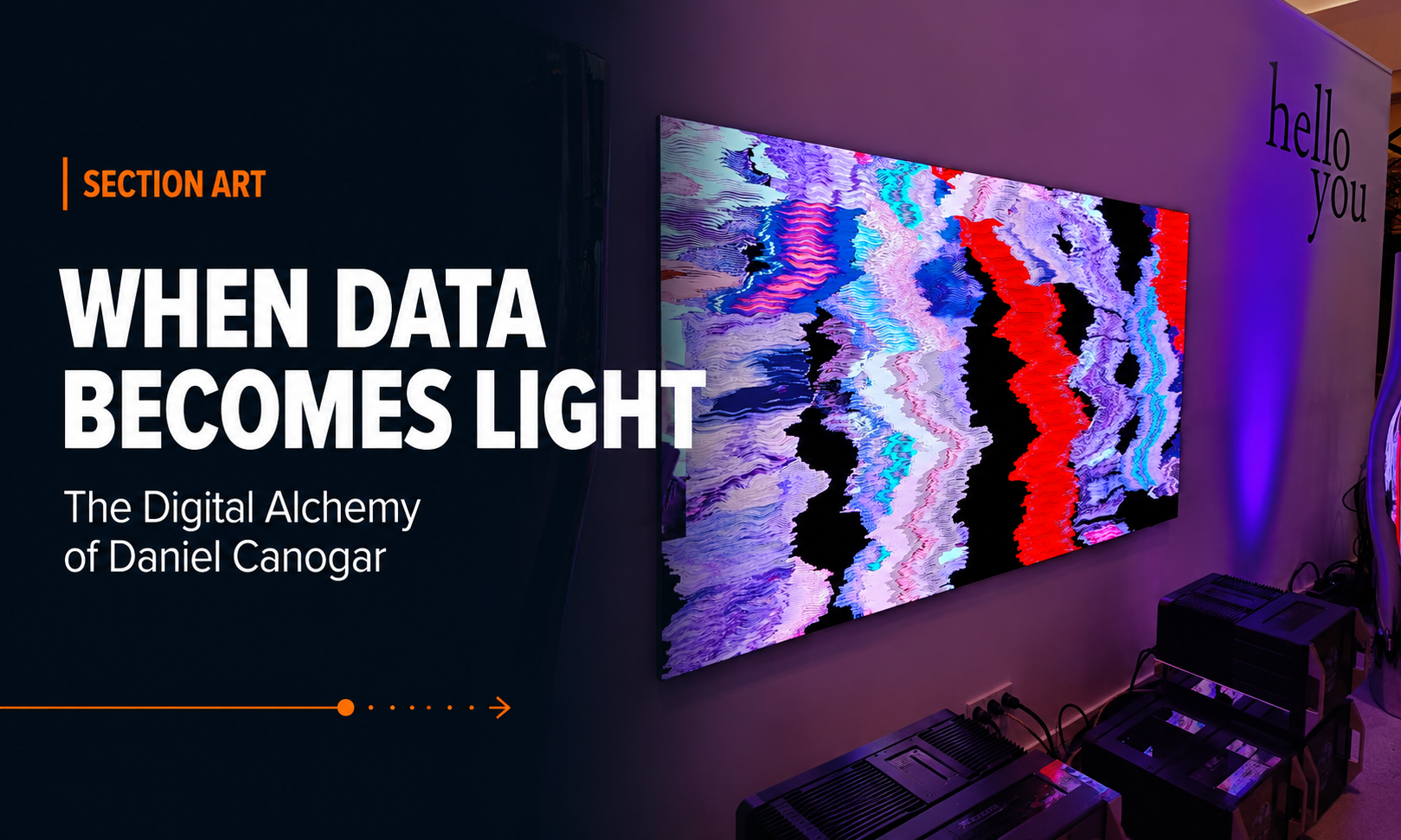
In a world saturated with screens, streams, and torrents of information, Daniel Canogar stands out as a magician of light — a creator who doesn’t just show data, but transmutes it into immersive visual poetry and moving sculptures. Through his video installations and generative artworks, Canogar transforms raw flows of digital information into luminous, breathing compositions, inviting us to experience the intangible architecture of our data-driven lives.
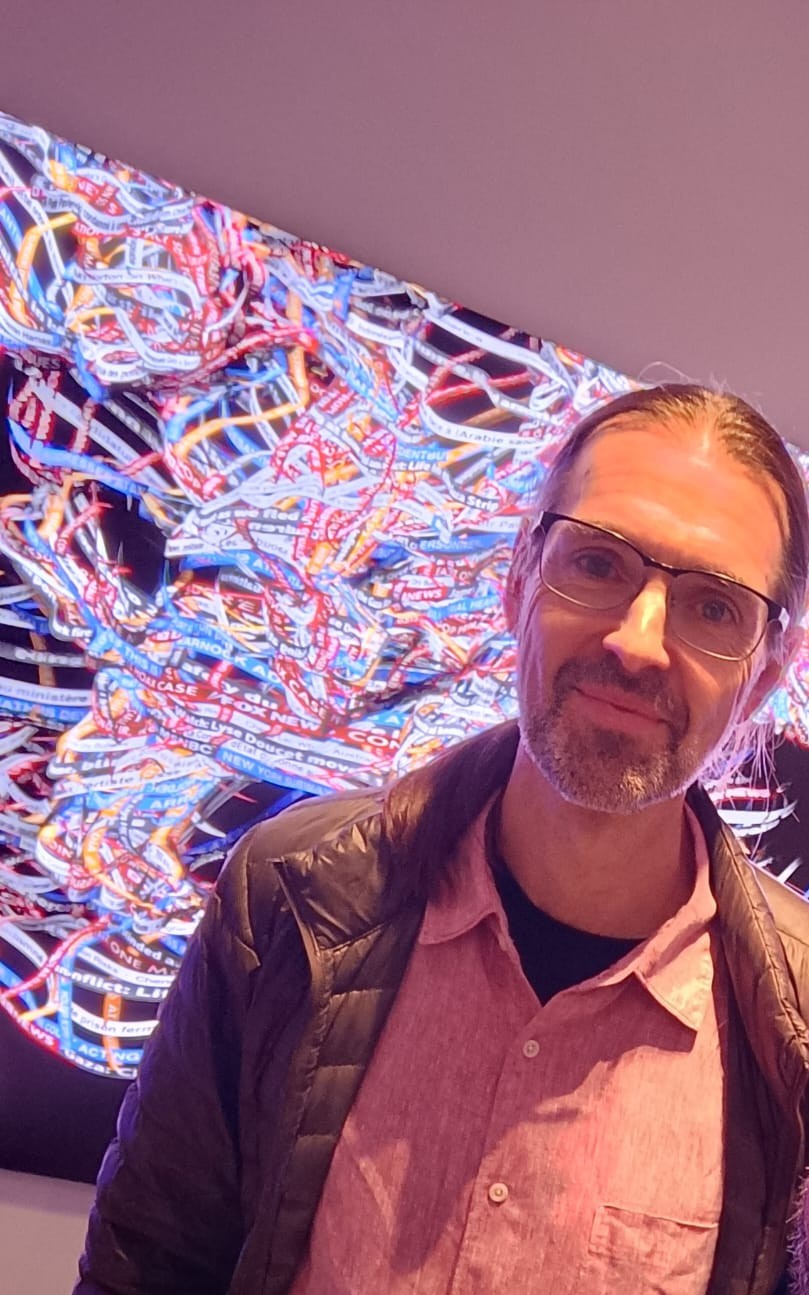
From Photography to Fluid Data — A Journey Through Media
Canogar was born in Madrid in 1964 and trained in photography, receiving a master’s degree from New York University’s International Center of Photography. https://www.mirabaud.com/en/contemporary-art/artists/artist/daniel-canogar
Yet, very early in his career he grew curious about the “projected image” — not just static pictures, but light, motion, space, and time. https://www.danielcanogar.com/bio
Over the decades, his practice evolved beyond photography: he experimented with fiber optics, video projections, recycled electronics, and — now — real-time data streams. https://www.meer.com/en/60589-daniel-canogar
For Canogar, objects like old VHS tapes, hard drives, obsolete electronics aren’t mere trash — they are archeological artifacts of a vanished analog era. By projecting onto them, he resurrects forgotten memories and highlights the impermanence of technology and memory. https://www.meer.com/en/60589-daniel-canogar
Data as Palette: Translating Information Into Art
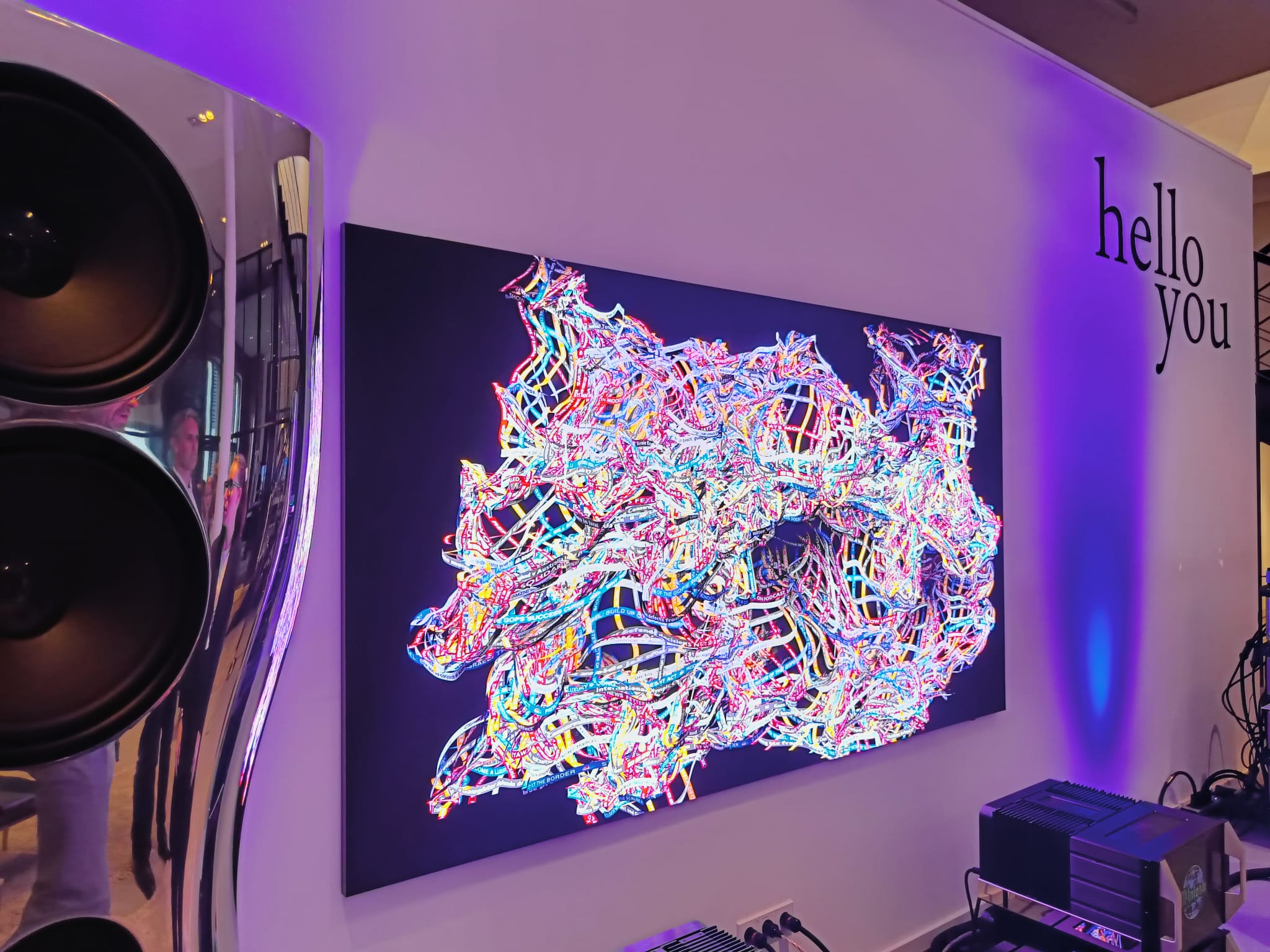
One of the most distinctive traits of Canogar’s work is how he transforms data itself — from financial markets to news feeds, from social attention metrics to historical artworks — into rich, moving visual experiences.
- In works like Cannula (2016), he drew upon the 100 most-searched YouTube videos, translating them into swirling abstract animations projected onto architectural facades. https://www.artsy.net/article/mark-moore-fine-art-mirrors-data-works-daniel-canogar
- With Xylem (2017), he tapped real-time data from 383 global financial indices — letting the ever-changing flows of global markets determine the movement and color of the installation. https://medium.com/%40totopampin/daniel-canogar-at-arco-madrid-36fcd32a97f4
- In Amalgama El Prado (2019), he processed the entire painting collection of a venerable museum, liquefying centuries of visual history into a digital river of color and form — a shimmering commentary on how digital media is transforming our experience and consumption of art. https://on.spainculture.us/amalgama-el-prado-by-daniel-canogar
What makes these works different from mere data visualization — charts, diagrams, dashboards — is that Canogar doesn’t aim to clarify. Instead, he embraces abstraction, ambiguity, emotion: the goal is not to inform, but to evoke. As one observer noted: “the palette of these artworks is not painting, but rather data.” https://www.artsy.net/article/mark-moore-fine-art-mirrors-data-works-daniel-canogar
Light, Memory, and the Fragility of Digital Existence
Underneath the technical brilliance and hypnotic visuals lies a deeper preoccupation: memory, impermanence, and what gets lost when technology evolves.
By projecting onto discarded electronics — DVDs, hard disks, cables — Canogar taps into a collective nostalgia, a memory of personal and shared times stored in these now-forgotten objects. https://www.meer.com/en/60589-daniel-canogar
He sees digital media not as a final frontier, but a sediment — layers of memories, data, context — that accumulate, shift, vanish. His installations often feel like attempts to hold on to that fluid past, to give shape and light to what otherwise remains intangible. https://www.thelightobserver.com/daniel-canogar
As he once said: after the magic of discovering the photographic darkroom as a teenager, “I realized I’m always trying to recreate that magical enchantment … now through algorithms, huge projectors, LED screens.” https://www.niio.com/blog/daniel-canogar-im-trying-to-find-inner-peace-in-this-world-of-excess/

Public Space as Canvas: Blurring Boundaries Between Digital & Physical
Another defining feature of Canogar’s work is its site-specific and often public-space dimension. He doesn’t confine his art to galleries — he spills it into urban spaces, airports, museums, and monumental façades. https://zkm.de/en/person/daniel-canogar
Whether it’s a flexible LED sculpture curving through the atrium of a bank headquarters, or projection animations crawling up the walls of iconic buildings — his art challenges the viewer’s concept of where art belongs. https://www.mirabaud.com/en/contemporary-art/artists/artist/daniel-canogar
In doing so, he asks: how does the digital age reshape our public spaces? How does the constant flow of information infiltrate our shared physical environment? Can we find a new kind of public sphere, where data and memory become visible and collective? https://linkedspheres.art/daniel-canogar
Why Daniel Canogar Matters — And What His Work Reflects
In an era where our lives are increasingly mediated by screens, algorithms, feeds, and streams — almost always unseen layers of code — Canogar’s work is important because it makes the invisible visible.
- He doesn’t just display data — he feels it, sculpts it, breathes light into it.
- He reminds us that behind every “data point” lies human experience, memory, culture.
- He connects analog pasts with digital futures — reclaiming discarded technology as vessels of collective memory.
- He questions what it means to be human in a world where identity, art, history, and memory are increasingly bound up with data.
To encounter a Canogar installation is to confront the vastness of our digital milieu — but to do so as poetry, not panic.
Final Thought: Data Is Not Just Information — It’s Living Light
If data is the new oil, then Daniel Canogar is one of the world’s most graceful and mindful refineries. With sensitivity, imagination, and technological mastery, he turns cold, abstract 1s and 0s into warm, pulsing lights; noisy, chaotic streams into meditative mosaics; fleeting online moments into lasting visual memories.
In his hands, data becomes not a commodity — but a canvas. A reminder that our digital lives, for all their intangibility, leave traces: light and shadows on walls, memories flickering in LED glow, the ghost of old hard drives dancing again.
And maybe that’s what we need now: not another chart or graph — but art.