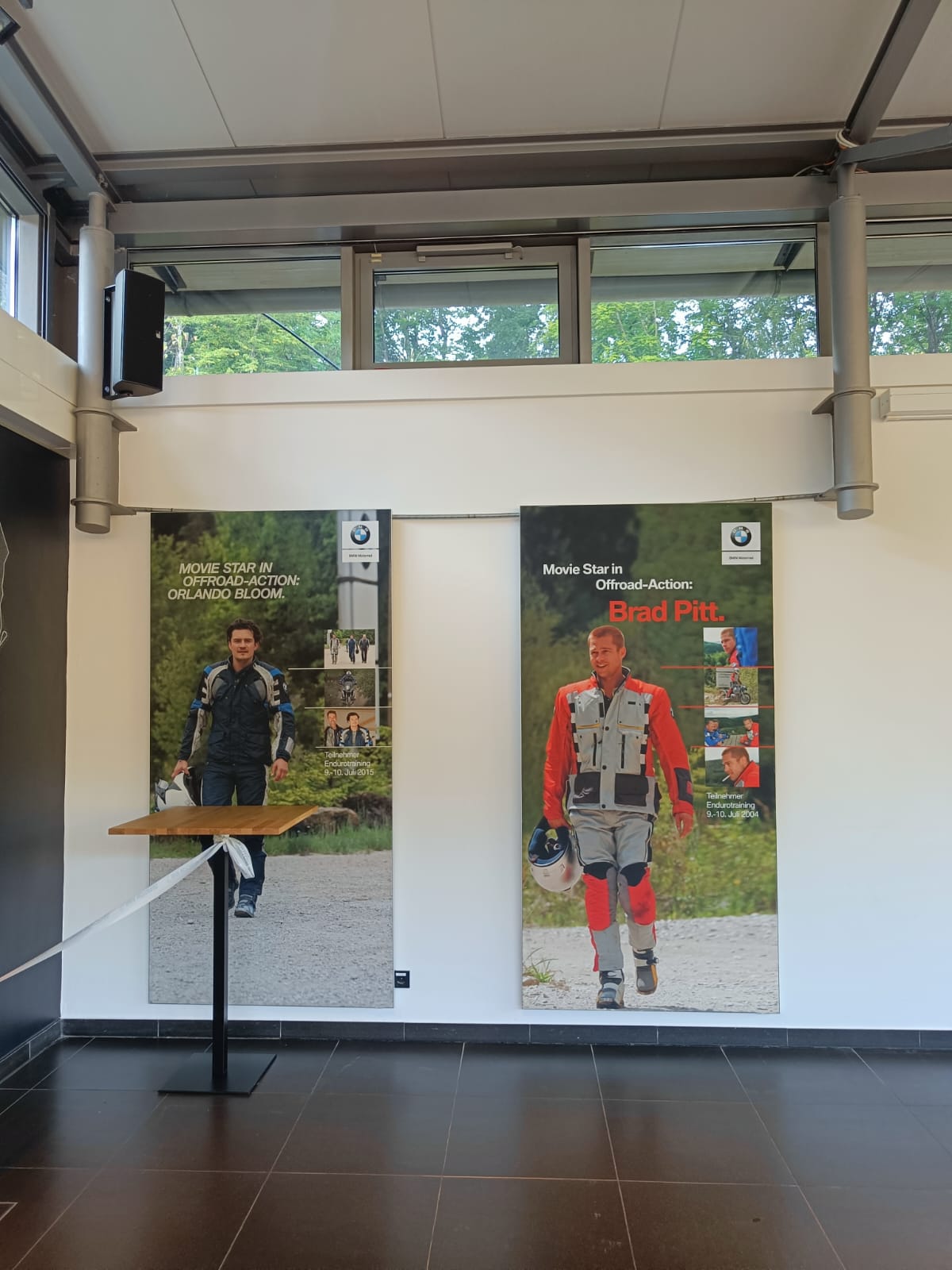
Hollywood adventure does not always stop at the film set. Both Brad Pitt and Orlando Bloom have taken their passion for motorcycles seriously enough to train at the BMW Motorrad Enduro Park—a destination widely regarded as one of the world’s premier off-road riding facilities.
Brad Pitt and Orlando Bloom Enduro Offroad
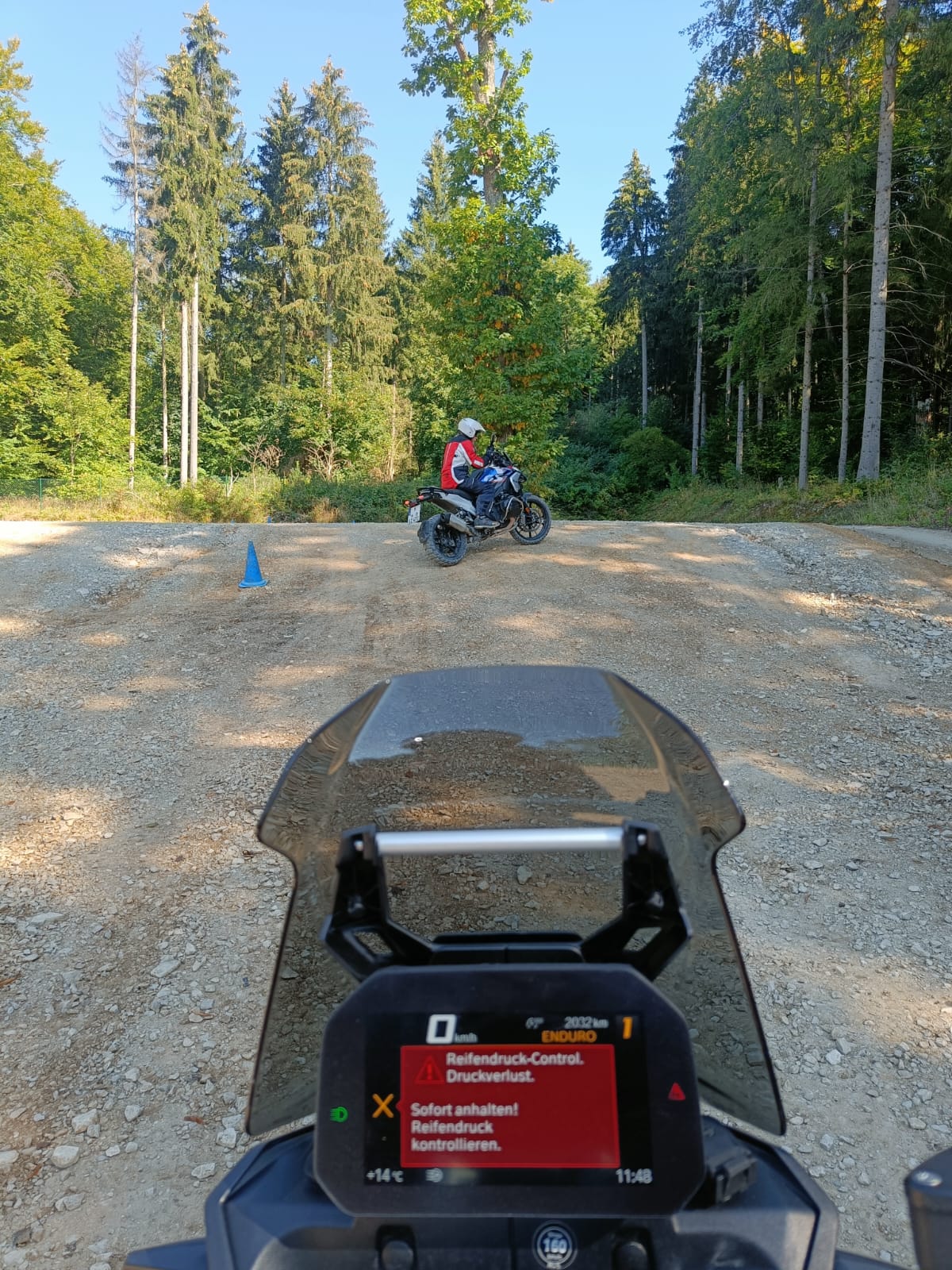
Located in Hechlingen, the park spans roughly 28 hectares of purpose-built terrain designed to replicate real-world adventure riding conditions. Riders encounter everything from steep ascents and technical descents to water crossings, sand sections, gravel beds, and narrow forest trails. The environment is demanding, yet carefully controlled, allowing riders to push their limits safely.
Training at the park is operated in cooperation with TWTMoto and delivered by certified BMW Motorrad instructors. Programs range from introductory off-road courses to advanced multi-day Enduro and adventure training, with a strong focus on balance, throttle control, body positioning, and confidence on unstable surfaces.
The presence of Pitt and Bloom underscores the park’s reputation. This is not a celebrity gimmick, but a serious training ground respected by professionals, enthusiasts, and instructors alike. Whether you are preparing for long-distance adventure travel or simply want to become a more capable rider off the tarmac, the BMW Motorrad Enduro Park offers an experience that is as authentic as it is unforgettable.
For riders who believe true adventure begins where the asphalt ends, this is where legends—on screen and on two wheels—come to learn.
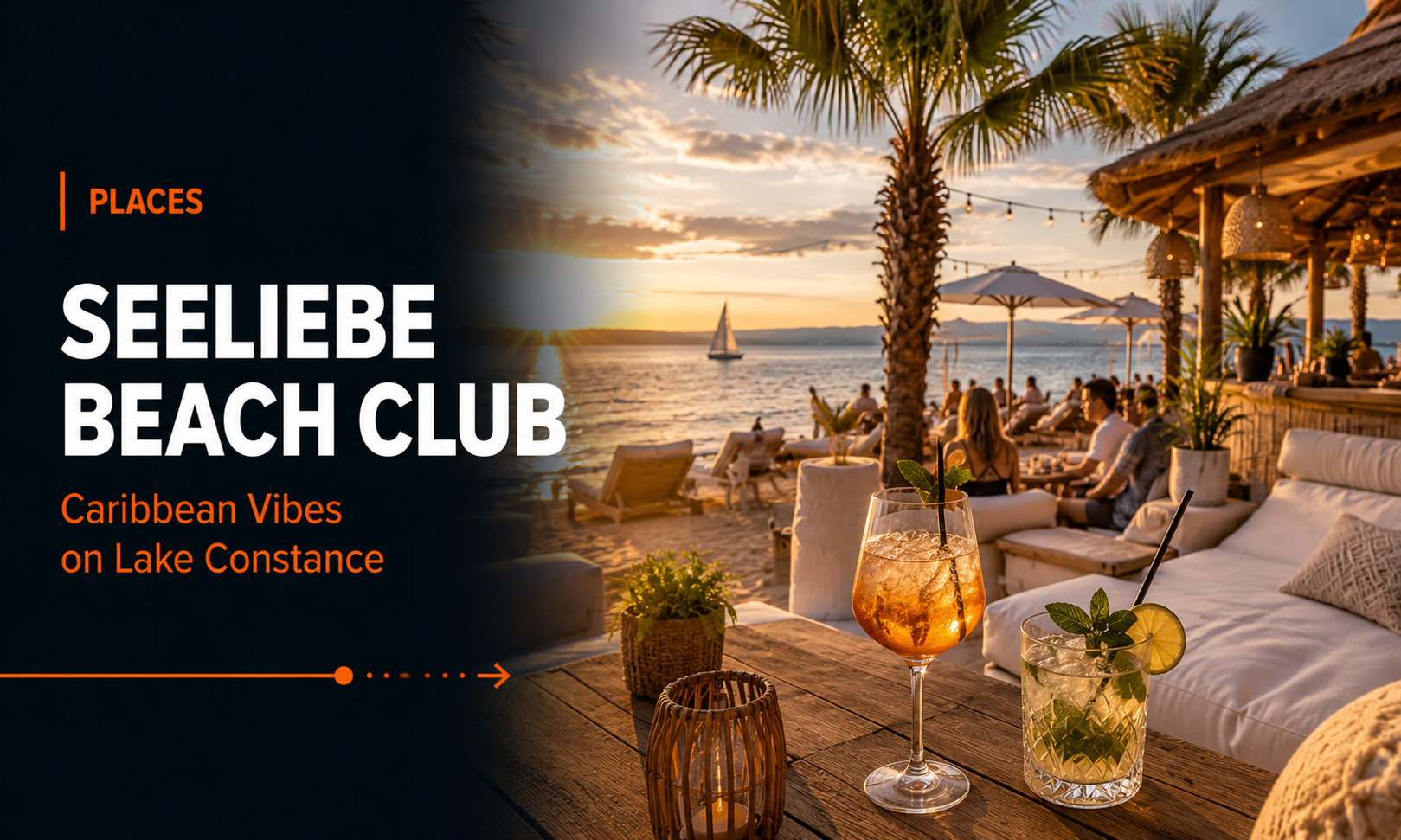
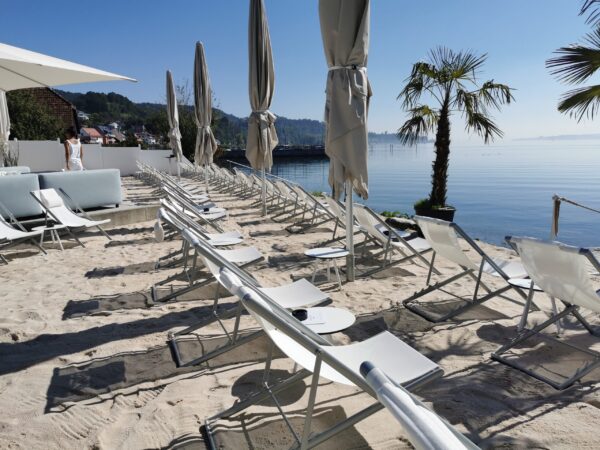
If you are searching for a place that feels like the Caribbean but is firmly rooted in Europe, Seeliebe Beach Club is a destination worth discovering. Located directly on the shores of Lake Constance, this beach club offers relaxed holiday energy, turquoise water views, and a lifestyle atmosphere that feels far removed from everyday life.
A Beach Club Experience — Without Leaving Germany
The Seeliebe Beach Club is known for its sandy beach area, stylish loungers, and open views across the lake toward the Alps. Palm details, comfortable seating, and curated music immediately create a summer mindset. On warm days, the light reflecting on the water gives the entire space a Mediterranean glow, making it easy to forget that you are still in southern Germany.
This is not a traditional lakeside café. It is a modern beach club designed for long afternoons, sunset drinks, and spontaneous moments that feel like vacation.
Food, Drinks, and Laid-Back Luxury
The menu focuses on light, fresh offerings that fit the beach club concept perfectly. Guests enjoy cold drinks, classic cocktails, Italian coffee, wine, and small dishes that are ideal for sharing. Everything is served with a sense of ease — no formality, no rush, just relaxed enjoyment by the water.
Whether you stop by for a daytime drink after swimming or settle in for the evening as the sun goes down, the atmosphere remains effortlessly stylish and welcoming.
A Favorite Spot for Locals and Travelers
The Seeliebe Beach Club attracts a diverse crowd: locals looking for a summer escape, couples enjoying a relaxed date, and travelers exploring the Lake Constance region. You do not need to be a hotel guest to visit, which makes it an easy and popular stop for day trips.
During peak summer days, arriving earlier is recommended, as the best spots fill up quickly when the weather is good.
Why It Belongs on Your Lake Constance Itinerary
What makes this place special is the combination of location and feeling. Few spots around Lake Constance manage to deliver such a strong “holiday abroad” sensation. The mix of sand, water, music, and scenery creates a beach club experience that rivals coastal destinations — without flights, crowds, or long travel times.
If you are curating a list of inspiring places, hidden gems, or lifestyle destinations, Seeliebe Beach Club stands out as a must-visit summer location.
Final Impression
Seeliebe Beach Club is proof that you do not need the Caribbean to feel like you are there. With its relaxed luxury, scenic lakeside setting, and unmistakable summer vibe, it captures the essence of a beach holiday in one of Germany’s most beautiful regions.
Perfect for slow afternoons, golden-hour drinks, and unforgettable summer memories — this is Lake Constance at its most stylish.
The year 2026 marks a turning point: AI becomes autonomous, specialized, agentic, embedded into infrastructure, and tightly woven into daily business ecosystems. For marketers, this isn’t simply a tech evolution—it’s a strategic inflection point that reshapes how we understand audiences, orchestrate journeys, build value, and measure outcomes.
Below is what these emerging technologies really mean for B2C and B2B marketers—and how to start preparing right now.
Hot Tech Trends in 2026
1. Advanced AI & Agentic Systems
Autonomous agents, multi-agent systems, and domain-specific language models (DSLMs) will dominate 2026.
What this means for B2C Marketers
Hyper-personalized, autonomous consumer journeys AI agents will design, test, and optimize journeys without waiting for human prompts—adjusting offers, timing, and channels in real time.
Conversational commerce 2.0 Consumers will interact with their own AI assistants who make recommendations, compare products, and negotiate offers. Marketers must optimize for an AI-first buyer, not just a human buyer.
Micro-segmentation at scale DSLMs understand consumer behavior at a depth never seen before: lifestyle, emotion, micro-intent, cultural nuance.
What this means for B2B Marketers
AI-driven account intelligence Multi-agent systems will score accounts dynamically—based on market signals, procurement changes, and internal activity.
Autonomous ABM campaigns Campaign agents will continuously orchestrate personalized content, outreach, and follow-ups for each buying role.
Radical efficiency in content production DSLMs trained on domain knowledge produce whitepapers, briefs, and case studies with near-expert precision.
2. Cybersecurity, Privacy & AI Governance
As AI scales, so do risks. Security becomes a brand trust pillar.
For B2C Marketers
Trust becomes a buying factor Consumers reward brands that clearly explain data usage, AI agents, and privacy protections.
Ethical design differentiates brands Transparent personalization and opt-in autonomy will become competitive advantages.
For B2B Marketers
Security storytelling moves to the forefront Procurement requires AI risk assessments, model governance documentation, and compliance clarity.
Secure data ecosystems enable deeper personalization Strong governance unlocks higher-quality, compliant data—driving more effective targeting.
Real-time contextual marketing becomes the norm From smart homes to wearables, IoT-linked AI will trigger experiences at the perfect moment—when intent is highest.
Frictionless omnichannel experiences Cloud-AI convergence means every customer touchpoint receives the same intelligence instantly.
For B2B Marketers
AI-native Martech stacks reshape operations Tools that build, integrate, and optimize themselves reduce operational overhead dramatically.
Predictive buyer behavior from IoT data Industrial IoT + AI gives real-time insights into equipment status, usage patterns, and future needs—turning marketers into forecasters.
4. Emerging Frontiers: Quantum, Bioprinting & BCI
These technologies may feel distant—but their marketing implications have already begun.
For B2C Marketers
Quantum-enabled personalization Ultra-fast simulations will refine recommendations and pricing models at unmatched speed.
New product categories Bioprinted health products or BCI-driven interfaces will require new education-first marketing formats.
For B2B Marketers
Entirely new verticals emerge Quantum computing and bioprinting reshape industries—creating new target accounts and value propositions.
Technical content becomes king Buyers will demand clarity on complex innovations. DSLMs can generate expert-level content for niche audiences.
New touchpoints in the physical world Domestic robots or smart cars become marketing channels:
in-car recommendations
home robot notifications
drone-enabled deliveries and experiences
Shift from screen-based to ambient marketing The home becomes a responsive environment, not a channel.
For B2B Marketers
New data streams from automated systems Robots and drones offer insights into behavior, operations, and demand.
Partnership-driven ecosystems Smart device ecosystems open new B2B collaborations and co-branding opportunities.
What Marketers Must Do Now
For Both B2C & B2B Leaders:
Build AI governance capabilities.
Prepare for AI-first customers and buying committees.
Invest in data quality, interoperability & ethical frameworks.
Experiment with autonomous agents in controlled environments.
Shift teams toward creativity, strategy & human-centric design.
The Bottom Line
2026 is not about more AI—it’s about AI becoming independent, specialized, and deeply embedded. Marketers who master governance, orchestration, collaboration with agents, and ethical innovation will dominate the next decade.
here are moments in nature so small and unassuming that they often slip past us unnoticed. A leaf trembling in a soft breeze. A bird sketching effortless curves across the morning sky. Or, as captured here, a humble piece of fruit revealing an unexpected universe of patterns, colors, and quiet poetry.
This is where nature hides her brilliance—in the places we dismiss as ordinary.
A Fruit, or a Tiny Sun?
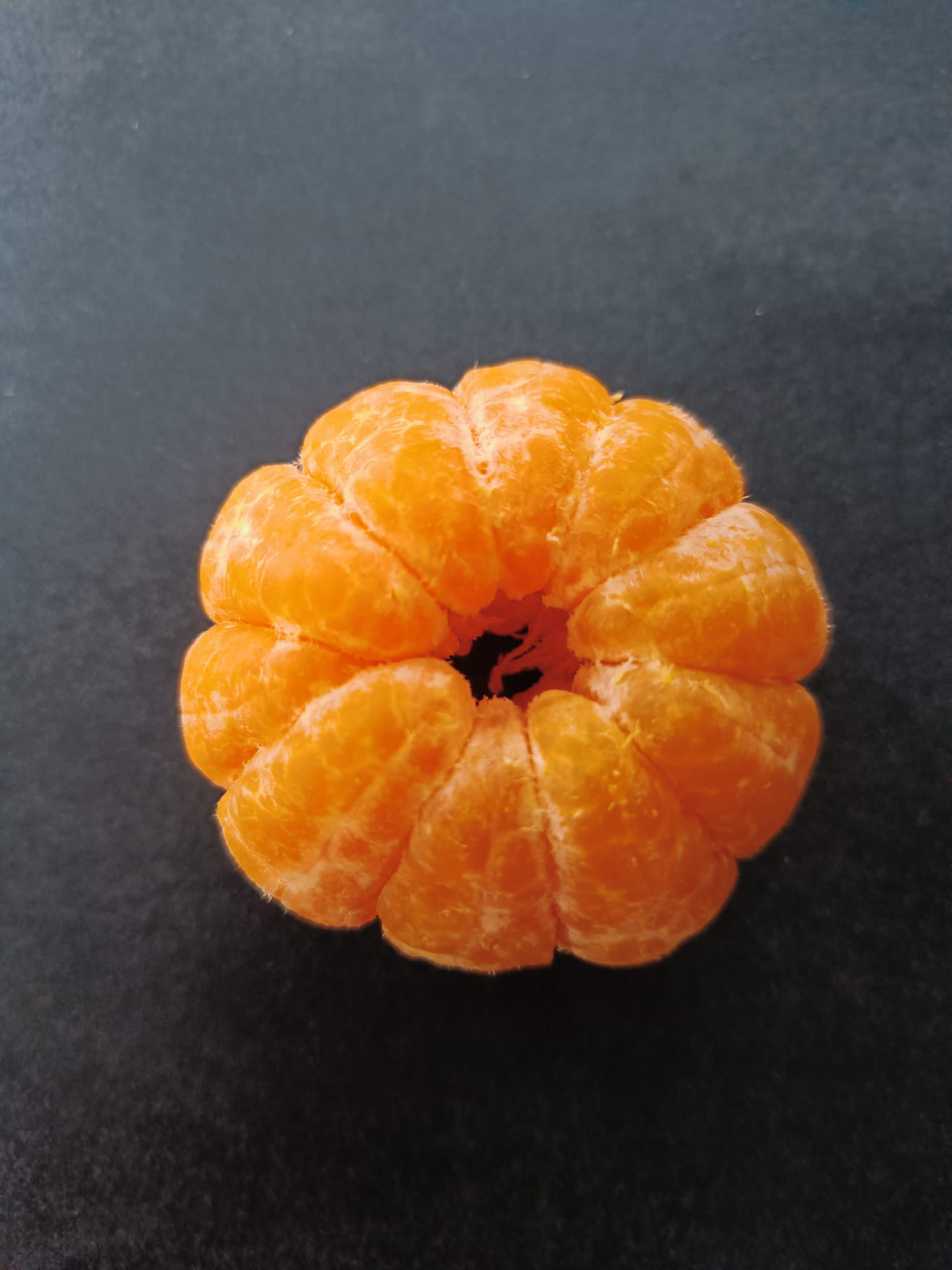
At first glance, the object seems obvious: a peeled mandarin, familiar and comforting. But seen from above, it transforms into something entirely different.
A miniature sun. A soft sculpture of repeating crescents. A natural mandala formed not by human hands, but by time, light, and quiet biological geometry.
Nature has a way of rearranging the everyday into something symbolic—sometimes even sacred—when we pause long enough to truly look.
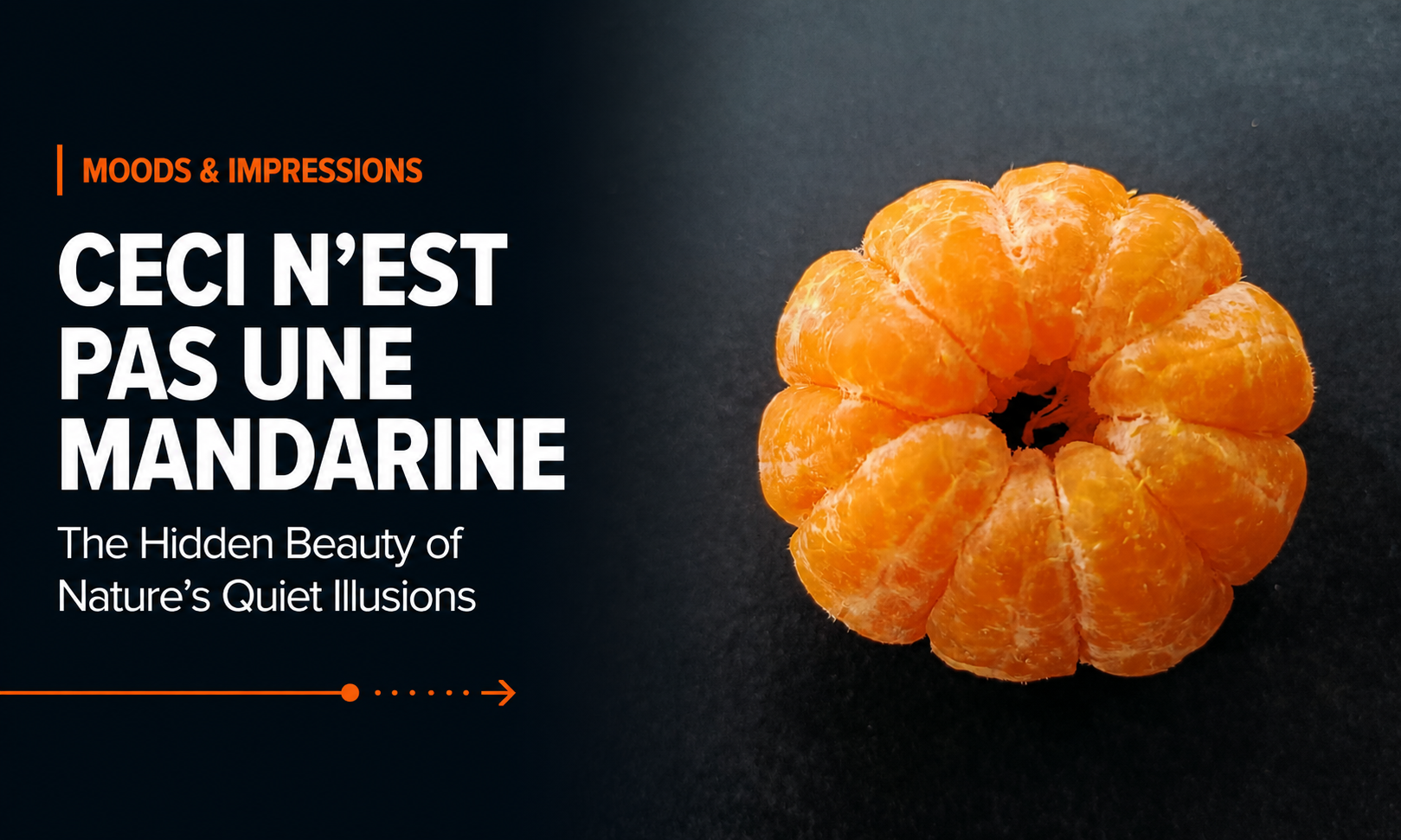
Why “Ceci n’est pas une mandarine” Matters
The phrase playfully echoes Magritte’s famous challenge to perception, reminding us that things often hold more meaning than their surface suggests. This is not just a mandarin. It is an invitation.
To notice. To imagine. To reconsider what stands before us.
When we look twice:
A fruit becomes a landscape
A shadow becomes a story
A simple moment becomes a lingering mood
This shift in perception is the heart of nature-inspired mindfulness—an art of noticing that opens our senses to quiet wonder.
Patterns, Patience, and the Beauty of Presence
The symmetry of the segments, the saturated orange glow, the soft textures catching faint light—all combine into a visual experience far richer than the object itself.
Nature doesn’t demand grand gestures. She asks only for:
Presence
Attention
Curiosity
When we offer these, even briefly, the world becomes textured again. Colors feel fuller. Time stretches. The ordinary becomes extraordinary.
These are the impressions that linger long after the moment passes.
Rediscovering Wonder in the Everyday
The mandarin—or not-mandarin—becomes a quiet reminder:
Beauty doesn’t hide from us. We simply forget how to look.
In its simplicity, this little sun-shaped fruit invites us to pause:
Breathe. Observe. Let nature reveal her subtle art.
Because the real magic of the natural world isn’t only in mountains, oceans, or dramatic sunsets. It is in the small, uncelebrated spaces where meaning lives quietly, waiting for us to notice.
Conclusion: This Is Not a Mandarin. It Is a Moment.
What we see is never the whole story. And often, the most powerful impressions come from the gentlest scenes.
So no, this is not a mandarin. It is a lesson in perspective—an ode to the unnoticed—and a tiny reminder that wonder lives closer than we think.
A simple layered plywood project that looks amazing
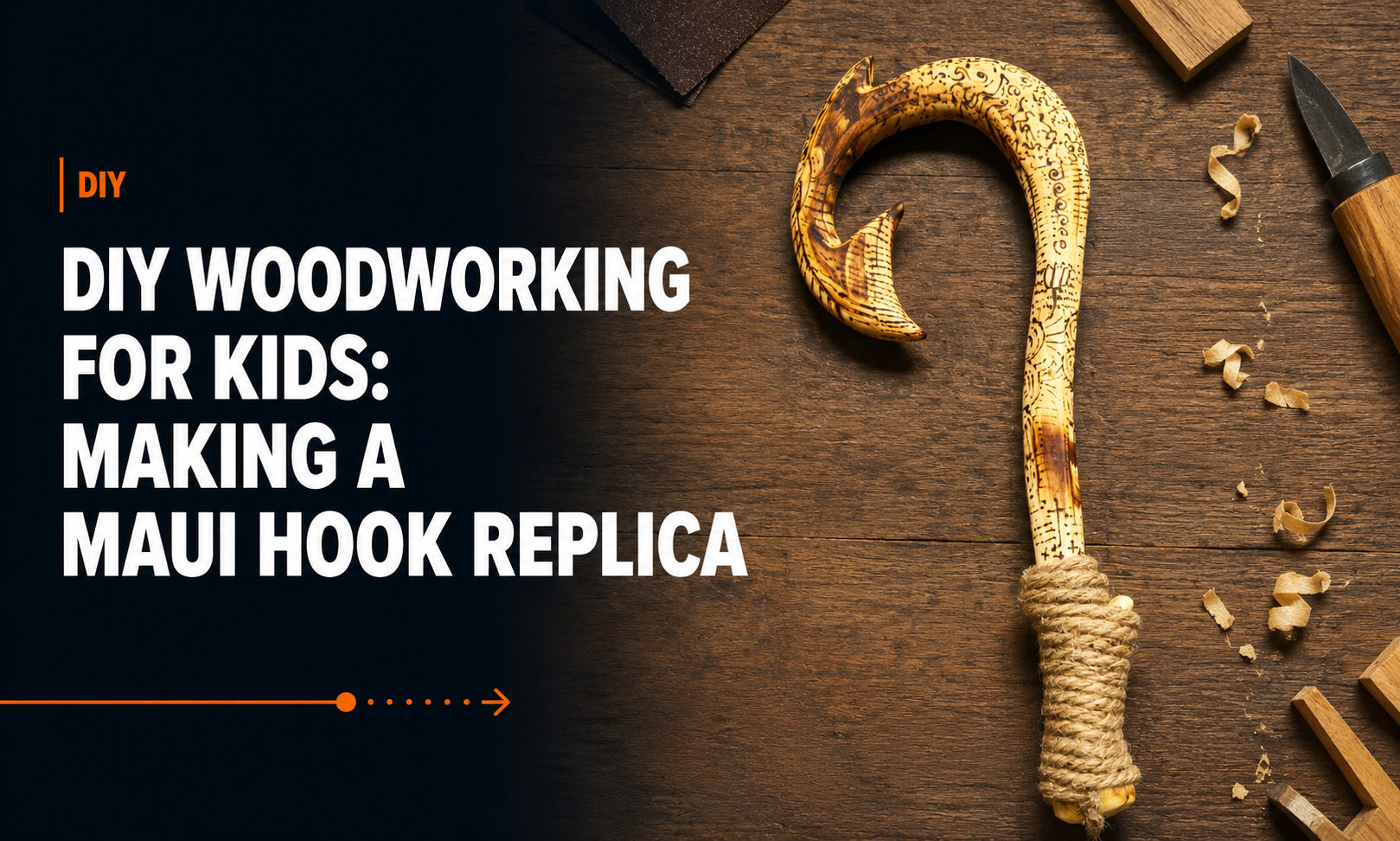
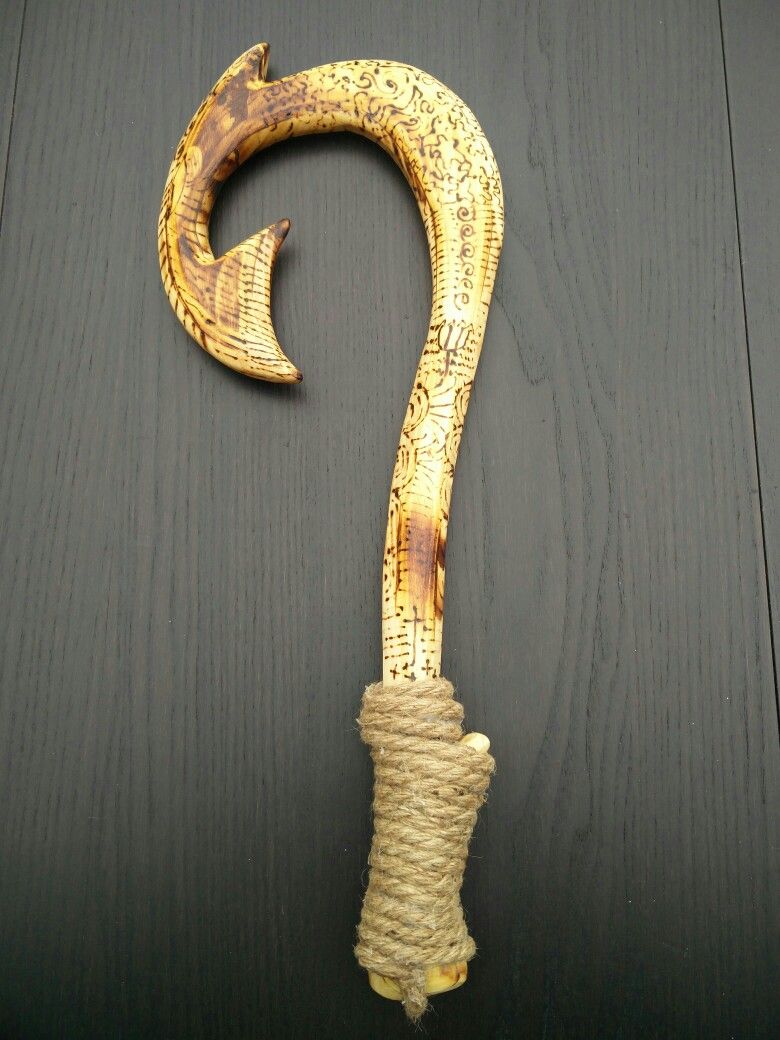
Woodworking with kids doesn’t have to be complicated. In fact, some of the most impressive-looking results come from very simple methods. One of our favorite projects is this handmade replica of the iconic Maui hook from Moana — a fun, hands-on build that introduces children to basic woodworking techniques while giving them a fantastic prop or decoration they’ll be proud of.
What’s especially great about this project is that it’s made from layered plywood, shaped with simple tools, and finished with details that kids can help create step by step.
Vajana Moana hook replica wood work
What You’ll Need
Plywood sheets
Wood glue
A jigsaw, coping saw, or scroll saw
Sandpaper (coarse to fine)
A woodburning tool
Clear coat or varnish
Rope or thick twine for the handle wrap
How to Make the Maui Hook
1. Create the Shape Using Layers
Start by tracing the hook shape onto several pieces of plywood. Kids can help draw the outline or hold the layers in place. Glue the sheets together to build thickness. Once dry, you’ll have a sturdy block ready to cut.
2. Cut Out the Outline
Using a saw, carefully cut along the shape. This step is best handled by an adult, but kids can watch and learn how the lines become a real object.
3. Sand Smooth and Round
Kids especially enjoy this part. Use coarse sandpaper to shape the hook, then finer grit to create a smooth, rounded surface. The transformation from rough wood to a polished curve is incredibly satisfying.
4. Add Woodburned Designs
A woodburning tool is a fantastic way to add details. Kids can help sketch patterns in pencil first, and adults can burn them into the surface. Polynesian-inspired lines and swirls give it the authentic Maui look.
5. Clear Coat for Protection
A few layers of clear coat bring out the grain, protect the pattern, and give the hook a finished shine.
6. Wrap the Handle
Finally, wrap the bottom of the handle tightly with rope or twine. This not only looks great but also makes the hook easier to hold.
Why This Project Works So Well for Kids
Woodworking projects like this teach children to plan, shape, and finish a real object. They get hands-on time with sanding, drawing designs, and helping with assembly — all while seeing a flat piece of wood turn into something recognizable and exciting.
The Maui hook is perfect because it’s bold, iconic, and instantly rewarding to make. Kids love the end result, whether for display, costume play, or simply as a keepsake they helped create.
Grab some plywood, sketch out your hook, and dive in. Yes, you and your kids can make this!
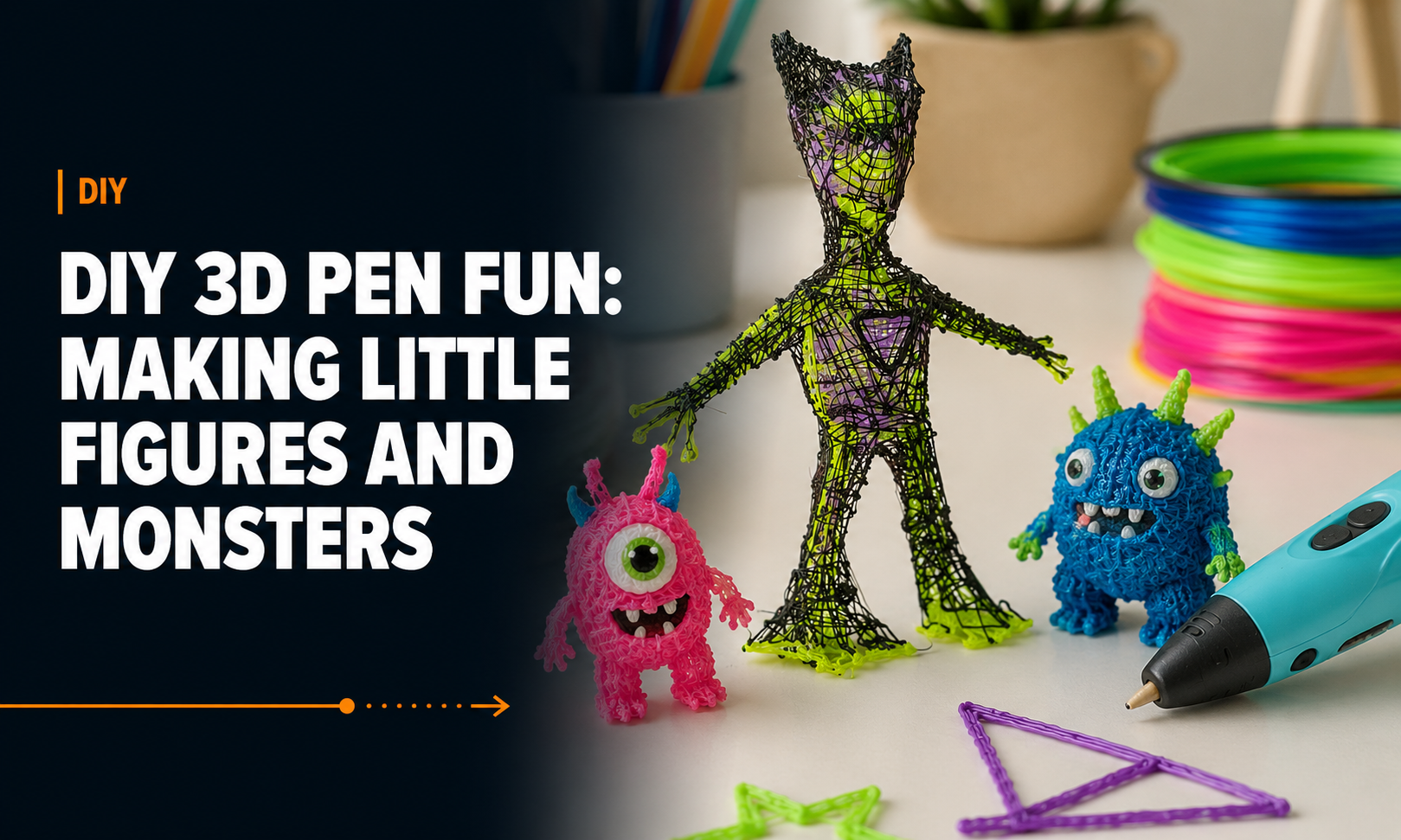
If you’re looking for a project that’s fun for all ages, full of personality, and doesn’t require precision or special skills, making little figures and monsters with a 3D pen is the perfect place to start. These creations can be cute, creepy, abstract, or downright bizarre — and that’s exactly what makes them so enjoyable.
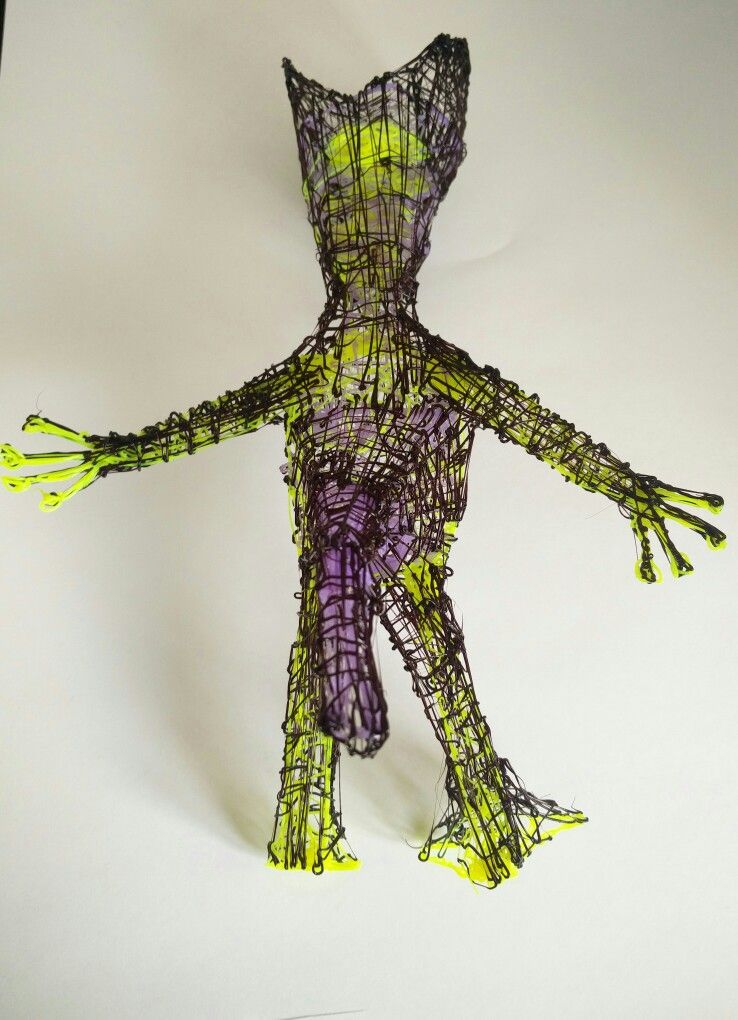
The figure in the photo is a great example: a wiry, expressive little monster built entirely by layering simple lines of filament. It looks complex, but the process is surprisingly easy once you get the hang of it.
3d pen printed little monster backside
What You Need
A 3D pen
Filament in a few colors
Paper or a heat-safe surface
Optional: a simple sketch to follow
Optional: glow-in-the-dark filament or paint
How to Make Your Own Little Monster
1. Start With a Simple Skeleton
Begin by drawing the rough outline of your figure directly onto paper. One vertical line for the spine, a circle for the head, a triangle for the torso, and simple lines for arms and legs. Once the basic shape is drawn, trace over it with filament to make a flat “wireframe.”
2. Build It Up in Layers
Carefully lift the flat shape off the paper and begin “drawing” in mid-air. Add more lines of filament around the outline to give it structure. The beauty of this step is that the lines don’t have to be perfect — the loose, webby texture gives your figure character.
3. Shape the Head
Heads are one of the easiest parts. Start by making a loop or circle, then slowly thicken it by weaving filament back and forth. Add pointed ears, horns, big eyes — whatever fuels your monster ideas.
4. Add Color and Personality
Use contrasting filament colors to fill in certain areas, like the eyes, chest, or hands. Glowing filament or glow paint creates an otherworldly effect, especially on alien-style figures.
5. Feet and Base
For more stability, make the feet slightly wider or add a small flat base. Monsters with oversized feet stand especially well.
6. Final Touches
Add texture by doodling extra lines over the limbs. Create claws, spikes, or even tiny accessories. Kids especially love designing ridiculous features — giant hands, long necks, funny hair, or superpowers.
Why These Projects Are Great
Making monsters and little characters is incredibly freeing. There’s no “right” way for a monster to look. No symmetry required. No need to hide imperfections. The more irregular the shapes, the more personality your creation has.
It’s a playful, low-pressure project that sparks imagination and encourages experimentation. And once you’ve made one creature, you’ll want to build a whole family of them.
Just grab a 3D pen, pick a color, and start doodling in 3D. You can absolutely make your own monsters — yes, you can do it!
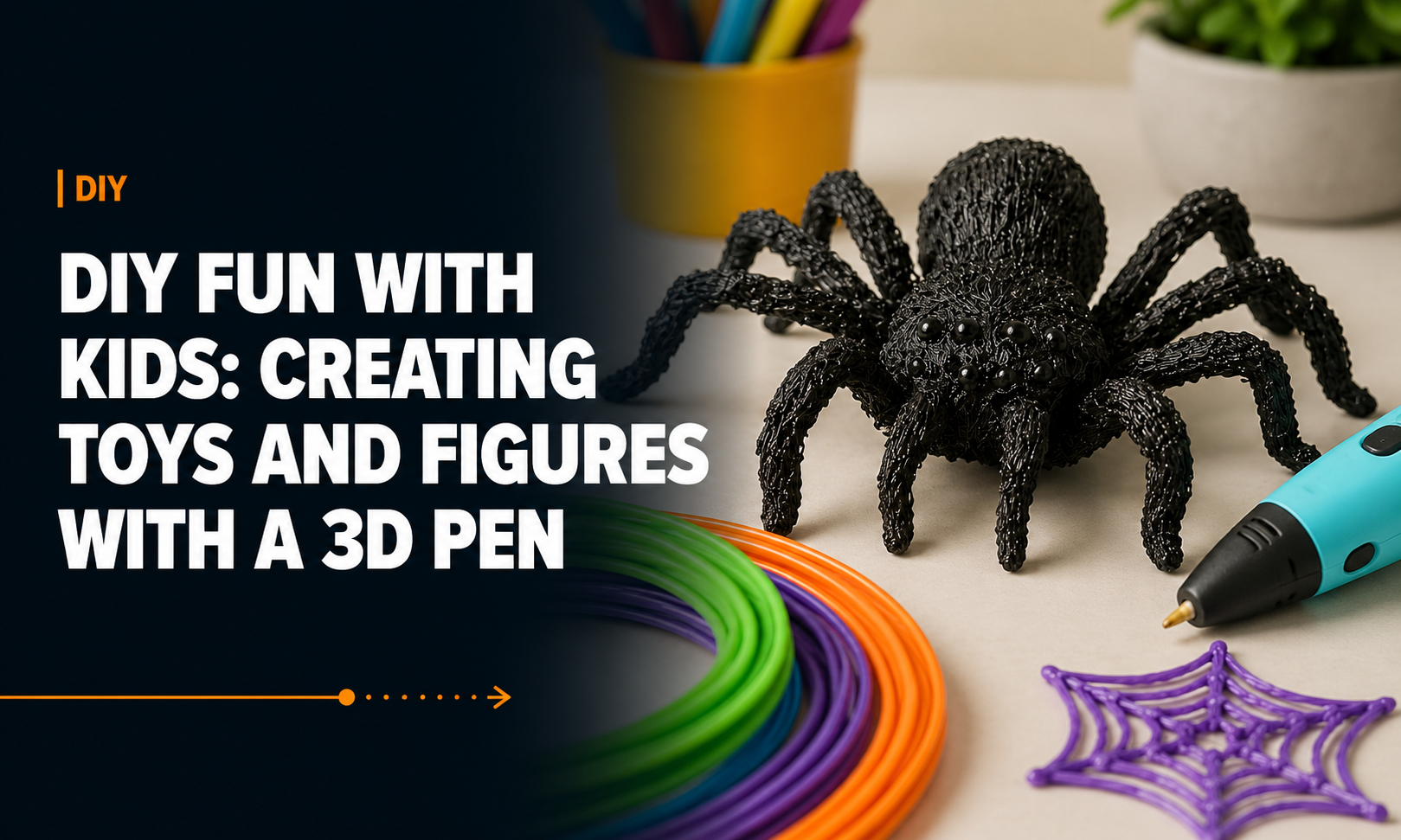
If you’ve ever held a 3D pen and wondered what kinds of projects you could create with kids, here’s the good news: it’s easier than you think. A 3D pen is basically a drawing tool that lets you build upward, outward, and in three dimensions—perfect for young imaginations.
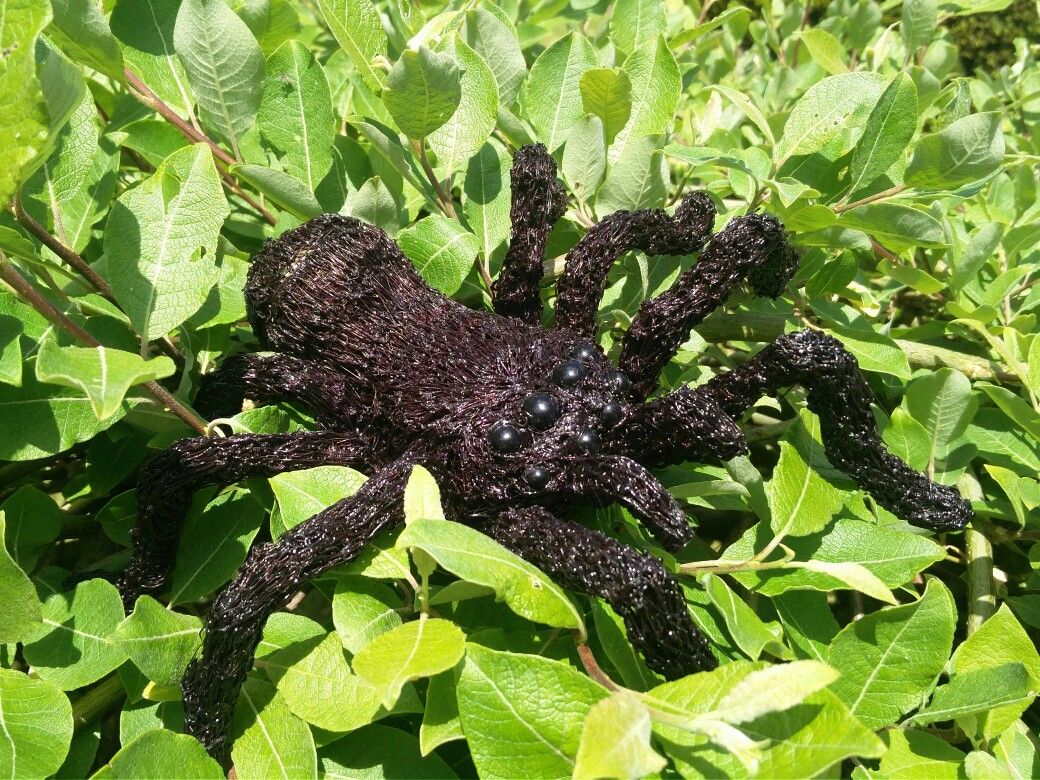
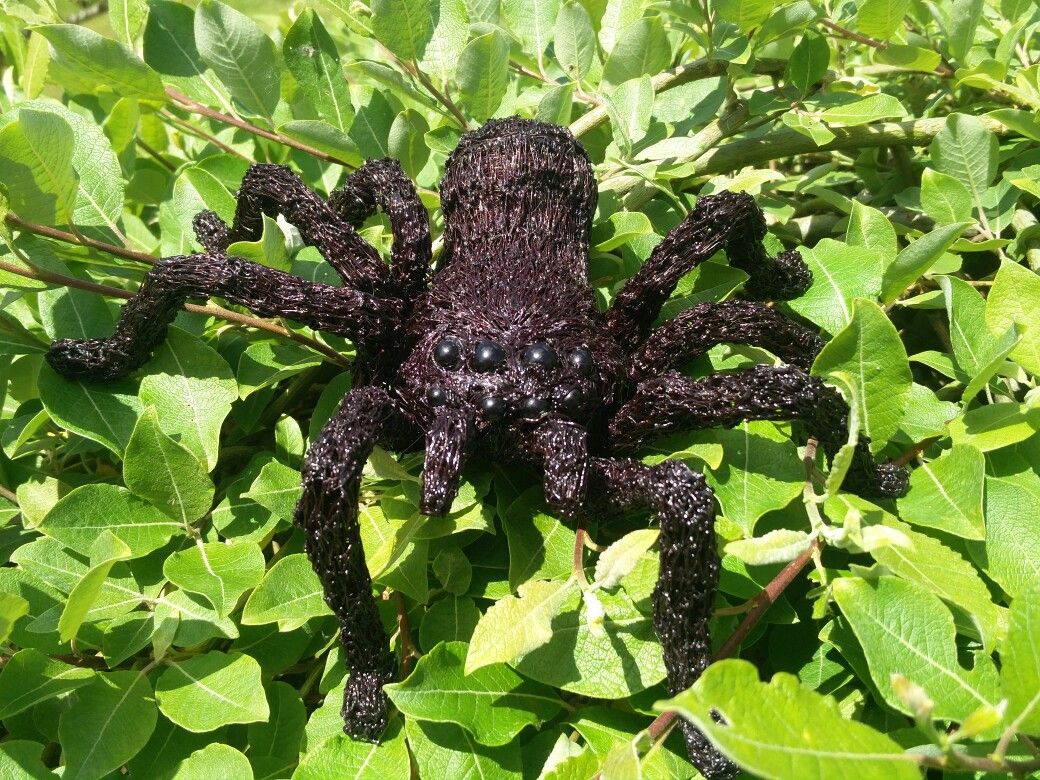
Today’s featured project is a great example of how simple and fun it can be. We created a scary-looking spider with a touch of glowing magic, and it’s a project that anyone can make, even beginners.
3d pen printed spider B
Why 3D Pens Are Great for Kids’ DIY Projects
A 3D pen is accessible, quick to set up, and instantly rewarding. Kids get to see their creations take shape right in front of them, which keeps them engaged and excited. There’s no waiting for a print to finish, no complicated software, and mistakes can be turned into new ideas on the fly.
It also encourages hands-on creativity, problem-solving, and the joy of experimenting with shapes and textures.
3d pen printed spider A
The Glow-in-the-Dark Spider Project
This spider looks surprisingly realistic, but the process behind it is straightforward. You only need a 3D pen, black filament, a ping pong ball, glow-in-the-dark paint, and a few small beads or drops of filament for the eyes.
1. Shape the Legs
Start by drawing eight legs using the 3D pen. Kids can help outline wavy or curved shapes on a piece of parchment paper or a work mat. Perfect symmetry isn’t important—natural spiders aren’t perfectly consistent either.
2. Build the Head and Upper Body
Use the 3D pen to draw a small rounded head and a slightly larger front body section. These can be hollow or filled in, depending on how sturdy you want the figure to be.
3. Form the Abdomen Using a Ping Pong Ball
This is where the project becomes especially fun. Take a ping pong ball and begin coating it with black filament from the 3D pen. Once it’s mostly covered, paint it with glow-in-the-dark paint. The paint charges in sunlight or under indoor lights, making the spider glow at night.
4. Assemble the Spider
Attach the legs one by one to the body, warming the filament slightly so it bonds firmly. Kids love this step because the spider starts to take shape instantly.
5. Add the Eyes
Use tiny beads or small dots of cooled filament to create the spider’s eyes. You can add as many as you like—real spiders often have eight.
The Best Part
Once the paint is dry, turn off the lights and watch the abdomen glow. Kids are always delighted to see their creation come alive with light.
This project often inspires more ideas: glowing insects, creative creatures, robots, or seasonal decorations. With a 3D pen, the possibilities are almost endless.
Working together on a project like this is not only creative but also a great bonding activity. You don’t need special skills—just curiosity and the willingness to play with shapes and ideas.
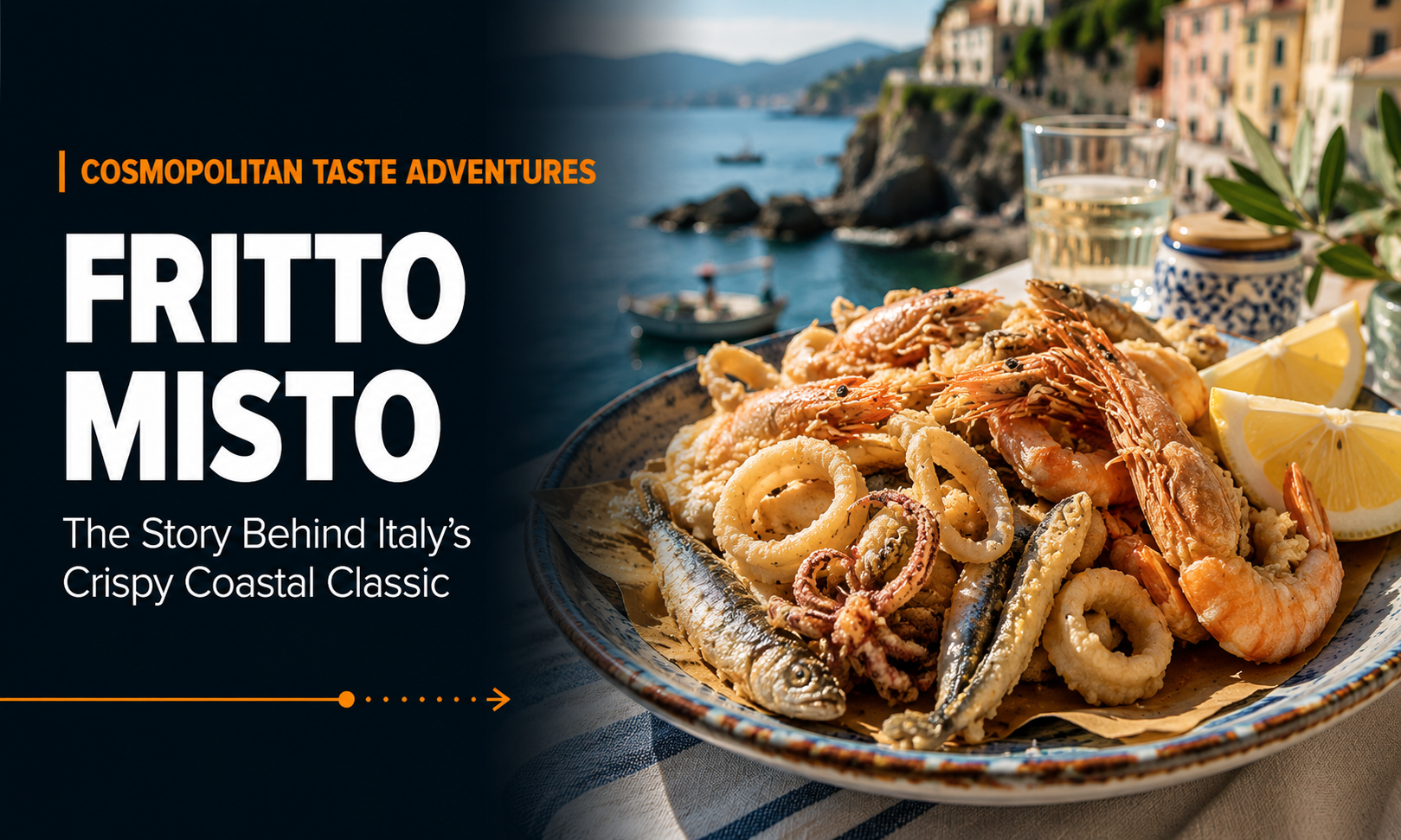
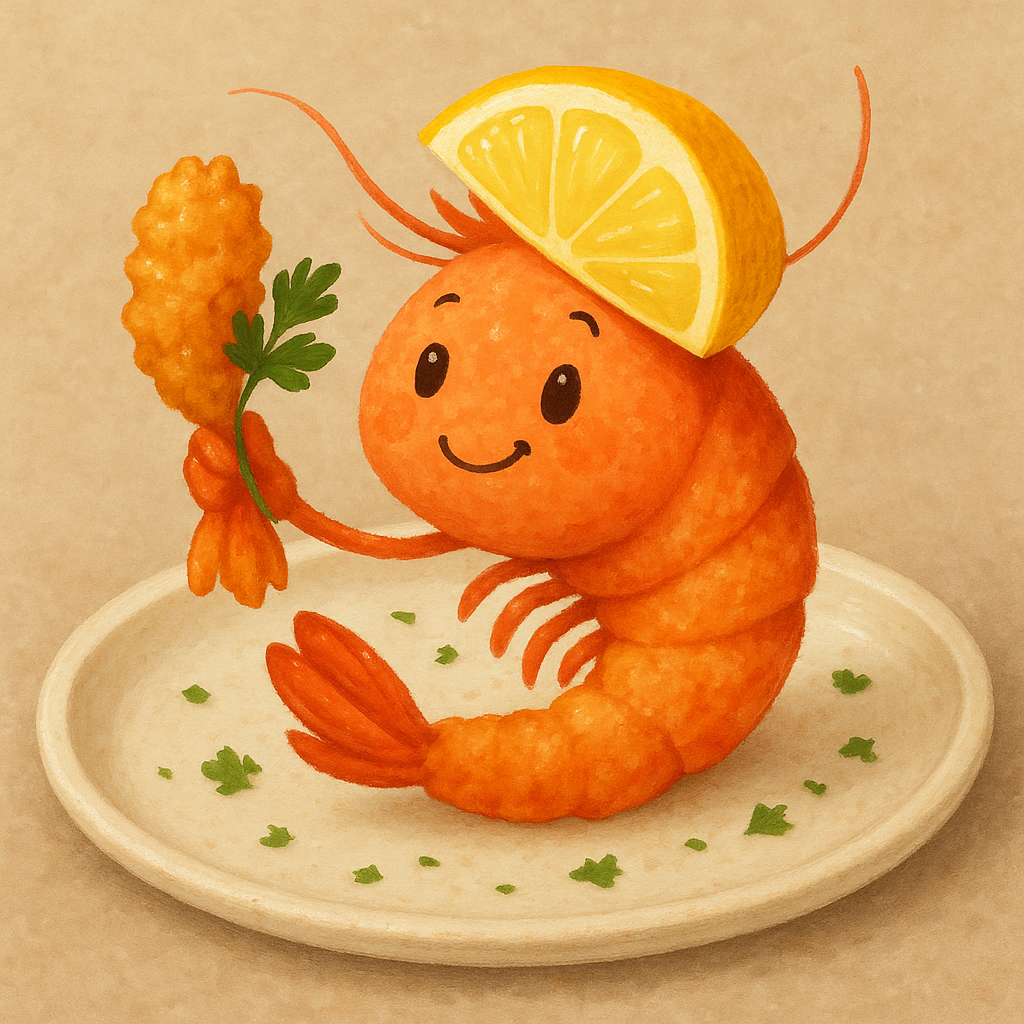
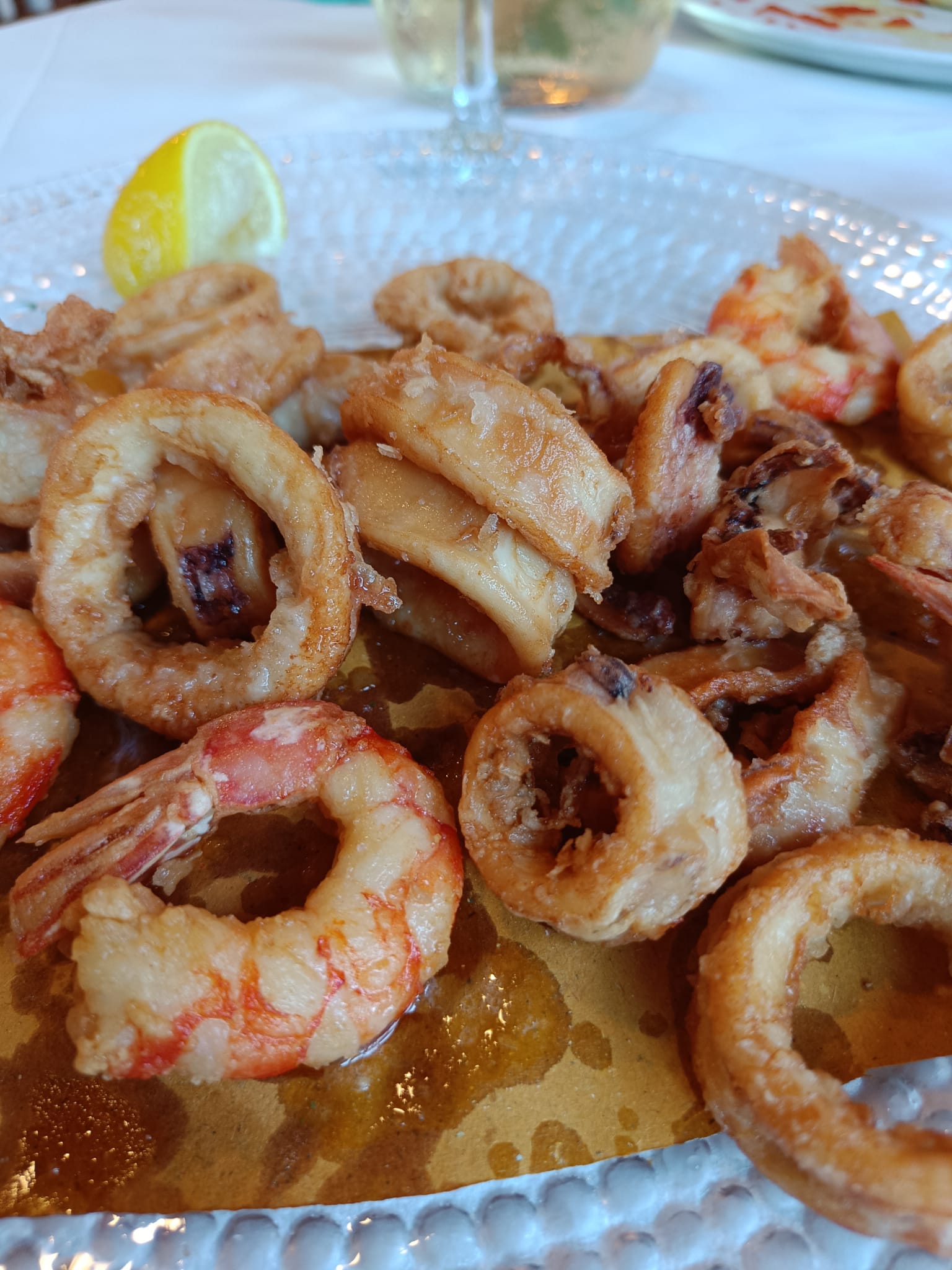
There are few dishes in Italian cuisine that capture the spirit of the coastline as perfectly as Fritto Misto. Simple, golden, and irresistibly crisp, it’s a dish that appears everywhere—from seaside shacks to Michelin-starred restaurants—yet its roots are humble.
The Story Behind Fritto Misto
“Fritto misto” simply means “mixed fry,” and depending on where you stand in Italy, that can mean very different things.
Born by the Sea
Along Italy’s Adriatic and Ligurian coasts, fishermen would fry up whatever the day’s catch offered—tiny fish, shrimp, calamari, or even small crabs. It was food meant to be eaten hot, quickly, and with your hands. Street vendors would serve it in paper cones (“cuoppo”), letting the sea breeze and sizzling heat mingle together in perfect harmony.
A Dish of Resourcefulness
In northern regions like Piemont or Veneto, the landlocked version appears: Fritto Misto alla Piemontese, featuring fried meats, vegetables, and even sweet fritters. It was born out of necessity and creativity—using every scrap of food available and turning it into a golden celebration.
Why We Still Love It Today
Because it’s everything we crave:
Crispy but light
Packed with flavor
Easily shared
A perfect example of cucina povera becoming timeless cuisine
Authentic Fritto Misto di Mare Recipe
Frito Misto plate
Serves: 2–3
Prep Time: 20 minutes
Cook Time: 10 minutes
Ingredients
Seafood
200 g calamari, cleaned and sliced into rings
200 g small shrimp (peeled or unpeeled—your choice)
150 g small fish (anchovies, smelt, or whatever is fresh)
Coating
1 cup fine semolina flour or a mix of semolina + all-purpose flour
A pinch of sea salt
Black pepper (optional)
For Frying
Neutral oil with high smoke point (sunflower, peanut, or light olive oil)
To Serve
Lemon wedges
Sea salt flakes
Fresh parsley (optional)
Instructions
1. Prepare the Seafood
Pat the seafood dry thoroughly—moisture is the enemy of crispiness. If using whole small fish, keep them intact but remove any large bones if needed.
2. Heat the Oil
Pour about 2 inches of oil into a deep pan. Heat to 180°C / 350°F. (If you don’t have a thermometer, drop in a pinch of flour—if it sizzles, it’s ready.)
3. Coat Lightly
In a shallow bowl, mix the semolina and flour. Toss the seafood in the mixture until lightly coated. Shake off the excess.
4. Fry in Batches
Add a handful of seafood at a time. Crowding lowers the oil temperature and results in soggy fry. Cook for 2–3 minutes, until pale golden and crisp.
5. Drain and Season
Transfer to a plate lined with paper towels. Immediately salt while still hot.
6. Serve
Pile everything onto a platter. Add lemon wedges and a sprinkle of parsley. Eat right away—it waits for no one.
Tips for the Perfect Fritto Misto
Use semolina for extra crunch.
Keep seafood cold until the moment it’s fried.
Eat while hot—freshness is key.
Try variations: zucchini strips, sage leaves, or even thinly sliced fennel.
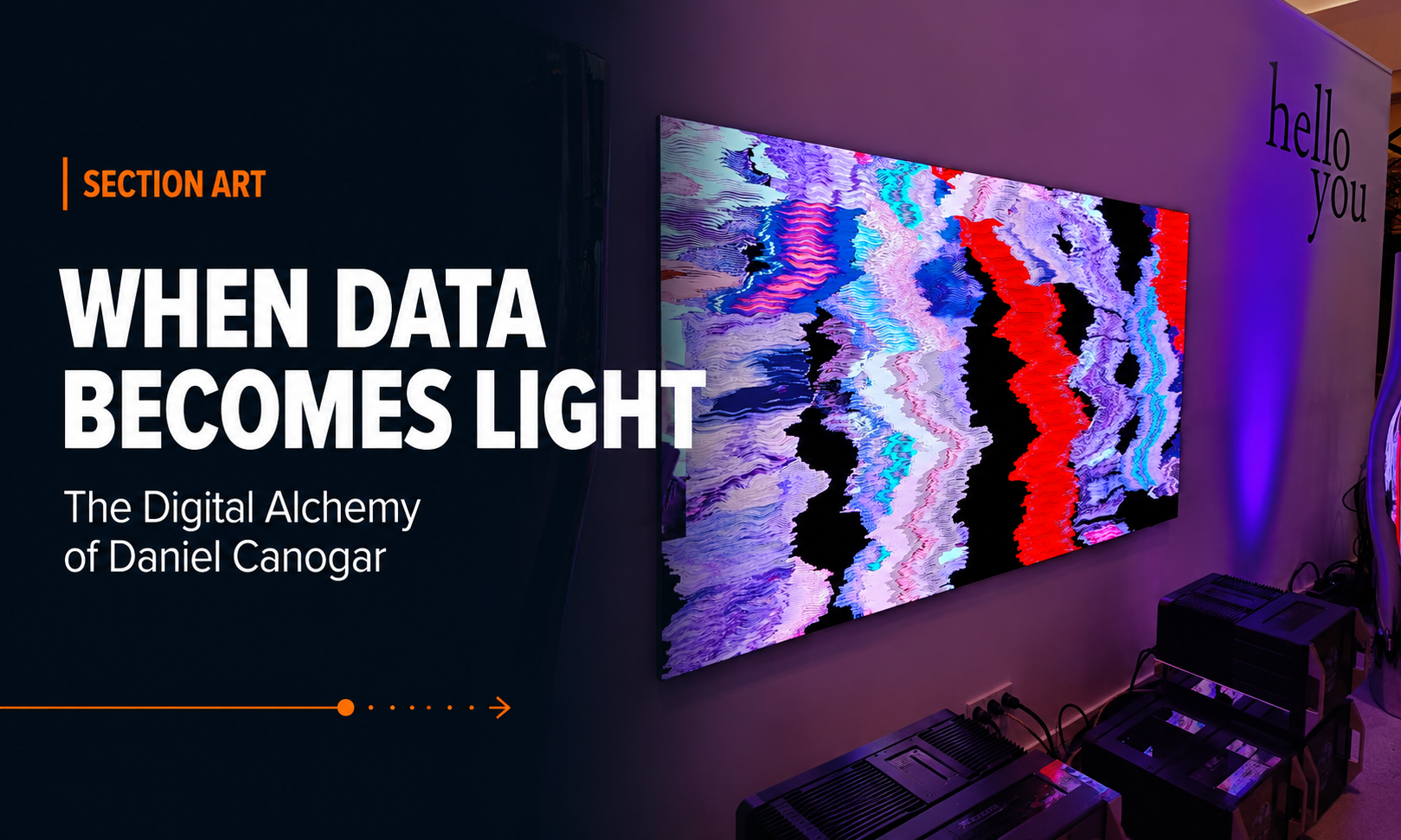
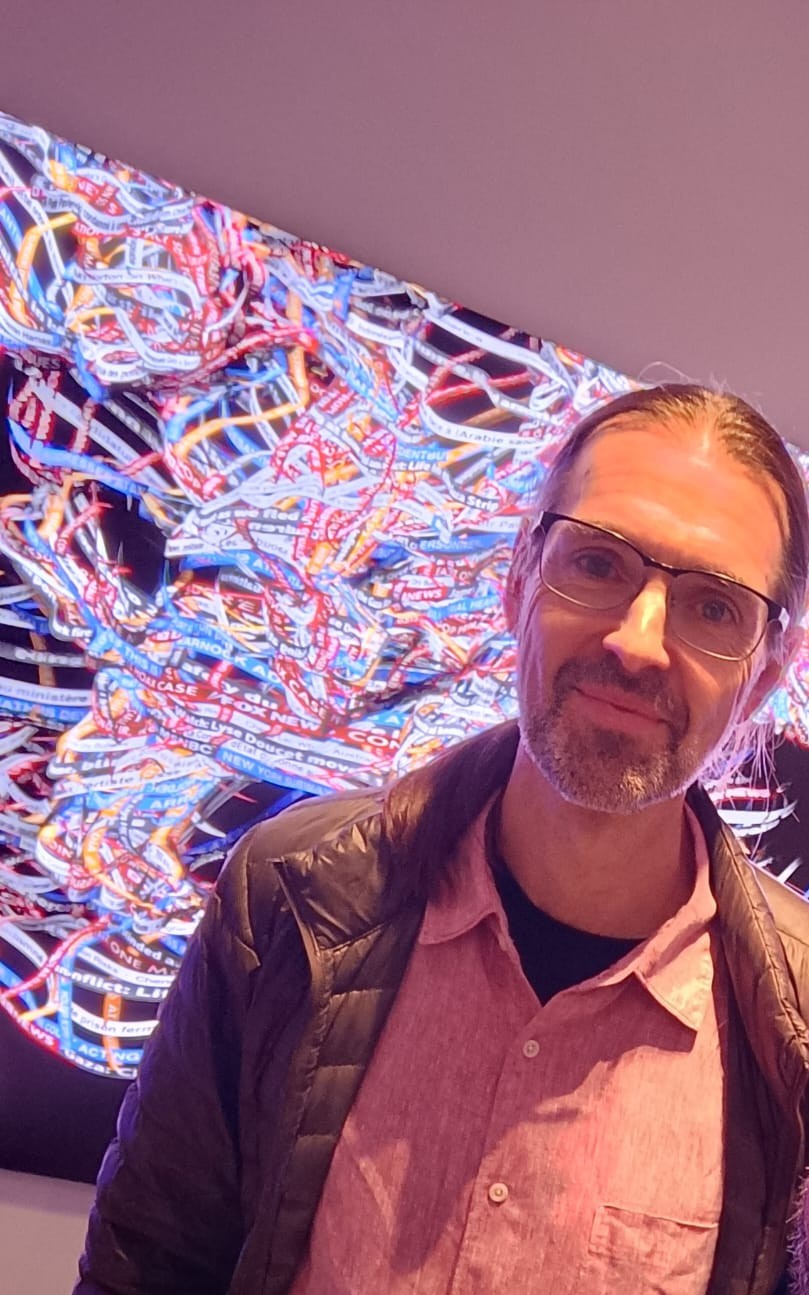
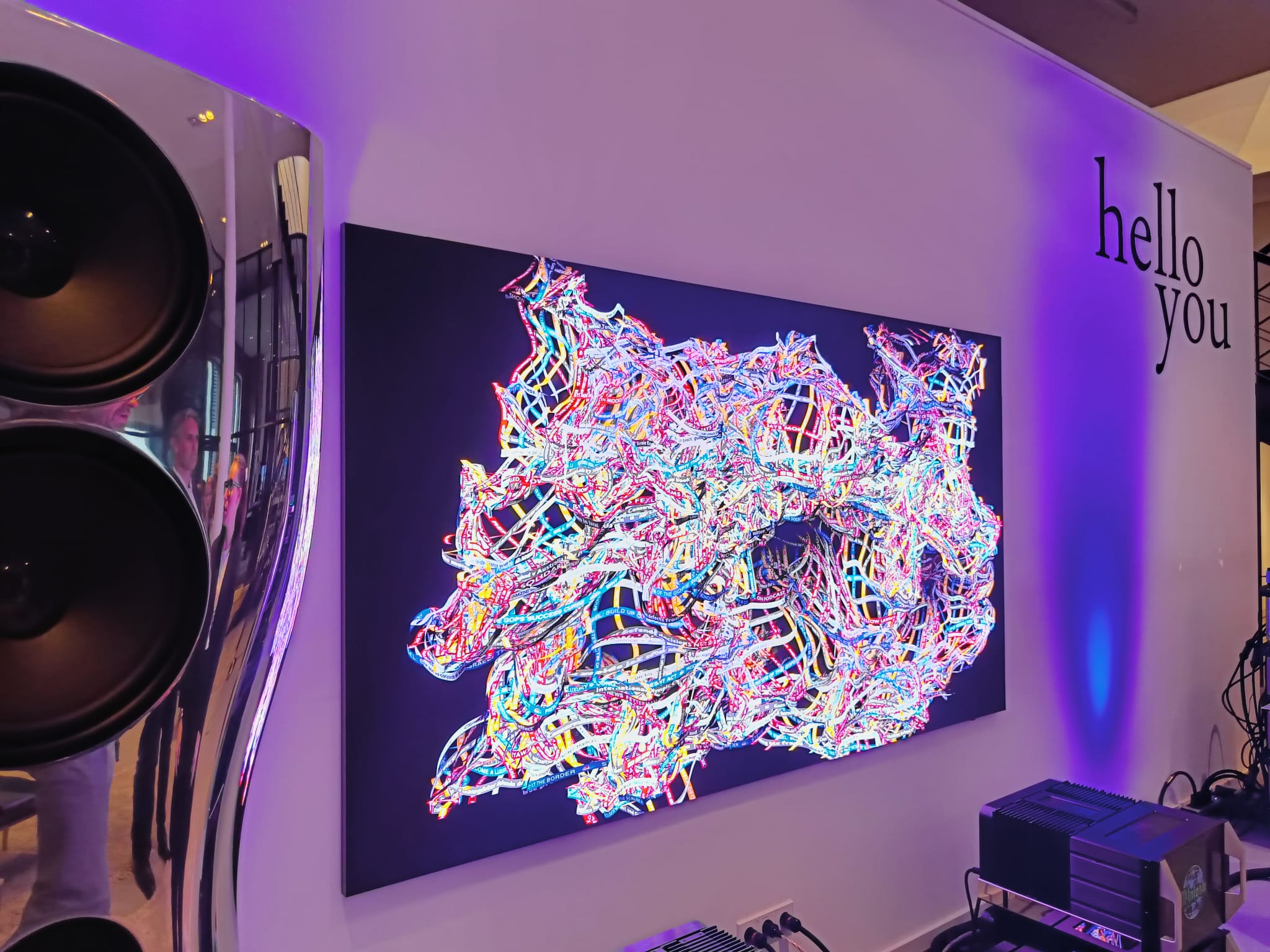
In a world saturated with screens, streams, and torrents of information, Daniel Canogar stands out as a magician of light — a creator who doesn’t just show data, but transmutes it into immersive visual poetry and moving sculptures. Through his video installations and generative artworks, Canogar transforms raw flows of digital information into luminous, breathing compositions, inviting us to experience the intangible architecture of our data-driven lives.
From Photography to Fluid Data — A Journey Through Media
Yet, very early in his career he grew curious about the “projected image” — not just static pictures, but light, motion, space, and time. https://www.danielcanogar.com/bio
Over the decades, his practice evolved beyond photography: he experimented with fiber optics, video projections, recycled electronics, and — now — real-time data streams. https://www.meer.com/en/60589-daniel-canogar
For Canogar, objects like old VHS tapes, hard drives, obsolete electronics aren’t mere trash — they are archeological artifacts of a vanished analog era. By projecting onto them, he resurrects forgotten memories and highlights the impermanence of technology and memory. https://www.meer.com/en/60589-daniel-canogar
Data as Palette: Translating Information Into Art
One of the most distinctive traits of Canogar’s work is how he transforms data itself — from financial markets to news feeds, from social attention metrics to historical artworks — into rich, moving visual experiences.
In Amalgama El Prado (2019), he processed the entire painting collection of a venerable museum, liquefying centuries of visual history into a digital river of color and form — a shimmering commentary on how digital media is transforming our experience and consumption of art. https://on.spainculture.us/amalgama-el-prado-by-daniel-canogar
What makes these works different from mere data visualization — charts, diagrams, dashboards — is that Canogar doesn’t aim to clarify. Instead, he embraces abstraction, ambiguity, emotion: the goal is not to inform, but to evoke. As one observer noted: “the palette of these artworks is not painting, but rather data.” https://www.artsy.net/article/mark-moore-fine-art-mirrors-data-works-daniel-canogar
Light, Memory, and the Fragility of Digital Existence
Underneath the technical brilliance and hypnotic visuals lies a deeper preoccupation: memory, impermanence, and what gets lost when technology evolves.
By projecting onto discarded electronics — DVDs, hard disks, cables — Canogar taps into a collective nostalgia, a memory of personal and shared times stored in these now-forgotten objects. https://www.meer.com/en/60589-daniel-canogar
He sees digital media not as a final frontier, but a sediment — layers of memories, data, context — that accumulate, shift, vanish. His installations often feel like attempts to hold on to that fluid past, to give shape and light to what otherwise remains intangible. https://www.thelightobserver.com/daniel-canogar
Public Space as Canvas: Blurring Boundaries Between Digital & Physical
Another defining feature of Canogar’s work is its site-specific and often public-space dimension. He doesn’t confine his art to galleries — he spills it into urban spaces, airports, museums, and monumental façades. https://zkm.de/en/person/daniel-canogar
In doing so, he asks: how does the digital age reshape our public spaces? How does the constant flow of information infiltrate our shared physical environment? Can we find a new kind of public sphere, where data and memory become visible and collective? https://linkedspheres.art/daniel-canogar
Why Daniel Canogar Matters — And What His Work Reflects
In an era where our lives are increasingly mediated by screens, algorithms, feeds, and streams — almost always unseen layers of code — Canogar’s work is important because it makes the invisible visible.
He doesn’t just display data — he feels it, sculpts it, breathes light into it.
He reminds us that behind every “data point” lies human experience, memory, culture.
He connects analog pasts with digital futures — reclaiming discarded technology as vessels of collective memory.
He questions what it means to be human in a world where identity, art, history, and memory are increasingly bound up with data.
To encounter a Canogar installation is to confront the vastness of our digital milieu — but to do so as poetry, not panic.
Final Thought: Data Is Not Just Information — It’s Living Light
If data is the new oil, then Daniel Canogar is one of the world’s most graceful and mindful refineries. With sensitivity, imagination, and technological mastery, he turns cold, abstract 1s and 0s into warm, pulsing lights; noisy, chaotic streams into meditative mosaics; fleeting online moments into lasting visual memories.
In his hands, data becomes not a commodity — but a canvas. A reminder that our digital lives, for all their intangibility, leave traces: light and shadows on walls, memories flickering in LED glow, the ghost of old hard drives dancing again.
And maybe that’s what we need now: not another chart or graph — but art.
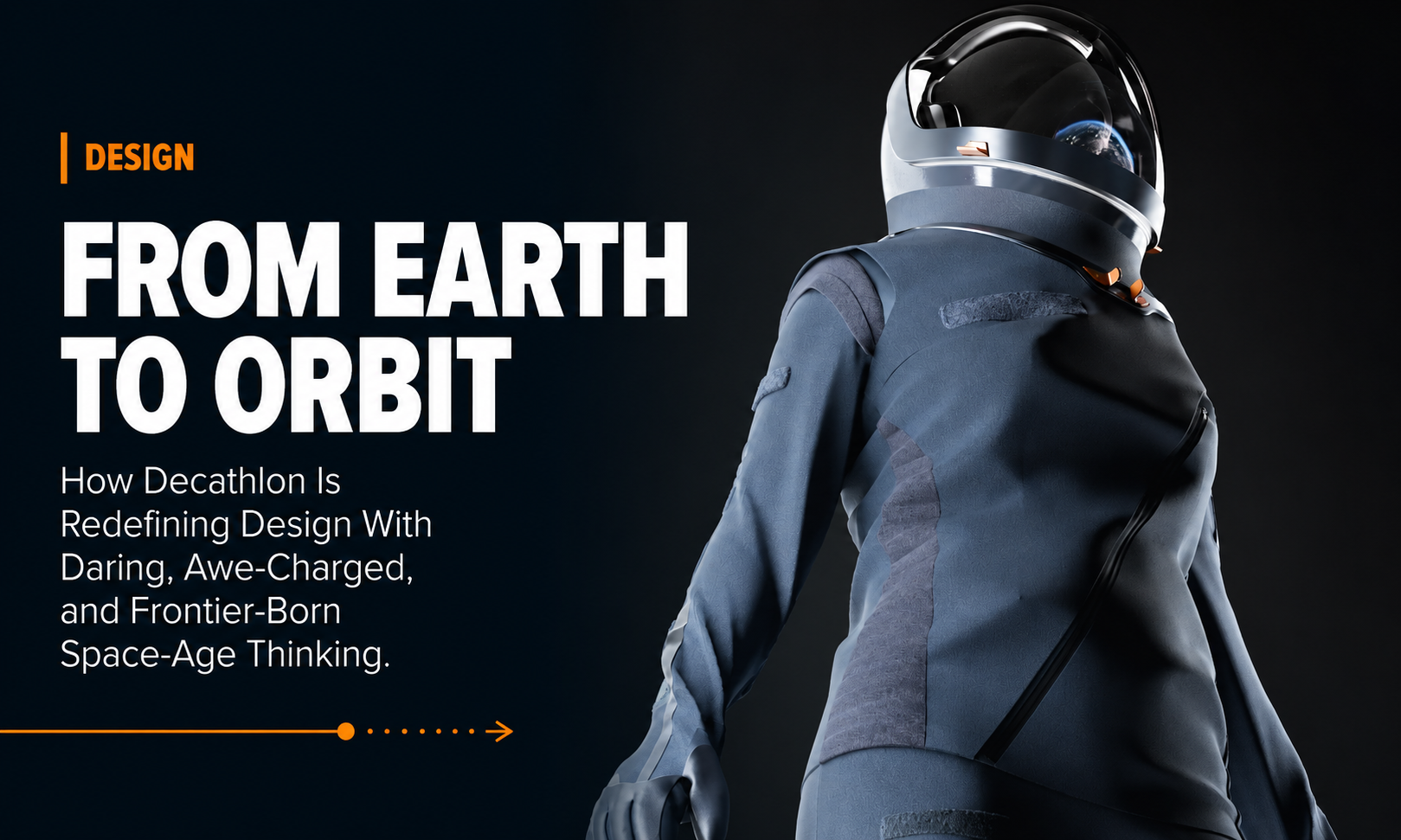
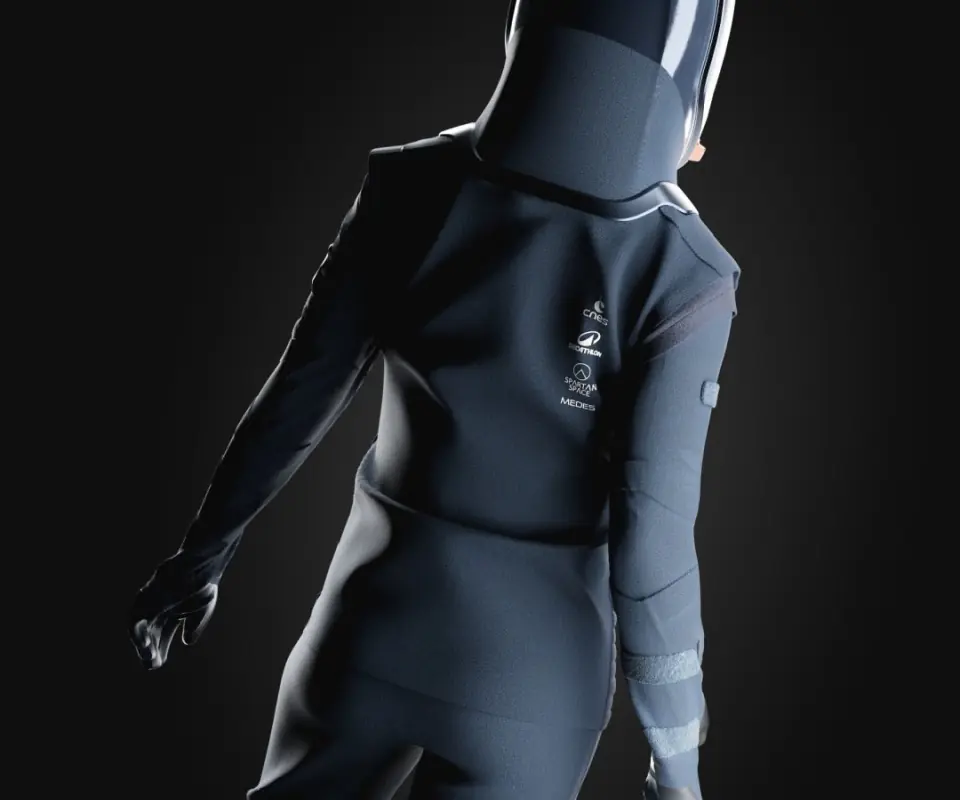
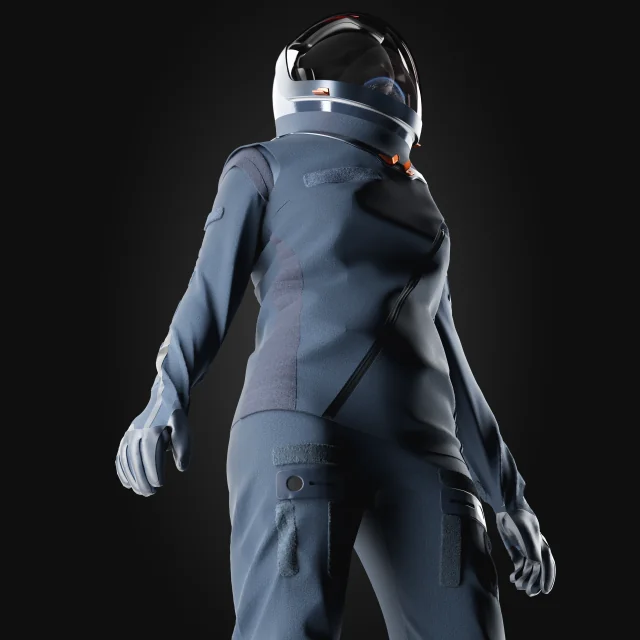
Decathlon’s Advanced Innovation division — known for optimizing comfort, mobility, and practicality in sports gear — is now applying that design philosophy to human spaceflight. In collaboration with CNES (the French space agency), Spartan Space (a space-tech provider), and MEDES (Institute for Space Medicine and Physiology), Decathlon has developed EuroSuit — a next-generation intra-vehicular activity (IVA) suit. https://www.decathlon-united.media/pressfiles/eurosuit-decathlon_intra-vehicular-space-suit-prototype
This is a clear example of how good design — from sport to space — can centre around the human body, not just technological demands.
What It Means for Design, Space & Everyday Innovation
Design thinking crosses industries. Decathlon’s pivot shows how principles from consumer-facing goods (comfort, ergonomics, usability) are increasingly relevant in high-tech, high-stakes fields like aerospace.
Human comfort + safety matters. For the first time, a major space-suit prototype combines rigorous astronaut requirements with the kind of user-centric design we expect in everyday clothing.
Accessibility and democratization. If EuroSuit succeeds, it may help democratize space travel and lower the barrier for designing crew gear — meaning more innovation, faster iteration, and perhaps more European autonomy in human spaceflight.
If successful, this could mark a turning point — where space-grade protective gear meets human-centric design, and a sportswear company becomes part of the space-exploration story.
We use cookies and similar technologies to make our website work and to improve your experience. Some cookies are essential. We use other cookies only with your consent. You can change your choices at any time in the cookie settings.
Functional
Always active
The technical storage or access is strictly necessary for the legitimate purpose of enabling the use of a specific service explicitly requested by the subscriber or user, or for the sole purpose of carrying out the transmission of a communication over an electronic communications network.
Preferences
The technical storage or access is necessary for the legitimate purpose of storing preferences that are not requested by the subscriber or user.
Statistics
The technical storage or access that is used exclusively for statistical purposes.The technical storage or access that is used exclusively for anonymous statistical purposes. Without a subpoena, voluntary compliance on the part of your Internet Service Provider, or additional records from a third party, information stored or retrieved for this purpose alone cannot usually be used to identify you.
Marketing
The technical storage or access is required to create user profiles to send advertising, or to track the user on a website or across several websites for similar marketing purposes.